
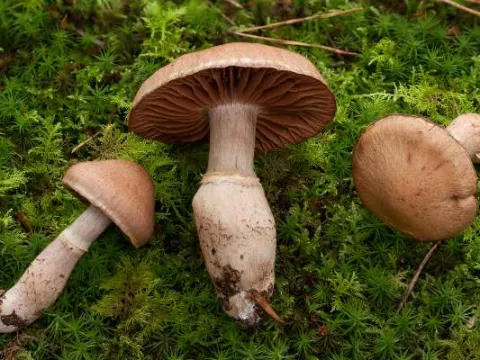
Cortinarius torvus
Cortinarius torvus
Cortinarius torvus is a species of fungus in the family Cortinariaceae. It is not a plant pathogen and does not cause diseases in agricultural crops, trees, or other vegetation.
What the section contains
Cortinarius torvus
This fungus is a well-known mycorrhizal partner. It develops a symbiotic relationship with the root systems of various tree species, assisting them in nutrient uptake, particularly phosphorus and water.
Unlike parasitic fungi that cause root rot or tissue decay, Cortinarius torvus contributes to the overall health and vigor of the forest ecosystem through its mutualistic interaction with plant hosts.
The biological classification of this fungus defines it as a saprotrophic and mycorrhizal organism, which is essential for nutrient cycling in woodland environments.
There is no scientific evidence to classify this species as a disease-causing agent, as its life cycle does not involve the degradation of living plant host tissues for pathogenic purposes.
The presence of Cortinarius torvus is primarily observed through the growth of its fruit bodies, which typically appear during late summer and autumn in deciduous and mixed forests.
The mushroom features a distinct brownish cap with violet undertones. A defining characteristic is the fibrous ring on the stem, which is a remnant of the cobweb-like cortina protecting the gills.
Gills are initially pale or grey-lilac in young specimens but turn rusty brown as the spores mature. This change in color is a key morphological feature for identification in the field.
The mycelium resides within the leaf litter and soil, creating an extensive network of hyphae that link to the roots of host trees without causing necrotic damage or visible infection symptoms.
Observing the mushrooms in their natural habitat indicates a stable environment, as these fungi are sensitive to soil disturbances and industrial pollutants.
Growth conditions for Cortinarius torvus include moist soil rich in organic matter. They thrive in environments with specific tree hosts, such as beech and oak, where they can form ectomycorrhizae.
The development of fruit bodies is highly dependent on rainfall and moderate temperatures. A typical autumn season with sufficient humidity provides the optimal conditions for spore release.
Dissemination occurs via spores, which are dispersed by wind and small fauna. Upon reaching suitable substrate and encountering compatible roots, the spores germinate to establish new fungal colonies.
The presence of this fungus is often linked to the overall quality of forest soil. It requires a balanced pH and the absence of aggressive chemical treatments to successfully complete its life cycle.
In managed forestry or agricultural settings, the presence of these fungi indicates healthy mycorrhizal associations, which generally decline when heavy soil cultivation or fungicide use is intensive.
Cortinarius torvus is considered an ecologically beneficial organism rather than a harmful one. It presents no threat to crop productivity or forest management objectives.
As a mycorrhizal fungus, it enhances the root system efficiency of its host trees, helping them withstand environmental stressors like drought and nutrient deficiency.
No agricultural control measures are required, as the species does not interfere with plant growth, development, or yield. Efforts to control this fungus would be counterproductive.
The only relevance this species has to human activity is in the field of mycology and foraging, where it is vital to correctly identify species to avoid consuming potentially inedible or toxic varieties.
In summary, the species should be viewed as a valuable component of biodiversity, supporting plant health and maintaining the integrity of forest soils without causing any pathogenic harm.