
Cortinarius subtortus
Cortinarius subtortus
Cortinarius subtortus is a member of the Cortinariaceae family, which functions as a mycorrhizal symbiont in its natural habitat rather than a plant pathogen.
What the section contains
Cortinarius subtortus
This fungus forms essential symbiotic relationships with the root systems of various forest trees, predominantly coniferous species such as spruce and pine.
It does not attack agricultural crops or ornamental plants. Instead, it facilitates the exchange of water and mineral nutrients for carbohydrates from the host tree.
The mycelium of the fungus is widespread in the soil, integrating into the rhizosphere to maintain a stable exchange with the root architecture of the trees.
Biologically, it is an integral part of forest ecosystems, contributing to the health and growth of the forest floor community through its symbiotic network.
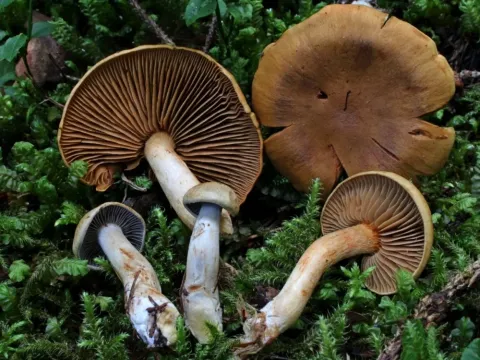
The fruiting bodies display yellowish-olive caps, which can grow up to 8 cm in diameter, often featuring a slightly sticky surface in damp conditions.
The gills transition from a pale yellowish hue to a rust-brown color as the spores reach maturity, a characteristic trait of the Cortinarius genus.
The most distinctive feature is the twisted (tortuous) stipe, which often appears deformed or curved, frequently accompanied by remnants of the cobweb-like cortina.
The flesh is known for a peculiar, often musty or pungent odor, which serves as a key identifying characteristic for mycologists and observers.
As a mycorrhizal fungus, it does not induce visual symptoms of disease in host trees; its presence is a sign of biological activity in the rhizosphere.
This species thrives in acidic, nutrient-rich soils typical of coniferous woodlands where tree roots are readily available for mycorrhizal association.
Moisture availability in the forest litter is a primary factor for the emergence of fruiting bodies, typically occurring during late summer and autumn.
A stable forest microclimate, characterized by moderate temperatures and sufficient organic material, is necessary for mycelial development.
It prefers undisturbed ecosystems where the relationship between the host plant and the fungal network has not been compromised by environmental stress.
The acidity level of the soil plays a significant role in the growth and distribution of the fungus, aligning with the requirements of coniferous hosts.
Cortinarius subtortus poses no threat to agricultural productivity, horticultural crops, or garden plants as it is not a phytopathogen.
It does not cause rot, necrosis, or any form of damage to cultivated plant tissues, as its nutritional strategy is strictly mutualistic.
The species is ecologically beneficial for forest vitality, acting as an auxiliary root system for trees, improving their resilience to environmental changes.
Potential harm is restricted to accidental ingestion by humans, as many Cortinarius species contain toxins that can lead to severe poisoning.
In terms of land management and agronomy, this species is considered harmless and does not require any mitigation or management practices.
There are no management or control protocols for this fungus, as it does not interfere with human economic interests or plant health.
Preventative measures are unnecessary and counterproductive to natural forest ecosystem health, of which this fungus is a valuable part.
Research and monitoring remain the only relevant activities for this species, focusing on cataloging biodiversity rather than pest control.
Public safety initiatives regarding mushroom foraging should emphasize avoiding unknown Cortinarius species to prevent accidental consumption.
Maintaining a healthy, intact forest habitat is sufficient to sustain the natural diversity of mycorrhizal fungi, including this particular species.