
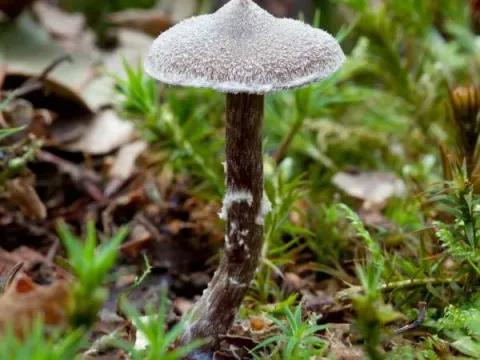
Cortinarius flexipes
Cortinarius flexipes
Cortinarius flexipes, commonly known as the pelargonium webcap, is a fungal species belonging to the Cortinariaceae family. It is primarily found in coniferous and deciduous forests.
What the section contains
Cortinarius flexipes
From an agricultural standpoint, it is important to clarify that Cortinarius flexipes is not a plant pathogen. It does not cause diseases in crops, vegetables, or commercial fruit species.
The fungus functions as a mycorrhizal partner, establishing symbiotic relationships with tree roots. It absorbs nutrients from forest litter and supports the tree, acting as part of the ecosystem.
It lacks the enzymatic capacity to invade, colonize, or destroy the tissues of agricultural plants. Therefore, it is misclassified if labeled as a crop disease.
The species is easily recognized by its dark brown to violet cap and a distinctive scent reminiscent of geraniums (pelargoniums), which is a key identifying morphological feature.
The fungus thrives in moist, shaded environments, particularly in forest areas with acidic soil composition. It requires specific moisture levels to produce fruiting bodies.
Optimal growth conditions typically include high relative humidity and temperatures between 10°C and 20°C, which are common during the autumn season.
It forms colonies in leaf litter and soil, requiring the presence of organic matter and symbiotic tree root systems to persist over long periods.
Changes in soil chemistry, such as liming or intensive agricultural fertilization, usually inhibit the development of this forest-dependent fungus.
Environmental fluctuations that lead to soil drying or high pH levels typically result in the decline of the mycelium of this species.
Cortinarius flexipes poses no danger to agricultural production. It does not induce lesions, wilt, chlorosis, or any other pathological symptoms in field crops.
There is no economic damage associated with this species in farms, greenhouses, or orchards, as it is strictly a forest-dwelling fungus.
Confusion between this species and genuine pathogens may lead to unnecessary chemical treatments, which is the only potential "harm" caused by misidentifying this mushroom.
As it does not infect living plant tissues, there is no risk of yield loss or quality degradation caused by its presence in the vicinity of farming areas.
It acts as a beneficial component of forest health, aiding in the decomposition of organic material and supporting local biodiversity.
No control measures are required, as Cortinarius flexipes does not interfere with agricultural or horticultural practices.
If you encounter these mushrooms on your land, it is a sign of healthy soil or forest edge conditions, and no removal is necessary unless they occupy recreational or aesthetic areas.
Standard agricultural practices like crop rotation and soil preparation are sufficient to manage any soil conditions if they differ from forest environments.
The use of fungicides to eliminate this species is strongly discouraged, as it could disrupt the beneficial soil microbiome and serve no agricultural purpose.
- Monitor for genuine crop pathogens instead.
- Maintain proper drainage in fields.
- Avoid unnecessary chemical intervention.