
Cortinarius praestans
Cortinarius praestans
Description
Symptoms
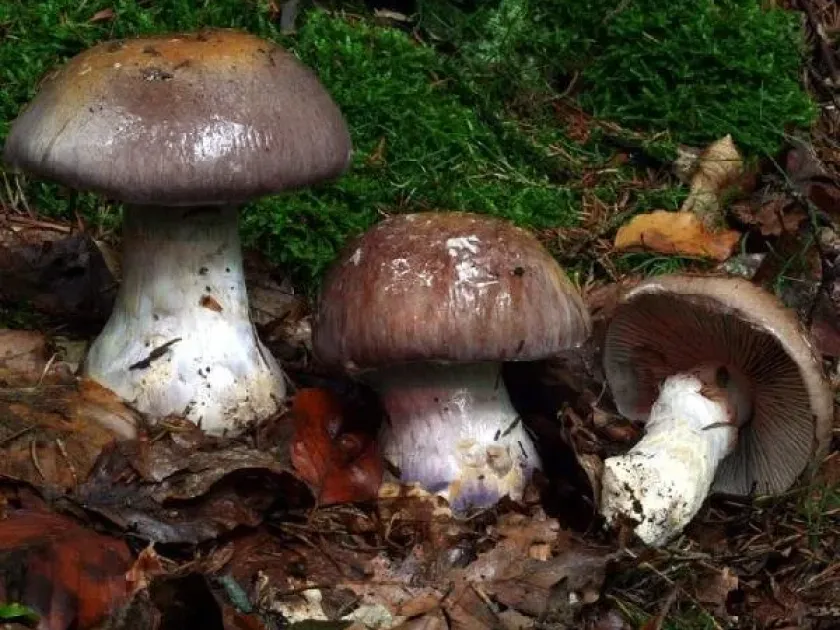
The mushroom is characterized by a large, convex, purple-brown cap that often displays a slimy surface when young.
The stem is thick and robust, usually whitish with violet hues, and features a ring-like zone left by the decaying cortina.
Gills are initially hidden by a web-like veil, which is a distinctive anatomical feature of the genus Cortinarius.
The flesh is firm and dense, contributing to its reputation as a high-quality edible species in mycological communities.
The spore print is rusty brown, which is a diagnostic trait used to separate this species from similar-looking forest fungi.
Pathogen
Cortinarius praestans is not a plant pathogen; it is a species of edible mushroom belonging to the family Cortinariaceae.
The fungus establishes a symbiotic mycorrhizal relationship with the roots of broad-leaved trees, such as beech and oak.
This biological interaction is beneficial to both the tree and the fungus, as the mycelium improves nutrient uptake from the soil for the host tree.
As it does not infect plant tissues or consume them, it cannot be classified as a disease-causing organism in agriculture.
Misidentifying this mushroom as a crop pest or disease agent is a common error, as it lacks the necessary characteristics to cause plant decline.
Conditions for development
The species prefers calcareous soils and is commonly associated with mature broad-leaved forest stands.
Development and fruit body formation occur primarily in late summer and autumn under stable temperature conditions.
High humidity and consistent rainfall are essential for the mycelium to initiate the production of fruiting bodies above ground.
The fungus is highly sensitive to soil chemistry changes, including the application of synthetic fertilizers and fungicides.
Stable soil temperature and the presence of healthy forest leaf litter are crucial for maintaining the fungal colony.
Why it matters
Cortinarius praestans poses no threat to agricultural crops and does not damage cultivated plants.
There are no recorded instances of this fungus causing any form of plant disease or yield loss in farming environments.
Its ecological niche is strictly within forest ecosystems, meaning it does not compete with agricultural crops for space or resources.
The presence of this fungus is often an indicator of a balanced and healthy forest soil environment rather than a cause for concern.
It has no negative economic impact on the plant protection sector, as it is a beneficial mycorrhizal partner.
Protection
Control measures are unnecessary since the mushroom is not a pest or a cause of disease in agricultural or horticultural settings.
The use of pesticides or fungicides to eradicate this fungus is harmful to the local soil ecosystem and should be avoided.
No preventative protocols exist for this species as it is recognized as a valuable component of forest biodiversity.
Management of the fungus is limited to protecting the natural habitat where it thrives, without any chemical intervention.
If identification is required, it should be performed by a mycologist to ensure accurate assessment of its natural occurrence.
Discussion
No discussions yet — be the first.