
Cortinarius elegantissimus
Cortinarius elegantissimus
Description
Symptoms
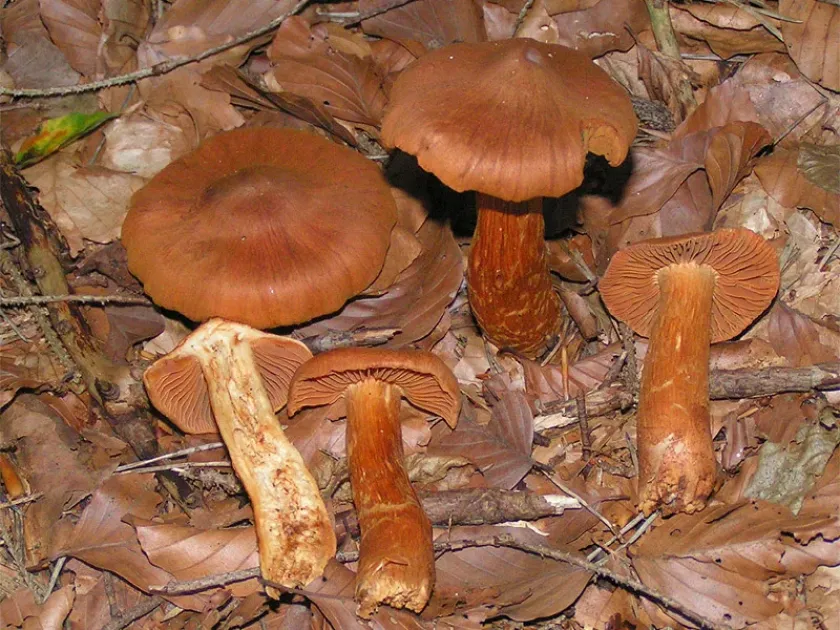
Key identification signs include the emergence of vibrant yellow or golden-yellow mushroom caps during the autumn season.
The cap surface is typically viscid or slimy, especially under humid conditions, which is a diagnostic feature of this particular species.
Young specimens display intense lemon-yellow gills that gradually shift to an ochre or brownish hue as the spores reach maturity.
The stipe usually exhibits remnants of the cortina (a cobweb-like veil), which is a common characteristic of all members of the Cortinarius genus.
Mycelial mats can often be found in the leaf litter around the base of hardwood trees like oaks or beeches, indicating the presence of the fungus.
Pathogen
The organism in question, Cortinarius elegantissimus, is a gilled mushroom belonging to the family Cortinariaceae.
It is vital to state that this species is not a plant disease, as it does not parasitize living tissues or cause plant necrosis.
Instead, it acts as a beneficial mycorrhizal symbiont, establishing a mutualistic relationship with the root systems of various tree species.
The fungus develops mycelial networks that wrap around tree roots, assisting in the exchange of nutrients and water between the soil and the host tree.
While biologically complex, it is classified as a potentially poisonous mushroom and is not suitable for human consumption.
Conditions for development
The development of Cortinarius elegantissimus is highly dependent on specific ecological conditions found in mature hardwood forests.
It thrives in soils with a high organic content and often prefers slightly alkaline or calcareous soil profiles to produce healthy fruit bodies.
Adequate moisture levels during the late summer and early autumn are necessary for the successful formation and emergence of the caps.
The presence of healthy, mature host trees is essential for the fungal mycelium to survive and flourish within the forest ecosystem.
Severe soil disturbance or significant changes in soil chemistry can inhibit the fungus from forming its characteristic fruiting structures.
Why it matters
This fungus poses no threat to the health or vitality of forest plantations or agricultural crops, as it does not act as a pathogen.
It contributes positively to the forest ecosystem by improving tree nutrition and enhancing the resilience of the host plant to environmental stress.
The primary concern regarding this species is its toxicity to humans if ingested, as it contains metabolites harmful to internal organs.
No economic damage is associated with this fungus; it is generally considered a valuable component of the natural woodland mycoflora.
There are no reports of it damaging wood quality or causing decay, making it completely harmless in a forestry management context.
Protection
Since Cortinarius elegantissimus is a beneficial symbiont rather than a pest, no chemical or biological control measures are necessary.
Public safety efforts should focus on educating mushroom foragers about the risks of collecting unknown species of the Cortinarius genus.
The use of fungicides in forests is highly discouraged, as it would destroy the vital mycorrhizal networks that support tree growth.
No agricultural intervention is required, as the fungus does not interfere with crop health or commercial timber production.
If physical removal is deemed necessary for safety in public parks, simply picking the fruit bodies is sufficient to prevent accidental ingestion.
Discussion
No discussions yet — be the first.