
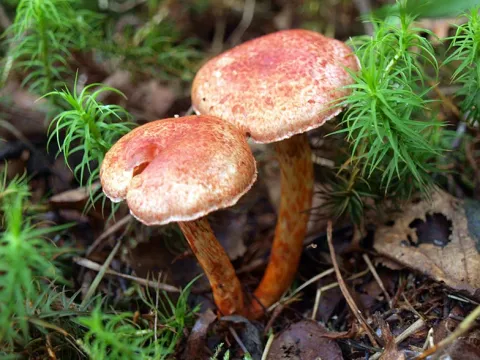
Cortinarius bolaris
Cortinarius bolaris
Cortinarius bolaris is not a plant pathogen and does not cause diseases in agricultural crops. It is a saprotrophic and mycorrhizal fungus belonging to the Cortinariaceae family.
What the section contains
Cortinarius bolaris
This species is classified under the division Basidiomycota, primarily existing as a network of mycelium within forest litter.
The fungus produces fruiting bodies that are typical cap-and-stem structures with a gilled hymenophore.
Its mycelium is deeply integrated with tree root systems, playing a role in symbiotic soil processes.
From an agronomic perspective, this organism is a natural component of forest ecosystems rather than a threat to cultivated plants.
The fruiting bodies are characterized by a yellowish-brown cap covered in numerous bright red or ochre-colored scales.
The gills of young specimens are clay-colored or yellowish, turning rusty-brown as the spores mature.
The stem is dense and often displays a characteristic ring or remnants of the cortina, a web-like veil from which the genus gets its name.
The flesh may show slight color changes when damaged and typically has a distinct odor common to many webcap mushrooms.
The fungus can be observed from late summer through mid-autumn, primarily in deciduous and mixed forests.
The fungus prefers acidic soils rich in organic debris, which is typical for temperate coniferous and broadleaf forests.
Optimal mycelium growth requires high soil humidity and moderate air temperatures.
This species often forms mycorrhizal associations with trees like beech, oak, or birch, which dictates its regional distribution.
Excessive soil compaction or significant changes in hydrological regimes can negatively impact the development of the fungal network.
Fruiting is stimulated by heavy rainfall, which maximizes the humidity of the forest floor.
Cortinarius bolaris does not cause harm to agricultural crops and is not a causal agent of plant diseases.
It does not attack the root systems of vegetable or cereal crops, as it is specialized strictly for forest tree species.
It does not produce toxins that would inhibit the growth of standard crops used in field or horticultural production.
Its lack of phytopathogenic properties confirms it as a harmless object in the context of commercial plant cultivation.
The economic significance of the species is negligible, as it holds neither food value for humans nor impact on the agricultural sector.
Protective measures against Cortinarius bolaris are unnecessary as it does not function as a pest or pathogen.
If observed in forest nurseries, agronomists should correctly identify the species to avoid unnecessary fungicide application.
Preventative management of fungal presence in forest areas is based on maintaining the biological balance of the ecosystem.
Regular clearing of rotting wood from the forest floor can reduce the intensity of fruiting body appearance in specific zones.
Chemical soil treatments to eradicate this species are counterproductive and environmentally hazardous to soil microflora.