
Cortinarius bulliardii
Cortinarius bulliardii
Description
Symptoms
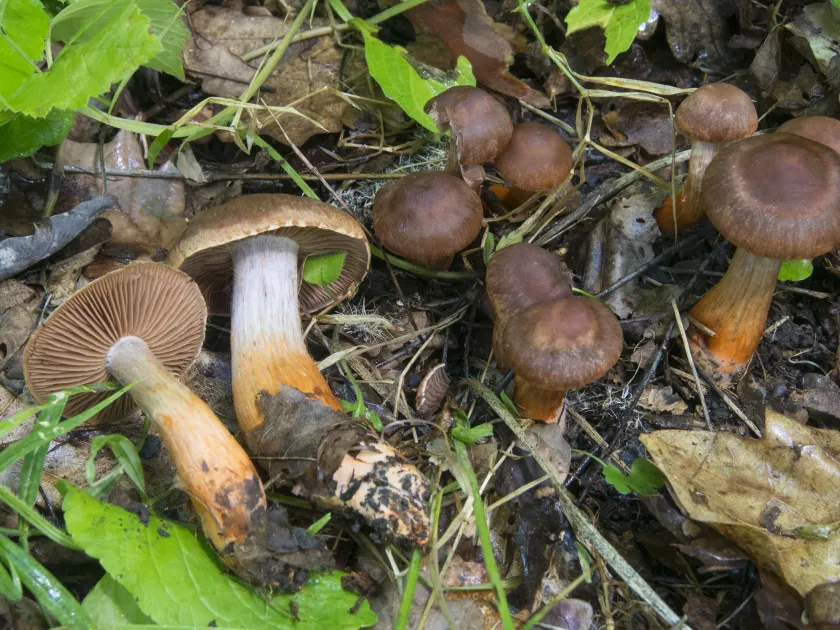
The fruiting body is characterized by a reddish-brown or brick-colored cap, which often exhibits a lighter tone towards the margins.
A distinctive feature of this species is the presence of a cobweb-like veil, known as the cortina, which covers the gills in young specimens and leaves a faint residue on the stem.
The gills are initially pale or ochre-colored, darkening to a rusty-brown as the fungal spores mature inside the cap.
The stem is typically cylindrical and may feature a bulbous base, which is a common diagnostic characteristic for identifying species within the genus Cortinarius.
The flesh of the mushroom generally lacks strong distinctive odors and is not considered a food source due to the difficulty of identification and potential toxicity of similar species.
Pathogen
Cortinarius bulliardii is a species of fungus in the family Cortinariaceae. It is important to clarify that this fungus is not a plant pathogen and does not cause any diseases in crops or garden plants.
The fungus acts as a beneficial mycorrhizal symbiont, forming symbiotic relationships with the root systems of various deciduous trees, such as oaks and beeches.
It plays a crucial ecological role in forest ecosystems by facilitating nutrient cycling and decomposing organic matter within the forest floor.
Because it is not a parasite, it does not require any pest control measures or agricultural intervention; it is a natural component of woodland biodiversity.
Botanists and mycologists study this species to understand the complex interactions between soil fungi and tree health in undisturbed forest habitats.
Conditions for development
This fungus thrives in deciduous and mixed forests where there is abundant organic litter and well-drained but moist soil conditions.
Development is highly dependent on the presence of host trees, as the mycelium relies on the exchange of nutrients with tree roots.
The fruiting season typically occurs in late summer and autumn, benefiting from the increased soil moisture and mild temperatures associated with the season.
It requires a stable microclimate provided by the forest canopy, which protects the mycelium from excessive evaporation and direct sunlight.
Human activity, such as soil compaction or forest clearing, generally inhibits the development of this species, as it is specialized for natural forest environments.
Discussion
No discussions yet — be the first.