
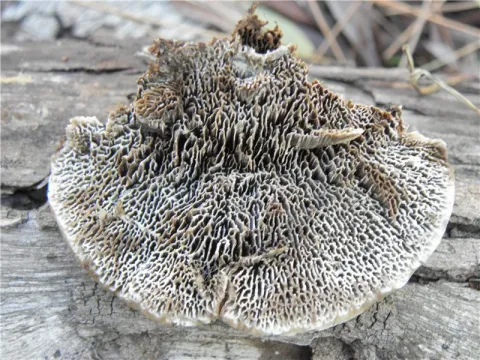
Coriolopsis gallica
Coriolopsis gallica
Coriolopsis gallica is a species of wood-decay fungus belonging to the Polyporaceae family. This basidiomycete acts as a primary decomposer of lignin and cellulose within tree trunks and branches.
What the section contains
Coriolopsis gallica
The fungus produces annual or sometimes perennial basidiocarps, which typically appear as woody, shelf-like structures on the bark. These fruiting bodies are the primary visible indicator of the internal infection.
As a specialized decomposer, the fungus uses extracellular enzymes to break down the complex structure of wood. This biological activity is essential in nature but destructive when it affects living trees.
The life cycle involves the release of basidiospores that travel through the air. Upon finding a suitable site with physical damage, the spores germinate and form mycelium, which penetrates deep into the sapwood and heartwood.
It is predominantly found on various deciduous tree species, although it can occasionally infest coniferous hosts if the conditions for infection are optimal.
The most evident sign of infestation is the emergence of bracket-like fruiting bodies. These appear on the trunk, main branches, or even near the base of the tree, often occurring in clusters.
Internal wood decay manifests as white rot, where the timber loses its structural integrity, becoming bleached, soft, and fibrous. This phase is often hidden from view until it is significantly advanced.
General tree decline is another major symptom. This includes foliage yellowing, reduced leaf size, and the gradual dying back of upper branches as the tree loses its ability to transport nutrients.
A hollow sound when tapping the trunk indicates internal wood degradation, suggesting that the fungus has successfully colonized the core of the tree.
Mechanical instability is a critical danger sign. Advanced decay makes trees prone to snapping, particularly during storms or under the weight of snow or high wind.
High humidity and moderate temperatures are the primary environmental drivers for Coriolopsis gallica growth. It thrives in shaded environments where moisture persists on tree surfaces.
Physical injuries serve as the main entry point for the fungus. Frost cracks, lightning damage, and improper pruning cuts without protective sealant are frequent infection sites.
Stressed trees, particularly those suffering from drought or soil nutrient deficiency, are significantly more susceptible to successful fungal colonization compared to healthy, vigorous specimens.
Poor airflow within dense groves or overgrown orchards can increase the concentration of spores and maintain a moist microclimate, facilitating the spread of the disease.
The infection rate typically peaks during the growing season when temperatures align with the fungus's metabolic needs for rapid mycelial expansion.
The primary economic impact is the irreversible destruction of timber value. Infested wood loses its mechanical strength and becomes useless for construction or carpentry.
The disease poses a severe risk to public safety in urban and recreational areas. Decayed trees can fall without warning, potentially causing injury or property damage.
The ecological impact involves the slow deterioration and ultimate death of trees that would otherwise have provided essential ecosystem services, such as oxygen production and shade.
The financial cost of managing this disease is high, as it requires specialized inspection, potential removal of large trees, and the safe disposal of infected woody debris.
In silviculture, the fungus reduces the overall yield of forests by shortening the lifespan of trees and decreasing the quality of the harvested wood products.
Sanitation is the most effective management strategy. This includes the removal and proper disposal of infected branches or entire trees to reduce the local inoculum density.
All pruning wounds should be treated with appropriate fungicides or wound paints to create a physical and chemical barrier against spore entry.
Promoting general tree vigor is a key preventive measure. Regular fertilization, correct irrigation, and soil management help trees maintain the defensive mechanisms necessary to resist fungal penetration.
During routine maintenance, workers should take care to avoid skinning the bark or damaging the cambium, as these wounds are primary access points for the fungus.
If decay is discovered, trees should be monitored closely for signs of structural failure; if the wood integrity is severely compromised, professional removal is the only safe option.