
Description
Symptoms
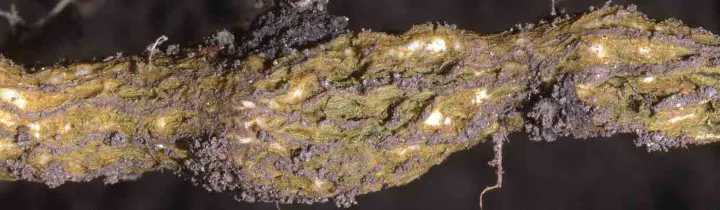
The primary symptom of the disease is the appearance of yellow to light brown lesions on the taproot and lateral roots. Over time, these lesions darken and become corky and brittle.
Affected lettuce plants exhibit stunted growth and reduced vigor. During periods of heat or water stress, the plants may wilt rapidly because the compromised root system cannot supply sufficient water to the foliage.
The outer layers of the roots become cracked and toughened, which is the most characteristic sign of the infection. The taproot may even decay or disappear entirely in severe cases.
Foliar symptoms often include yellowing of the lower leaves, which may look like nutrient deficiency, though it is actually a secondary effect of the failing root system.
In mature plants, infection leads to a smaller head size and overall poor commercial quality, making the crop unsalable. The roots lose their fine hair structures, which are vital for nutrient absorption.
Pathogen
The causative agent of this disease is the bacterium Rhizorhapis suberifaciens (formerly classified as Sphingomonas suberifaciens). It is a soil-borne pathogen that primarily infects lettuce crops.
Although commonly referred to as a root rot, the disease is bacterial in origin. The pathogen survives in the soil and can persist for long periods even in the absence of a host plant, making it a difficult disease to eradicate from field environments.
The bacteria colonize the root system, causing the cells to react by producing excessive cork-like tissue. This process disrupts the plant's ability to uptake water and nutrients effectively.
The pathogen can be disseminated through infested soil, contaminated irrigation water, and infected transplant seedlings. Farm equipment that is not properly sanitized between fields is also a major vector for spreading the bacteria.
There are different races of the pathogen, which can vary in their virulence. Understanding the specific race present in a particular geographic area is essential for selecting resistant lettuce varieties.
Conditions for development
Corky root rot development is highly favored by warm soil temperatures, generally between 18°C and 25°C. The disease activity is highest during the warmer months of the growing season.
Excessive soil moisture creates ideal conditions for the bacteria to multiply and spread throughout the root zone. Proper field drainage is vital for managing the severity of the infection.
Alkaline soil conditions are often associated with higher disease incidence. Adjusting the soil pH to a slightly acidic level can sometimes suppress the bacterial population.
Continuous cropping of lettuce on the same land facilitates the buildup of the pathogen in the soil. Without a proper crop rotation cycle, the disease pressure increases annually.
Physical injury to the root system, caused by cultivation equipment or soil insects, provides entry points for the bacteria to infect the roots more easily.
Why it matters
The disease causes significant economic losses by reducing the marketable yield of lettuce. Stunted and chlorotic plants do not meet the quality standards required for retail sales.
Severe infestations can lead to complete field failure, forcing growers to abandon the crop. This results in the loss of inputs such as seeds, fertilizers, and labor costs.
Plants weakened by Rhizorhapis suberifaciens are more susceptible to secondary pathogens and soil-borne insects, which can accelerate the death of the crop.
The persistence of the bacteria in the soil means that once a field is contaminated, future lettuce crops are at high risk, often necessitating expensive soil sterilization techniques.
The loss of uniformity in the crop makes harvesting more expensive and time-consuming, as individual plants may be in different stages of growth and health.
Protection
Crop rotation is the most effective cultural practice for managing Corky root rot. Alternating lettuce with non-host crops for at least 3-4 years helps reduce the bacterial population in the soil.
Planting resistant lettuce cultivars is the primary defense strategy for commercial growers. Breeders have developed various varieties that demonstrate high tolerance to the most common races of the pathogen.
Implementing strict hygiene protocols for equipment is essential. Cleaning tires and tools to remove soil before moving from infested fields to clean areas prevents the spread of the disease.
In protected cultivation, such as greenhouses, steam sterilization of the soil is highly effective at eliminating the bacteria and providing a clean start for the next crop.
- Ensure adequate soil drainage to prevent saturated conditions.
- Avoid over-fertilization, as high levels of nitrogen can sometimes exacerbate symptoms.
- Monitor soil pH and maintain it at levels less conducive to the pathogen.
- Remove and dispose of crop debris immediately after harvest to reduce the inoculum load.
Pathogens and affected parts
Affects crops · 1
Discussion
No discussions yet — be the first.