
Corky root rot of tomato
Pseudopyrenochaeta lycopersici
Description
Symptoms
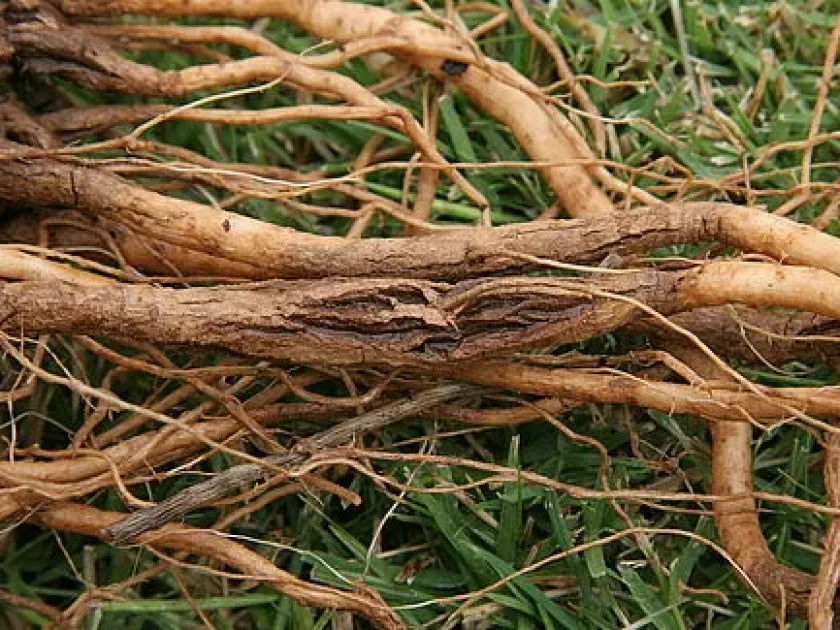
The first external signs of infection are small, brown lesions on the roots that eventually develop into characteristic corky cracks. These cork-like lesions give the disease its name and represent the destruction of the root's outer layers.
Above-ground symptoms initially manifest as stunted growth and chlorosis. Lower leaves typically show yellowing first, and as the season progresses, the entire plant may appear weak compared to healthy counterparts.
Plants often wilt during the hottest parts of the day because the damaged roots cannot keep up with transpiration rates. While the plants may recover at night, the progressive decay of the root system eventually makes this recovery impossible.
A closer inspection of the root system reveals a significant reduction in secondary roots. The primary roots become brittle, discolored, and covered in corky protrusions, drastically reducing the surface area available for nutrient uptake.
- Development of corky, brown lesions on the root surface.
- Stunted plant growth and reduced vigor.
- Chlorosis starting from the lower leaves.
- Wilting of the canopy during periods of high demand.
Pathogen
The causal agent of this disease is the soil-borne fungus Pseudopyrenochaeta lycopersici (formerly known as Pyrenochaeta lycopersici). This pathogen is a filamentous fungus specifically known for attacking the root systems of solanaceous crops.
The fungus survives in the soil for extended periods as resistant structures such as sclerotia and chlamydospores. This longevity makes it a persistent threat in greenhouses, where it can survive for many years in the absence of a host crop.
Infection begins when fungal hyphae come into contact with the root hairs of the tomato plant. The pathogen then penetrates the epidermal tissues, eventually colonizing the cortical tissue of the root and disrupting the plant's vascular integrity.
As the fungus develops, it systematically destroys the root's ability to transport water and essential nutrients to the rest of the plant. This internal damage is the root cause of the visible symptoms observed in the foliage.
Biological studies indicate that the fungus thrives under moderate temperature conditions common in protected agriculture, making it a challenging disease to manage in long-term greenhouse production cycles.
Conditions for development
The primary factor facilitating this disease is the lack of crop rotation in greenhouse settings. Repeatedly growing tomatoes in the same soil leads to a dangerous accumulation of the pathogen's inoculum.
The fungus develops optimally at soil temperatures ranging from 15 to 22 degrees Celsius (59 to 72 degrees Fahrenheit). These moderate temperatures are often found in greenhouse soils during the early stages of planting.
Poor drainage and low soil aeration create a perfect environment for the pathogen to thrive. Waterlogged soil stresses the tomato roots, making them significantly more susceptible to fungal infection.
Transmission of the disease is highly efficient via contaminated agricultural tools, irrigation water, and even soil clinging to footwear. This high mobility allows the disease to spread rapidly throughout a greenhouse if sanitary practices are neglected.
Environmental stress, such as sudden temperature fluctuations or poor light, can weaken the plant's natural defenses, allowing the fungus to colonize the root system much faster than it would on a healthy plant.
Why it matters
The economic impact of corky root rot is significant, primarily due to drastic reductions in yield. Because the root system is compromised, the plant cannot support the development of high-quality fruit, resulting in smaller, less marketable yields.
In severe cases, the disease leads to premature death of the tomato plants, necessitating early removal and replacement. This leads to gaps in production and overall loss of potential revenue for the grower.
Once established, the pathogen is extremely difficult to eradicate from the soil. Growers often face the prospect of costly soil sterilization or the complete replacement of growing media to maintain productivity.
The fruit that does manage to reach maturity on infected plants often suffers from poor flavor and irregular shape. This loss of quality negatively impacts the price the grower can command for their produce in the market.
Corky root rot remains a persistent, chronic issue that can destroy the profitability of a tomato enterprise if proactive management and preventative measures are not implemented correctly.
Protection
Effective management begins with rigorous crop rotation. Moving to non-host crops for several seasons can help reduce the population of Pseudopyrenochaeta lycopersici in the soil to more manageable levels.
The most reliable control method is the use of resistant or tolerant tomato hybrids. Many modern commercial varieties are bred specifically to withstand root rot pathogens, providing an essential layer of protection.
Strict sanitation protocols for greenhouse equipment and tools are mandatory. Disinfecting boots, tools, and irrigation lines helps break the cycle of infection and prevents the pathogen from moving between sections of the greenhouse.
Biocontrol agents, specifically Trichoderma species, have shown success in suppressing the disease. These beneficial fungi inhabit the rhizosphere and outcompete the pathogen for resources, protecting the developing tomato roots.
For high-pressure situations, steam sterilization of the soil is highly effective at eliminating the fungus. Alternatively, moving to soil-less production systems like rockwool or coco coir effectively eliminates the habitat for the pathogen.
Discussion
No discussions yet — be the first.