
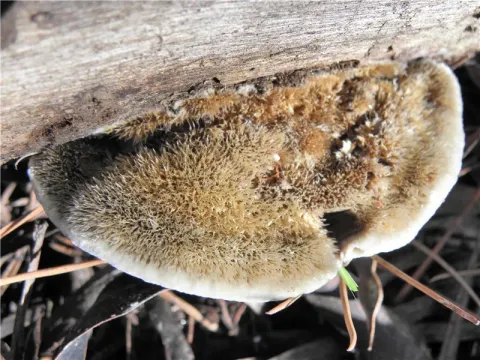
Coriolopsis
Coriolopsis
Coriolopsis is a genus of basidiomycete fungi belonging to the Polyporaceae family, known for causing white rot in various species of woody plants.
What the section contains
Coriolopsis
These fungi are highly efficient decomposers that specialize in breaking down lignin, which gives wood its structural strength and rigidity.
The pathogen reproduces through microscopic spores that are spread by wind, rain splashes, and insect activity across orchard or forest environments.
Once established, the fungus develops a complex network of mycelium that penetrates deep into the heartwood and sapwood of the host plant.
Coriolopsis can survive as a saprotroph on dead wood, but under favorable conditions, it acts as a facultative parasite that colonizes living hosts.
The most distinct sign of infection is the presence of tough, leathery, or velvety fruiting bodies that emerge from the bark of trunks, stumps, or large limbs.
Internal examination of affected wood reveals a bleached, fibrous, or spongy texture, which is a classic indicator of the white rot process.
Visible decline in the tree canopy, such as yellowing leaves or dieback of twigs, often accompanies the internal degradation caused by the fungus.
Bark cracking and peeling around the base or wounds are common sights, revealing the fungal mycelium growing beneath the surface.
In severe cases, the affected tree may show signs of structural instability, leaning significantly or exhibiting deep cavities where the wood has rotted away.
Coriolopsis thrives in environments with high humidity and moderate temperatures, which are essential for the germination and spread of its spores.
The fungus primarily enters trees through wounds caused by pruning, animal damage, frost cracks, or improper maintenance of the garden space.
Trees that are under stress due to drought, soil compaction, or nutrient deficiencies are significantly more susceptible to successful fungal colonization.
Poor ventilation and dense planting prevent the bark from drying out quickly, creating a microclimate that supports rapid fungal growth.
Lack of proper sanitation in the orchard, such as leaving piles of pruning debris, provides a continuous reservoir of inoculum for new infections.
The primary harm is the structural compromise of the wood, rendering trees dangerous and prone to failure during storms or high winds.
By disrupting the vascular system of the tree, the fungus prevents the efficient transport of water and nutrients, leading to a slow and inevitable death.
The degradation of wood quality makes it impossible to save the timber, leading to substantial economic losses in forest management and fruit production.
Coriolopsis is notoriously difficult to eliminate once it has colonized the heartwood, as the mycelium is shielded from external chemical treatments.
If left unmanaged, the tree can become a focal point of infestation, spreading spores to surrounding healthy plants and degrading the overall health of the ecosystem.
Effective control starts with rigorous sanitation, including the prompt removal and destruction of all infected wood and fruiting bodies.
Applying antiseptic treatments to pruning cuts is crucial to prevent the fungus from gaining a foothold in healthy tissue after maintenance work.
Maintaining vigorous tree health through balanced fertilization and correct irrigation practices helps the tree wall off and contain small infections.
Regular monitoring of trees for any signs of decay or the emergence of fungal fruiting bodies allows for early intervention before damage becomes severe.
- Remove all dead or decaying wood from the garden.
- Sanitize tools with alcohol or bleach after pruning infected trees.
- Avoid damaging the bark of trees with lawn mowers or trimmers.
- Promote good air circulation through proper spacing and canopy thinning.