
Cornelian cherry spot
Sphaerulina cornicola
Description
Symptoms
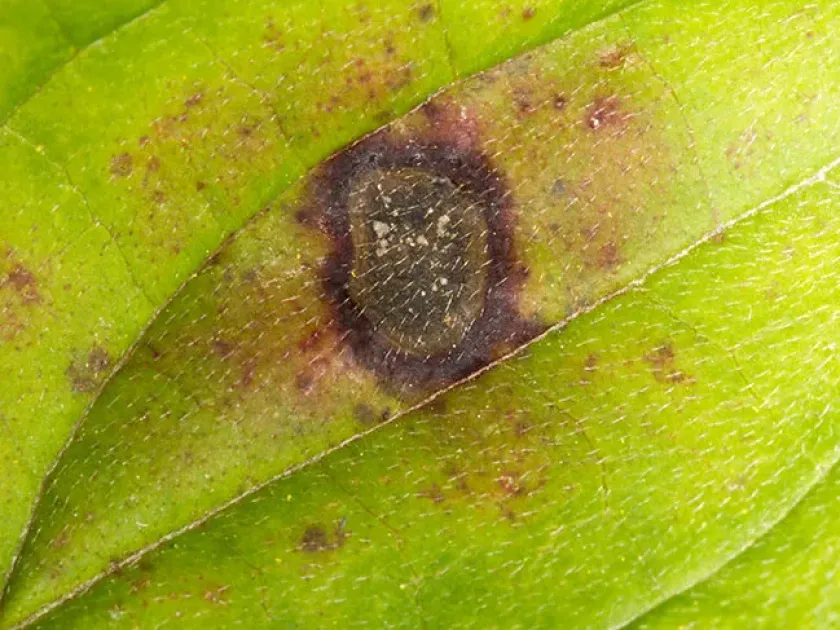
The primary symptom is the appearance of small, circular to irregular spots on the leaves. Initially, these spots are light brown and often surrounded by a darker border.
As the disease progresses, the spots expand and may coalesce, covering large sections of the leaf. Tiny, black, pin-point structures (the perithecia) often become visible on the surface of the spots.
Severely infected leaves show signs of yellowing, chlorosis, and curling. This leads to premature leaf drop, which often begins in late summer, well before the normal senescence period.
In some cases, the fungus also affects tender shoots, where it causes sunken, necrotic lesions. These areas may crack, providing entry points for other secondary pathogens.
- Circular brown leaf spots with dark borders.
- Black fruiting bodies visible on the leaf spots.
- Premature yellowing and leaf abscission.
- Necrotic lesions on young succulent shoots.
Pathogen
The disease is caused by the ascomycete fungus Sphaerulina cornicola. This pathogen specifically targets the tissues of the Cornelian cherry, interrupting essential physiological functions.
The fungus develops fruiting bodies called perithecia within the infected plant tissues. These structures produce spores that are responsible for the primary and secondary infection cycles.
The pathogen overwinters as mycelium in fallen leaves and on the bark of infected branches. In the spring, spores are released and disseminated by wind and splashing raindrops onto the foliage.
The biological cycle of Sphaerulina cornicola is highly dependent on environmental moisture. Once spores land on a host, they require a film of water to germinate and penetrate the leaf surface.
As the fungal mycelium grows, it invades the leaf parenchyma, leading to cell death. This degradation of tissue disrupts photosynthesis, eventually causing severe stress to the entire plant.
Conditions for development
Cornelian cherry spot thrives in conditions of high humidity and persistent rainfall. Rainy seasons provide the ideal environment for the rapid dissemination and germination of fungal spores.
Poorly ventilated planting sites with dense canopy growth create microclimates that trap moisture. This significantly increases the risk of successful fungal infection.
Optimal temperatures for the growth of Sphaerulina cornicola range from 18 to 25 degrees Celsius. During these temperatures, the incubation period is significantly reduced.
Lack of proper solar exposure or shading also makes the foliage more susceptible to infection. Healthy, vigorous plants with good sunlight access are generally more resistant.
Overhead irrigation systems can facilitate the spread of the fungus by washing spores from the top of the canopy to the lower leaves and maintaining constant moisture on the foliage.
Why it matters
The primary damage caused by this disease is the loss of photosynthetic leaf area, which reduces the plant's overall vigor. Premature leaf drop leaves the tree poorly prepared for winter dormancy.
The resulting physiological stress leads to a decrease in fruit quantity and quality. The fruit may become smaller, less juicy, and possess lower levels of nutrients and sugars.
Infection of succulent shoots can lead to tip dieback and may cause the branches to be more vulnerable to freeze damage during the winter months.
In nursery settings, the aesthetic damage and weakened state of the saplings significantly reduce their marketability and overall survival rates after planting.
Repeated annual infections create an accumulating reservoir of inoculum in the orchard, necessitating frequent chemical interventions and increasing maintenance costs.
Protection
Sanitation is the most effective management strategy. Removing and destroying fallen leaves during the autumn is crucial to eliminate the overwintering source of the fungus.
Pruning the canopy to improve air circulation and sunlight penetration is highly recommended. This helps leaves dry out more quickly after rain or dew, hindering spore germination.
Fungicidal treatments based on copper compounds are effective when applied during the dormant season. During the growing season, systemic fungicides can be used for targeted control.
Providing optimal growing conditions, including balanced fertilization with potassium and phosphorus, strengthens the plant's natural defense mechanisms against fungal pathogens.
Early diagnosis and routine monitoring are essential. Detecting the initial symptoms allows for prompt action, which can successfully prevent the disease from becoming a major outbreak.
Discussion
No discussions yet — be the first.