
Coriolus
Coriolus
Description
Symptoms
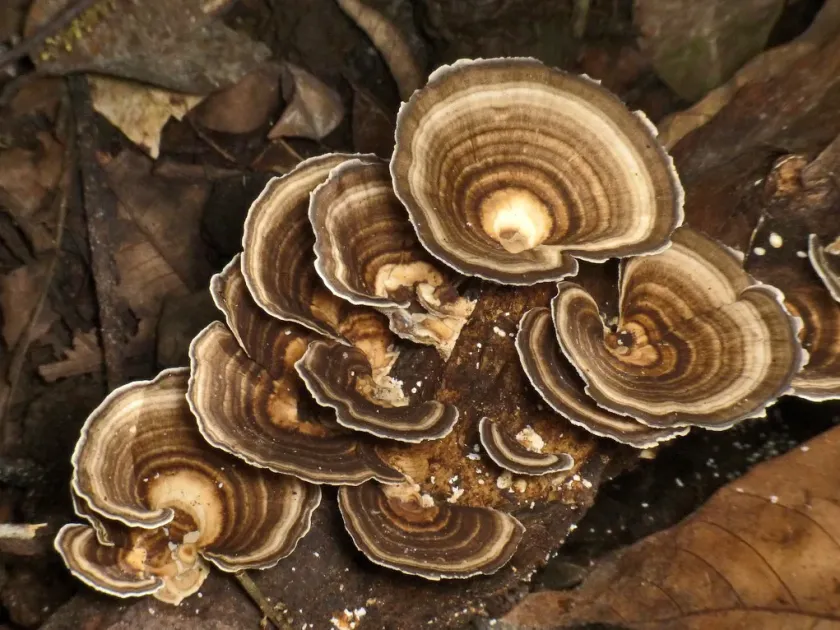
The most visible sign of a Coriolus infection is the presence of distinctive fruiting bodies on the trunk or branches. These are often fan-shaped and display multiple concentric color zones ranging from white to dark brown.
Internally, the wood undergoes a visible transformation. It becomes bleached, appearing significantly lighter than healthy wood, and develops a characteristic white, fibrous, or stringy texture.
Infected trees typically show signs of decline, such as canopy thinning, chlorosis, and the premature death of smaller twigs or entire branches. The structural stability of the tree is progressively compromised.
Cracking and peeling bark are often observed around the site of infection. This occurs as the fungus colonizes the cambium and xylem, causing internal pressure that forces the outer layers of the bark to break apart.
- Visible bracket-like fungal bodies on wood.
- White, fibrous appearance of decaying wood.
- Loss of structural strength and brittleness in limbs.
- Gradual crown dieback and decreased tree vigor.
Pathogen
Coriolus (often classified under the genus Trametes) is a genus of bracket fungi that are known as aggressive decomposers of wood. While they are beneficial in forest ecosystems as part of the nutrient cycle, they can be devastating in orchards and gardens.
The disease is caused by fungal spores that infect the tree through wounds, such as pruning cuts, broken branches, or frost cracks. Once inside, the mycelium begins to digest the structural components of the tree's wood.
The fungus produces extracellular enzymes, specifically laccases, which break down lignin and cellulose. This enzymatic action results in white rot, a condition where the wood loses its integrity and density, becoming soft and spongy.
Coriolus fungi are characterized by the production of shelf-like, leathery, or papery fruiting bodies on the bark of infected trees. These fruiting bodies are the reproductive structures that disperse spores.
These spores are primarily wind-dispersed, allowing the fungus to spread rapidly from a single infected source to other susceptible trees throughout the garden during favorable weather conditions.
Conditions for development
Coriolus thrives in environments with high humidity and moderate temperatures. It is particularly prevalent in densely planted, unpruned, or poorly ventilated areas where moisture remains trapped on the bark.
The fungus is most active during the growing season. Warm, wet weather patterns provide the ideal conditions for spore germination and rapid colonization of the host's inner tissues.
Stressed or mechanically damaged trees are highly susceptible to Coriolus infection. Any tree with unsealed wounds is an inviting target for spores traveling on the wind or via insects.
Lack of light and airflow within the garden canopy creates a microclimate that prevents bark from drying out after rain, significantly increasing the probability of a fungal attack.
Trees that are already suffering from nutrient deficiencies or root system issues have weaker defense mechanisms, making them unable to resist the entry and spread of the fungal mycelium.
Why it matters
The damage caused by Coriolus is profound as it directly affects the structural integrity of the tree. A tree heavily colonized by white rot is a hazard, as it can snap under strong winds or under the weight of its own fruit.
This fungus is a common killer of fruit-bearing trees. By destroying the vascular and structural tissues, it leads to a total failure in nutrient transport and eventually results in the death of the specimen.
In a horticultural setting, an infected tree is not just a loss; it acts as a reservoir of spores that can easily infect neighboring healthy plants, necessitating total removal.
Secondary colonization by wood-boring insects is almost inevitable once Coriolus has weakened the tree, further accelerating the decay process and making the wood unsalvageable.
The economic impact involves the loss of productive, mature trees that take many years to replace, alongside the costs associated with safe removal and sanitation of the site.
Protection
Prevention is the most effective management strategy. All pruning cuts must be made cleanly and sealed immediately with appropriate wound sealants to prevent spore entry.
Strict sanitation protocols must be followed. All pruning tools should be disinfected using 70% alcohol or bleach solutions between every cut to prevent the transfer of fungal material.
Trees showing signs of fruiting bodies should be inspected carefully. If an infection is localized, the decayed area can be surgically removed down to healthy tissue, followed by a disinfectant application.
Fungicidal treatments, especially those containing copper, can be used as a protective layer on the bark to prevent spores from germinating during high-risk weather windows.
Proper garden management, including adequate fertilization and watering, is essential. A healthy tree can better defend against fungal intrusions and recover more quickly from mechanical damage.
Discussion
No discussions yet — be the first.