
Corky root rot of tomato
Pyrenochaeta nobilis
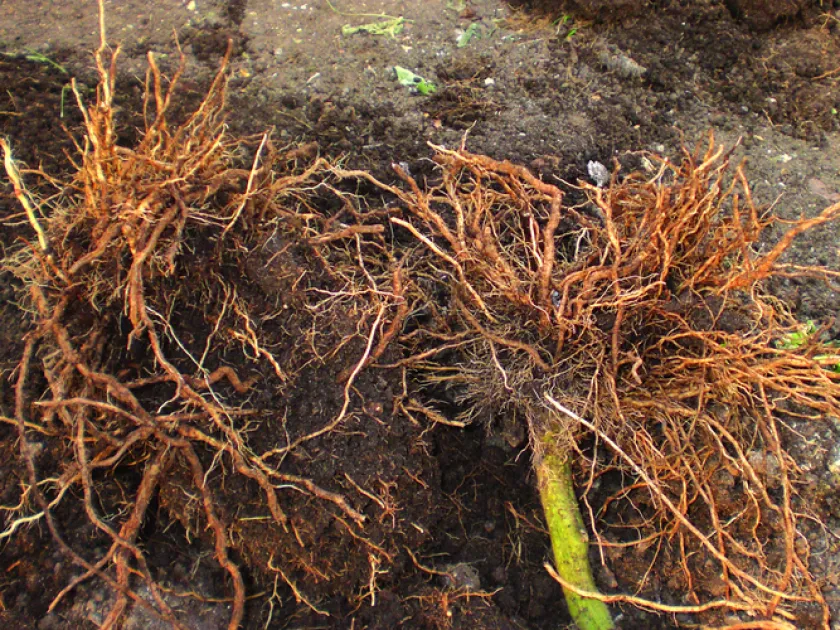
Description
Symptoms
Early symptoms include stunted plant growth and temporary wilting of foliage during the heat of the day, indicating impaired root function.
The name "corky root" derives from the appearance of the roots, which develop brown, scabby, or corky lesions along their surface.
As the infection progresses, the entire root system may become necrotic, brittle, and essentially non-functional, leading to a complete collapse of the plant.
Minute black dots, which are the fungal fruiting bodies (pycnidia), may appear on the decaying root tissues under magnification.
Plants affected by the disease exhibit chlorosis and significantly reduced yield, as they are no longer able to sustain metabolic demands.
Pathogen
The causative agent of corky root rot is the soil-borne fungus Pyrenochaeta lycopersici, which specifically targets the root system of solanaceous plants.
This pathogen survives in the soil for several years by forming dormant structures such as pycnidia and sclerotia, making eradication difficult.
The mycelium colonizes the root cortex, leading to cellular degradation and the eventual disruption of water and nutrient transport.
Infection cycles typically restart whenever tomatoes are grown continuously in the same soil without appropriate decontamination techniques.
The fungus is highly resilient and can colonize various weed species, which can serve as a reservoir for infection in greenhouse environments.
Conditions for development
The fungus thrives in cooler soil temperatures, typically ranging from 15 to 20 degrees Celsius, which makes it a common early-season problem.
Poor soil aeration, compaction, and excessive moisture levels significantly favor the spread and activity of the pathogen.
Greenhouse conditions, which provide a stable climate and continuous cropping, create the perfect environment for the build-up of the fungal population.
Soil pH levels and the availability of calcium can influence the severity of the disease in commercial tomato productions.
Human activity, including the movement of contaminated soil on machinery and boots, is a primary vector for spreading the pathogen between houses.
Why it matters
The primary economic impact of corky root rot is a substantial reduction in marketable tomato yield due to poor nutrient uptake.
Severely infected plants often die prematurely, leading to gaps in production and reduced overall efficiency of the growing cycle.
Fruit quality is also negatively affected, as the plants struggle to supply enough resources for proper fruit development and ripening.
Management costs increase significantly due to the need for soil sterilization, crop rotation, or the purchase of resistant grafting rootstocks.
The disease limits the long-term viability of using in-ground beds in greenhouses, eventually necessitating costly infrastructure upgrades.
Protection
Long-term crop rotation is the most effective cultural practice, typically requiring a 4- to 5-year break from solanaceous crops.
Utilizing grafting techniques where tomato scions are placed on disease-resistant rootstocks provides a powerful line of defense.
Implementing rigorous greenhouse sanitation protocols, including the sterilization of tools and equipment, is essential to prevent re-introduction.
- Steam sterilization of the soil before the planting season.
- Improving soil drainage and physical structure to prevent waterlogging.
- Application of biological control agents like Trichoderma species.
Monitoring soil moisture levels and avoiding over-irrigation can help mitigate the conditions that favor pathogen development.
Discussion
No discussions yet — be the first.