
Description
Symptoms
Above-ground symptoms are often generalized and include stunted plant height, chlorosis, and wilting during periods of moisture stress. These patches of poor growth are often initially misidentified as nutritional deficiencies.
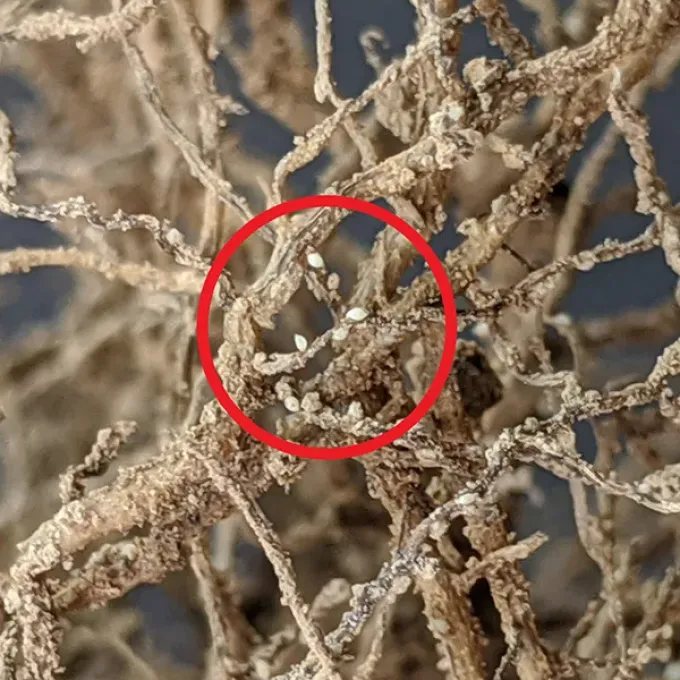
Affected plants exhibit a reduced root system, often with fewer fine roots. In cases of severe infestation, the roots may appear necrotic or show visible tiny, white to dark brown, lemon-shaped cysts.
Stunted plants tend to occur in irregular patterns or patches within the field. These areas correspond to the initial points of nematode infestation and expansion over consecutive cropping seasons.
Reduced vigor and delayed maturity are characteristic signs during the vegetative stage. In some cases, the plants fail to produce fully filled ears due to the impaired nutrient uptake caused by the parasitic damage.
Secondary infections by soil-borne fungi are frequently observed in nematode-damaged roots, which can lead to rapid root rot and further degradation of the plant's structural integrity.
Pathogen
The corn cyst nematode, known scientifically as Heterodera zeae, is a soil-borne plant-parasitic nematode belonging to the family Heteroderidae. It is considered a significant pathogen in maize-producing regions worldwide.
The parasite completes its life cycle within the root system of the host plant. Females swell into lemon-shaped cysts, which eventually contain hundreds of eggs, providing long-term survival in the soil.
It is an obligate parasite that interferes with root development by establishing feeding sites called syncytia. This process drains vital nutrients from the host plant, severely restricting its growth potential.
The host range is primarily limited to maize, but several grass species can also act as hosts. This makes the management of volunteer grasses in fields essential to suppress the nematode population.
Spread occurs through the movement of infested soil by farm machinery, wind, water runoff, and contaminated seeds or planting materials. Once introduced, the cyst stage can remain viable in the soil for several years.
Why it matters
The primary damage caused by Heterodera zeae is the disruption of water and nutrient transport to the aerial parts of the maize plant. This leads to substantial biomass loss and reduced yield.
Yield losses can be severe, often ranging between 20% and 50% depending on the initial population density and environmental stress. High nematode counts make maize cultivation uneconomical in infested fields.
Plants weakened by nematode damage are significantly more susceptible to drought, heat stress, and secondary pathogens. This synergy between biotic and abiotic stressors often leads to premature plant death.
The long-term persistence of cysts in the soil creates a permanent threat to future crops. Fields that have been infested require multiple years of non-host crops to significantly reduce the pathogen pressure.
Crop quality is also negatively impacted. The seeds produced on infested plants may be smaller, lighter, and possess lower nutritional value compared to healthy crops grown in non-infested soil.
Protection
Crop rotation is the most effective cultural practice for managing corn cyst nematode. Growing non-host crops such as soybeans, sunflowers, or various legumes for at least three seasons helps to deplete the population.
Using resistant or tolerant maize hybrids is a recommended strategy. While no complete immunity exists, modern hybrids are bred to limit nematode reproduction and sustain yield under pressure.
Strict sanitation protocols must be followed. Machinery should be thoroughly cleaned of soil before moving from infested fields to clean ones to prevent the spread of encysted eggs.
Effective weed control is critical. Removing grasses that can serve as alternative hosts keeps the nematode population from surviving or multiplying between corn seasons.
Integrated pest management (IPM) is the best approach. This includes a combination of early planting, proper irrigation, balanced fertilization, and the use of nematicides if economically justified and permitted by local regulations.
Pathogens and affected parts
Affects crops · 1
Discussion
No discussions yet — be the first.