
Clitocybula lacerata
Clitocybula lacerata
Description
Symptoms
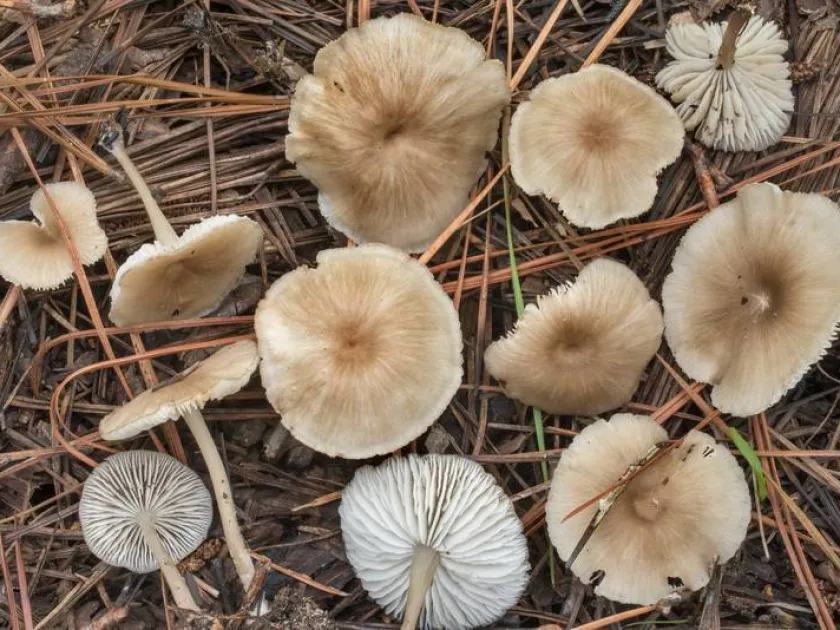
The most visible sign of infection is the development of fruit bodies with grayish-brown, often torn or lacerated caps, hence the species name.
Wood colonized by the fungus undergoes progressive structural changes, becoming soft, brittle, and eventually developing characteristic white rot.
Internal examination of infested wood reveals a dense network of mycelium spreading through the vascular tissues and breaking down the cellular structure.
Surface layers of the bark may show signs of cracking or discoloration as the fungus colonizes the underlying sapwood and heartwood.
In advanced stages, the wood loses its tensile strength, and the decay pattern becomes evident through cross-sectional analysis of the damaged logs.
Pathogen
Clitocybula lacerata is a wood-decaying fungus that belongs to the family Mycenaceae and is widely known for its saprotrophic activity.
This pathogen primary colonizes dead or decaying wood, particularly targeting the stumps, fallen logs, and dead branches of various hardwood species.
The mycelium of the fungus utilizes specialized enzymes to break down complex organic polymers such as lignin and cellulose, which constitute wood tissue.
Its biological cycle revolves around the production of basidiocarps, which emerge from the substrate to release spores into the surrounding environment.
While primarily a saprotroph, it can act as a secondary parasite, exploiting injuries on living trees to penetrate the protective bark layers.
Conditions for development
High moisture levels are the most critical factor for the successful establishment and vegetative growth of Clitocybula lacerata.
The fungus thrives in cool, humid climates, with peak activity typically observed during rainy seasons and autumn months.
High accumulations of woody debris and organic matter on the forest floor provide the necessary substrates for sustained spore production.
Poor airflow and dense canopy cover, which maintain high relative humidity levels, create ideal conditions for the rapid spread of the fungus.
Extended periods of moderate temperatures allow the fungus to effectively colonize both surface and internal layers of wood tissue.
Why it matters
The primary economic harm caused by this fungus is the degradation of timber quality, rendering logs unsuitable for construction or industrial use.
By breaking down wood fibers, the fungus reduces the structural integrity of trees, significantly increasing the risk of windthrow and breakage.
In forest ecosystems, excessive colonization can disrupt natural nutrient cycling and reduce the survival rate of already weakened tree stands.
The presence of Clitocybula lacerata acts as an infection reservoir, continuously releasing spores that pose a risk to nearby healthy wood.
If left unmanaged, the infestation can lead to significant biomass loss within forested areas, affecting both biodiversity and harvestable timber.
Protection
Sanitary forest management, including the regular removal of dead wood and diseased logs, is the most effective way to limit fungal outbreaks.
Preventing mechanical damage to the bark of living trees is essential, as wounds serve as primary entry points for fungal spores and mycelia.
Cleaning and disinfecting forestry tools between operations can prevent the spread of the pathogen from infected sites to healthy ones.
Maintaining proper tree spacing and density promotes adequate sunlight penetration and airflow, which discourages the growth of decay fungi.
Integrated monitoring programs should be used to detect signs of early decay, allowing for targeted interventions before the pathogen spreads further.
Discussion
No discussions yet — be the first.