
Description
Symptoms
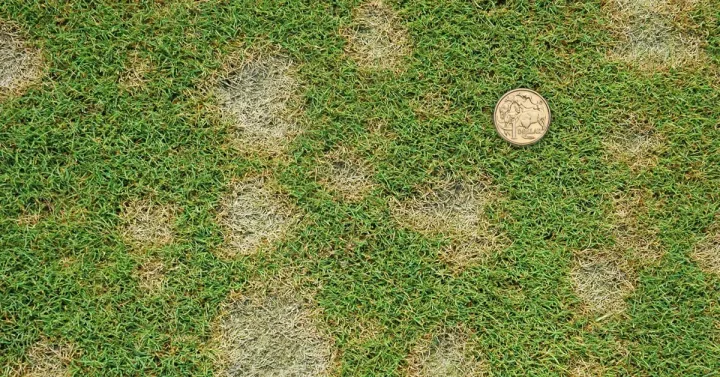
The most characteristic symptom is the appearance of small, circular, straw-colored spots, usually about the size of a silver dollar, which appear on the turf surface.
In the early stages, the spots may appear as bleached or chlorotic areas. As the disease advances, the grass blades within the spot die and become light tan or white.
During mornings with heavy dew or high humidity, a fluffy, white, cobweb-like mycelium can often be observed on the affected grass, confirming active fungal growth.
If left untreated, individual spots will coalesce to form large, irregular, blighted areas, leading to significant turf thinning and the loss of overall uniformity.
While the roots generally remain healthy, the loss of leaf tissue makes the plant unable to perform photosynthesis effectively, leading to localized dieback.
Pathogen
The causal agent of this disease is a fungal pathogen formerly known as Sclerotinia homoeocarpa, now reclassified into the genus Clarireedia homoeocarpa. It specifically targets amenity grasses and turf.
The fungus survives as dormant mycelium within the thatch layer and the crown of the plants, waiting for optimal conditions to restart its infection cycle.
Infection occurs when fungal hyphae enter the leaf tissue through wounds or natural openings. Once inside, the fungus secretes toxins that cause localized necrosis of the grass blades.
Dissemination of the pathogen happens through mechanical means, such as mower blades and foot traffic, as well as via wind-blown spores during periods of high humidity.
The biology of the organism is specialized for turfgrass environments, allowing it to persist even under intensive maintenance regimes if moisture levels are not managed correctly.
Conditions for development
Dollar spot thrives in warm weather, with temperatures ranging from 15°C to 30°C (60°F–85°F), accompanied by long periods of leaf wetness.
High humidity and consistent nocturnal dew formation are primary environmental drivers that trigger spore germination and infection cycles.
Low nitrogen levels in the soil are strongly linked to the severity of the outbreak, as nutrient-deficient turf lacks the vigor to resist fungal invasion.
Poor air circulation and heavy thatch accumulation prevent the turf from drying out, creating a persistent microclimate that favors the pathogen.
Over-irrigation or erratic watering schedules that keep the turf canopy moist for extended periods contribute significantly to the disease's spread.
Why it matters
Dollar spot significantly reduces the visual quality of turfgrass, making it a major concern for golf course superintendents and sports field managers.
The disease causes thinning of the grass canopy, which not only looks unsightly but also increases the risk of weed encroachment into the damaged patches.
Ongoing infection weakens the turfgrass, making it more susceptible to other biotic stresses, such as secondary pests and competitive invasive plant species.
In high-traffic areas, the loss of turf density leads to surface instability and reduced playability, necessitating costly repairs or complete reseeding.
Without intervention, chronic outbreaks can degrade the entire turf stand, requiring aggressive chemical and cultural recovery programs.
Protection
Management starts with sound fertility practices, ensuring that nitrogen levels are adequate to promote steady growth and recovery from stress.
Cultural control includes dew removal via mowing or dragging in the morning, which reduces the duration of leaf wetness and inhibits fungal activity.
Regular aeration and scarification help to manage thatch levels, thereby improving drainage and airflow within the turf canopy.
For severe infestations, fungicide programs utilizing products from different chemical classes, such as DMI or SDHI fungicides, are recommended for effective control.
- Maintain a consistent morning irrigation schedule to promote drying.
- Clean mowing equipment to prevent the spread of the pathogen.
- Select resistant turfgrass cultivars where possible.
- Promote good air circulation through pruning nearby obstacles.
Content graph
Connections · Dollar spot
Most often together:
Marketplace
Products · 15




RED MOUNTAIN
HIGHER FEDERAL INSTITUTE OF EDUCATION AND RESEARCH (HBL
Bentgrass
0
0
·
57
No offers
—
Details


Community
Discussion
No discussions yet — be the first.