
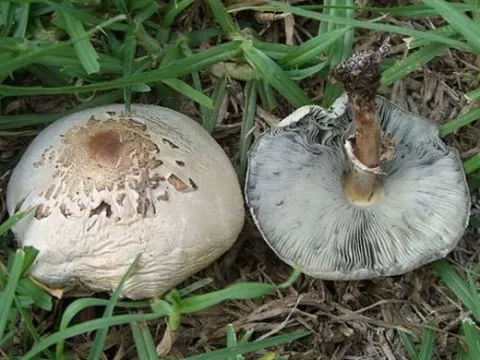
Chlorophyllum molybdites
Chlorophyllum molybdites
Chlorophyllum molybdites is a large saprotrophic fungus belonging to the Agaricaceae family. While it is not a direct phytopathogen that causes disease in crops, it is a common inhabitant of soil in lawns, gardens, and meadows.
What the section contains
Chlorophyllum molybdites
This fungus acts as a decomposer, breaking down organic matter within the soil. Although it does not infect living plant tissues, its mycelial networks can grow extensively, potentially altering soil nutrient profiles and moisture availability.
Widely known for its toxicity, Chlorophyllum molybdites is responsible for the majority of mushroom poisonings in many countries due to its resemblance to edible species such as the shaggy parasol or meadow mushrooms.
In an agricultural or horticultural setting, this fungus is seen as an unwanted organism that can colonize soil patches for many years, as the mycelium survives through long periods in a vegetative state.
The fungus is biologically adapted to thrive in disturbed soil, often appearing in manicured urban environments where organic matter accumulates in the topsoil layers.
The most visible sign of Chlorophyllum molybdites is the emergence of large, fleshy fruiting bodies, which can reach up to 30 cm in diameter. The cap is light-colored and covered with brownish scales.
The diagnostic feature of this species is the color of its gills. While they appear white in young specimens, they turn a distinct olive-green or leaden-gray color as the spores mature.
These mushrooms frequently grow in circular patterns known as "fairy rings." Within these circles, the grass may exhibit distinct growth patterns, ranging from localized lush green areas to patches of stunted growth.
Fruiting bodies often emerge in clusters following heavy rainfall or irrigation. They lack any distinct foul odor, which makes them particularly dangerous because people may mistakenly harvest them for consumption.
- Large caps with brownish scales.
- Prominent ring on the stalk.
- Olive-green spore print and gills at maturity.
- Formation of fairy rings on lawns.
This fungus thrives in rich, moist soil conditions. It is most active during warm summer and autumn months when temperature and soil moisture are optimal for fruiting body formation.
It is commonly found on well-fertilized lawns, golf courses, and meadows. Frequent irrigation of landscapes often creates the perfect environment for the fungus to initiate its fruiting stage.
Dispersal primarily occurs via spores carried by wind, water runoff, or the movement of contaminated soil. The mycelium is highly resilient and can colonize large areas over time.
The ideal temperature range for active growth is between 20 and 30 degrees Celsius. While it prefers moist conditions, the mycelium is capable of persisting in the soil during periods of drought.
High levels of organic matter, such as heavy mulching or applications of non-fully composted manure, can significantly encourage the development of this fungus.
The primary harm caused by Chlorophyllum molybdites is its severe toxicity to humans and pets. Consumption typically leads to intense gastrointestinal distress, including vomiting and diarrhea.
While the fungus does not damage crops directly, its presence is often indicative of poor soil management, specifically an excess of undecomposed organic matter and potential soil microbiome imbalances.
The formation of fairy rings can negatively impact the aesthetic quality of lawn grasses, sometimes requiring lawn renovation to restore a uniform appearance.
Presence of the fungus poses a safety risk, particularly to children and pets who may encounter these attractive but poisonous mushrooms while playing outdoors.
The biochemical activity of the fungus may also create temporary chemical imbalances in the soil that can affect the health of surrounding vegetation in the immediate vicinity of the rings.
The most effective management strategy is the physical removal of fruiting bodies as soon as they appear. Early removal is crucial to prevent the release of spores and the further spread of the fungus.
Adjusting the irrigation schedule to allow the soil surface to dry out between waterings can help inhibit the formation of mushrooms, as the fungus requires high moisture levels for fruiting.
Improving soil drainage and aeration can help manage the buildup of organic matter and encourage a healthier balance of soil microorganisms that compete with the fungus.
Avoiding the use of fresh manure or excessive organic fertilizers on lawns can reduce the food sources that Chlorophyllum molybdites relies upon for development.
In cases of severe infestation, replacing the top layer of soil or applying specialized soil conditioners may be necessary to displace the mycelium and discourage future growth.