
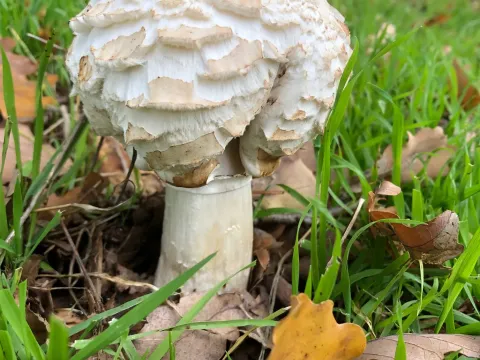
Chlorophyllum brunneum
Chlorophyllum brunneum
Chlorophyllum brunneum is a species of mushroom belonging to the Agaricaceae family. It functions primarily as a saprotroph, meaning it feeds on decaying organic matter rather than living plant tissues.
What the section contains
Chlorophyllum brunneum
The fungus is not a plant pathogen; it does not infect plant roots or stems. Instead, it plays a role in the natural decomposition cycle, breaking down humus and complex organic compounds in the soil.
Its life cycle involves the production of spores that disperse through wind and water. Upon landing in a nutrient-rich environment, these spores develop into a dense, underground mycelial network.
The fungus is highly adapted to cultivated soils, particularly those where organic fertilizers or wood-based mulch are applied in large quantities, providing a constant food source.
From an agronomic perspective, the presence of this fungus is an indicator of high organic activity, though its proliferation can sometimes be undesirable in managed horticultural settings.
The most visible sign of its presence is the appearance of fruiting bodies, typically characterized by a brown, scaly cap surface, usually appearing in late summer through autumn.
A key diagnostic feature of Chlorophyllum brunneum is the reaction of its flesh when bruised or cut. The white flesh turns a distinct reddish-brown or saffron color very quickly upon exposure to air.
The mycelium often forms white, thread-like structures beneath the soil surface or within the mulch layer, which can be observed when clearing away garden debris or turning the soil.
Growth patterns often include the formation of clusters or circular arrangements known as fairy rings. This indicates the radial expansion of the fungal colony as it exhausts local nutrients.
On lawns, the growth of these colonies can lead to discolored patches or localized turf dieback, as the underground mycelium can become dense enough to affect soil water absorption.
The development of this species is heavily dependent on soil moisture levels. High humidity and consistent rainfall are primary triggers for the emergence of its fruiting bodies.
Soil enriched with high nitrogen levels and significant organic content provides the ideal substrate for colonization. Areas with heavy mulch usage are particularly susceptible to rapid spread.
Warm temperatures, generally ranging from 18 to 25 degrees Celsius, facilitate optimal growth and reproductive cycles. During these conditions, the mycelium can expand significantly.
Shaded areas within a garden or orchard help maintain soil moisture and protect the underground mycelium from excessive heat, allowing the fungus to persist throughout the season.
Poorly drained soils or areas prone to waterlogging create stable, moist environments that support the sustained growth of the fungal network over multiple years.
While the fungus does not directly harm live plants through parasitism, it is classified as a toxic species to humans and animals if ingested. Ingestion can cause severe gastric distress.
The presence of dense mycelial mats can occasionally compete with young, shallow-rooted plants for nutrients and water, potentially causing minor stunted growth in sensitive species.
The primary concern for gardeners is the aesthetic disruption caused by fruiting bodies on lawns and flowerbeds, which may require manual removal to maintain the property's appearance.
In intensive cultivation areas, the fungus can create compacted soil patches due to its dense mycelial structure, which may hinder regular agricultural maintenance tasks.
The risk of accidental ingestion is a major safety concern, especially in private gardens where children or pets play frequently, making control measures necessary.
Manual removal of young fruiting bodies before they release spores is the most effective way to curb the spread and reduce the fungal population in the target area.
Improving soil drainage is a long-term solution. By reducing persistent soil moisture, you create an environment that is less favorable for the growth of this saprotrophic species.
Avoiding the use of excessive or uncomposted organic fertilizers and fresh wood mulch can significantly limit the available food supply, naturally checking the expansion of the colony.
Tilling the soil in the autumn can disturb the mycelial network, exposing it to cooler temperatures and potentially reducing its ability to survive the winter months.
Public awareness and restricted access to areas with high fungal activity are essential safety precautions to prevent accidental consumption by humans or livestock.