
Choanephora rot
Choanephoraceae
The disease is caused by the fungus Choanephora cucurbitarum, a member of the Choanephoraceae family and the Zygomycota phylum.
What the section contains
Choanephora rot
This pathogen acts as a facultative parasite, capable of surviving for long periods in the soil or on decaying organic plant debris as zygospores.
The fungus is characterized by the rapid production of conidia, which are easily disseminated by wind, splashing rain, and insect vectors.
Biologically, it thrives by exploiting both damaged and healthy tissues, releasing enzymes that break down plant cell walls to access nutrients.
It is particularly aggressive in humid environments, where its mycelial growth can colonize host tissues in a very short timeframe.
Initial symptoms appear as water-soaked lesions on leaves, stems, flowers, and young developing fruits.
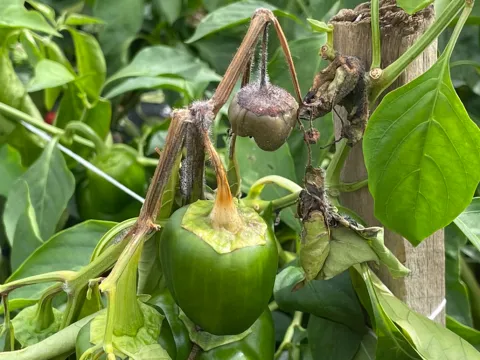
The most distinctive feature is the rapid formation of a dense, silvery-grey to white fungal mat, which is actually the sporangia of the pathogen.
In cucurbits, the disease often targets blossoms, causing them to rot and drop prematurely before successful fertilization occurs.
Fruits infected with Choanephora undergo a rapid, wet, soft rot that turns them into a mushy, dark-colored mass covered in fungal growth.
Affected stems may show tissue collapse, leading to permanent wilting and eventually the death of the entire plant.
High relative humidity, typically exceeding 80 percent, is the primary environmental prerequisite for the development of Choanephora rot.
Optimal temperatures for the rapid proliferation of the fungus range between 25 and 30 degrees Celsius.
Poor ventilation in greenhouses and overcrowding of plants create stagnant air pockets that favor disease outbreaks.
Mechanical damage to plants during cultivation, pruning, or harvest serves as an entry point for the fungus to initiate infection.
Frequent rainfall, fog, and heavy morning dews significantly increase the risk of rapid disease spread in open-field crops.
Choanephora rot poses a severe threat to various vegetable crops, including squash, peppers, and beans, significantly reducing marketable yield.
The disease can cause devastating losses, sometimes destroying the entire harvest if the conditions remain favorable for the pathogen.
Infected fruits are completely unmarketable and serve as concentrated reservoirs for further spread of the infection within the crop.
Early-season infections targeting the flowers can lead to total crop failure, as no fruit will be produced by the affected plants.
The speed at which the disease spreads necessitates constant vigilance and rapid response, increasing management costs for growers.
Implementing a proper crop rotation plan is essential to reduce the inoculum levels of Choanephora present in the soil.
Rigorous field sanitation, including the removal and destruction of all infected plant parts, is critical to limit disease carryover.
Improving air circulation through wider plant spacing and proper pruning helps keep the plant canopy dry and less conducive to infection.
Fungicide applications are most effective when timed preventatively or at the very first sight of symptom development.
- Use of drip irrigation to keep foliage dry.
- Selection of disease-resistant varieties.
- Control of insects that spread fungal spores.
- Sanitization of tools and greenhouse structures.
- Integration of biocontrol agents like Trichoderma.