
Chlorociboria rot
Chlorociboriaceae
Description
Symptoms
The primary symptom is a striking, intense green or turquoise stain throughout the affected wood. This discoloration is often deep and can be observed even when the wood is planed or cut.
Infected wood loses its structural integrity over time, becoming brittle and prone to breakage. Initially, the green stain may appear in patchy areas or along the grain before spreading throughout the mass.
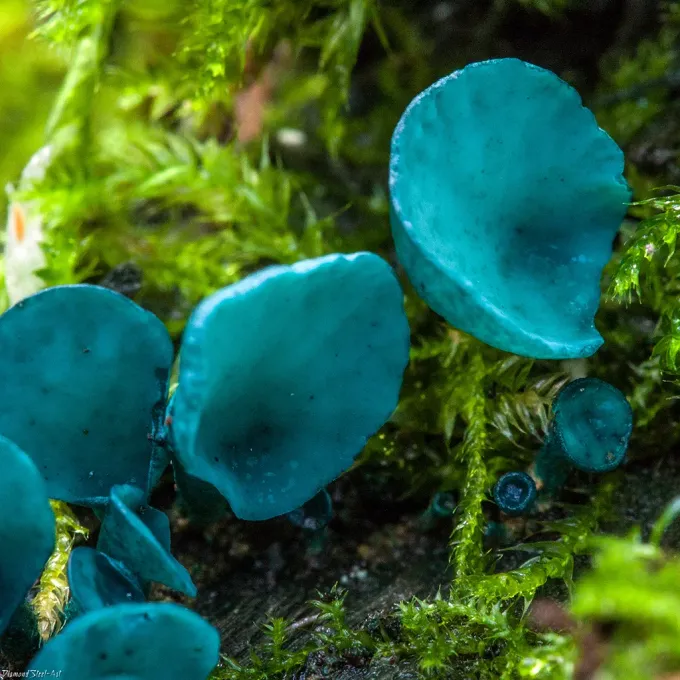
The presence of vibrant green, saucer-shaped fruiting bodies on dead branches, logs, or stumps is the most distinct macroscopic sign that the wood is colonized by Chlorociboria.
Internal wood inspection often reveals dark or green "zone lines"—mycelial structures that demarcate areas of colonization within the wood, signaling advanced decay activity.
While the wood remains physically intact for a longer period compared to other rot types, it eventually becomes soft and lacks the mechanical strength required for industrial or structural applications.
Pathogen
The disease is caused by fungi belonging to the genus Chlorociboria, with Chlorociboria aeruginascens being the most representative species. These fungi belong to the order Helotiales and are known as wood-decaying organisms.
As saprotrophic fungi, they specialize in breaking down lignin and cellulose within wood fibers. The fungal mycelium penetrates deep into the wood structure, systematically colonizing the host tissues.
A biological hallmark of this genus is the production of a secondary metabolite called xylindein. This stable pigment imparts a vivid blue-green or turquoise color to the wood, which is a unique trait among wood-decay fungi.
The reproductive stage involves the formation of small, cup-shaped fruiting bodies (apothecia). These structures are typically 5–10 mm in diameter and appear as vibrant green "discs" on the surface of infected wood.
Dissemination occurs via spores, which are carried by wind, rain, or insects. These spores land on exposed wood surfaces, such as cuts or cracks, initiating the infection cycle under suitable conditions.
Conditions for development
Chlorociboria thrives in high-humidity environments and moderate temperatures. The fungus is most active in damp forests, particularly in shaded areas with heavy leaf litter or fallen wood.
Wood in direct contact with damp soil is highly susceptible to infection. The constant supply of moisture creates an ideal microclimate for spore germination and mycelial expansion.
Mechanical damage to the bark, such as frost cracks, wind breakage, or logging scars, acts as a primary entry point for the fungus, allowing it to bypass the tree's natural defenses.
Poor ventilation in timber yards or storage facilities significantly increases the risk of infestation. Stagnant air and moisture buildup accelerate the colonization of timber stacks.
The optimal temperature for growth ranges from +15°C to +22°C. The fungus can survive in colder climates but exhibits significantly slower decay rates during off-season temperatures.
Why it matters
The main impact is the severe reduction in the aesthetic and commercial value of the wood. Stained timber is often rejected for high-end furniture or decorative woodworking applications.
The mechanical properties of the wood are degraded, making it unreliable for load-bearing structures. While it may look unique, its compromised integrity poses safety risks.
In forestry, the fungus accelerates the decomposition of woody debris, which is beneficial for nutrient cycling but can lead to rapid degradation of commercially valuable felled logs left unattended.
The irreversible nature of the green pigment means that the wood cannot be "cleaned" or restored, leading to significant economic losses for timber producers.
Infection can spread from fallen logs or debris to healthy parts of nearby trees if those trees have pre-existing wounds, though the fungus is generally considered a weak pathogen of living trees.
Protection
Sanitation is the primary control measure. Removing dead wood, fallen branches, and stumps from forest sites reduces the inoculum load and prevents the fungus from flourishing.
Proper storage is essential: timber should be stacked in well-ventilated areas, kept off the ground using racks, and protected from direct rainfall to maintain low moisture levels.
Preventing mechanical damage during forest management practices helps maintain the integrity of tree bark, which serves as a vital physical barrier against fungal spores.
Chemical protection using wood preservatives or fungicides can be applied to valuable timber to prevent colonization by fungal spores, especially during transit or long-term storage.
Kiln drying is a highly effective method to eliminate active mycelium. By reducing the wood moisture content below the threshold required for fungal growth, the decay process is completely halted.
Discussion
No discussions yet — be the first.