
Chlorospleniaceae
Chlorospleniaceae
The family Chlorospleniaceae includes several species of ascomycetous fungi characterized by their unique interaction with woody substrates.
What the section contains
Chlorospleniaceae
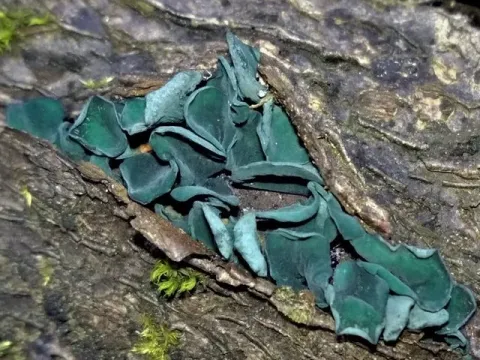
The most notable representative is Chlorosplenium aeruginosum, often called the green elf cup, which is a wood-inhabiting fungus.
These fungi generally function as saprotrophs, breaking down decaying wood, but they can act opportunistically on stressed or weakened trees.
The mycelium of these fungi colonizes the xylem, penetrating deeply into the wood tissue to access nutrients necessary for their development.
Reproductive structures appear as small, cup-shaped fruiting bodies, which are typically bright green or turquoise, indicating the presence of specific fungal pigments.
The most prominent sign of infection is a vivid green or bluish stain that deeply penetrates the wood fibers of the host tree.
This coloration is caused by the synthesis of a pigment known as xylindein, which is deposited within the wood cells by the fungal mycelium.
During humid seasons, small, disc-shaped fruiting bodies emerge on the surface of the bark or decaying wood, signaling an active infestation.
The infected wood progressively loses structural integrity, becoming brittle and prone to fragmentation even under light mechanical pressure.
In advanced stages, the internal layers of the wood exhibit significant degradation, showing signs of soft rot that compromises the stability of the tree.
Chlorospleniaceae thrive primarily in high-moisture environments where the wood surface remains damp for extended periods.
Poor ventilation, shade, and proximity to standing water are ideal conditions for the colonization and spread of these fungal pathogens.
Temperatures ranging from 10°C to 20°C are particularly conducive to the rapid growth of the mycelial network within the wooden substrate.
Mechanical damage, such as bark cracks or pruning wounds, provides the essential entry points for spores to infect the tree's inner tissues.
Prolonged rainy weather encourages the maturation of the cup-shaped fruiting bodies, leading to the release of millions of spores into the environment.
The primary concern is the significant aesthetic and structural damage caused to wood, making it unusable for high-quality carpentry or construction.
The infection accelerates the decomposition of wood, which, in the case of standing trees, leads to premature decline and increased risk of collapse.
The presence of this fungus significantly reduces the economic value of timber, as the green stain is often considered a defect in the industry.
Weakened trees are more susceptible to secondary attacks from insects and other pathogens that exploit the already compromised tree health.
If left unchecked in a forest or garden setting, the fungi can become a persistent source of spores, affecting a wide range of neighboring trees.
Rigorous sanitation practices, including the removal and disposal of infected wood, are the most effective way to limit the fungal population.
Pruning cuts should be treated with appropriate sealants or fungicides to create a physical barrier against spore infiltration in healthy tissue.
Maintaining optimal tree vigor through balanced fertilization and proper irrigation helps the tree resist fungal encroachment more effectively.
Improving the drainage and air circulation around trees reduces the surface moisture levels, making the environment unfavorable for the fungus.
Regular monitoring of trees for any signs of green discoloration or cup-like fruiting bodies is critical for early detection and mitigation.