
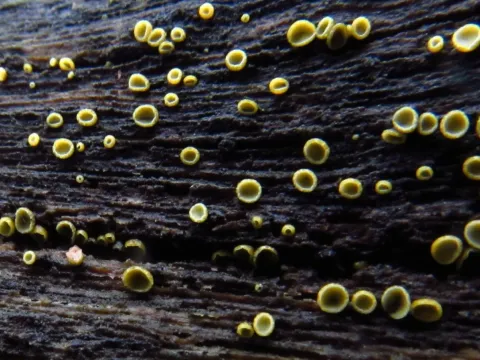
Chlorosplenium chlora
Chlorosplenium chlora
The causative agent of this condition is the fungus Chlorosplenium chlora (often categorized as Chlorociboria chlora), a member of the Ascomycota division. It acts as a wood-decay fungus that primarily thrives on dead or weakened woody tissues.
What the section contains
Chlorosplenium chlora
Biologically, the fungus is known for its specialized enzymatic system capable of breaking down complex cellulose and lignin structures in timber. It plays a significant role as a decomposer within forest ecosystems.
The species produces small, cup-shaped fruiting bodies known as apothecia. These structures are distinctively bright green, which is a key diagnostic feature for identifying the presence of this pathogen in the wild.
Spores are dispersed primarily by wind and splashing water, allowing the fungus to colonize new substrates rapidly when moisture conditions are favorable. It typically colonizes areas with high sapwood content.
The pathogen is highly resilient and can persist in the environment for years, waiting for ideal conditions to initiate the growth of its vegetative mycelium throughout the host's woody structure.
The most prominent sign of Chlorosplenium chlora infection is an intense, vivid emerald-green staining of the wood. This pigment is deeply embedded in the wood fibers and is resistant to fading over time.
Externally, affected wood may appear relatively normal, but internal staining becomes obvious upon cutting or splitting the log. The wood tissue may appear somewhat softer or brittle compared to healthy sections.
During the humid autumn season, small, bright green, disc-like fruiting bodies emerge on the surface of the bark or exposed wood. These are easily identifiable due to their striking, non-natural color.
The mycelium of the fungus can also be found in cracks and under the bark, appearing as fine, fibrous threads. In advanced stages of colonization, the structural integrity of the wood is visibly compromised.
Microscopic examination reveals dense hyphal networks filling the xylem vessels. This colonization leads to the characteristic color change that serves as a diagnostic marker for forest pathologists.
The fungus thrives in environments with persistently high humidity. Moisture levels in the wood must be sufficient to facilitate the germination of spores and the subsequent expansion of the mycelium.
Temperature plays a crucial role in development; moderate, cool temperatures typical of autumn or wet spring months are most conducive to the growth of Chlorosplenium chlora.
Mechanical damage to the bark acts as a primary entry point for the fungus. Injuries caused by heavy machinery, wildlife, or wood-boring insects provide the necessary access to the internal woody tissues.
Shaded, stagnant areas with poor air circulation contribute to the retention of spores and moisture, creating a perfect microclimate for the fungus to establish itself and spread to neighboring trees.
The presence of fallen logs, brushwood, and logging residues in the forest creates a large reservoir of inoculum, allowing the fungus to proliferate and increase its impact on the surrounding healthy forest stand.
The primary concern regarding this fungus is the aesthetic degradation of timber. The intense green staining makes the wood undesirable for high-quality carpentry, furniture making, and architectural finishings.
Although it rarely acts as a primary parasite for healthy, vigorous trees, it weakens the plant's overall vitality. This stress makes the host more susceptible to secondary attacks by other, more aggressive decay pathogens.
In forestry, the presence of this fungus results in significant economic losses. Timber lots affected by green stain are often downgraded in quality, leading to lower market prices and loss of utility.
The structural degradation caused by the fungus reduces the mechanical strength of the wood, which is particularly hazardous when considering wood used in construction and load-bearing structures.
Ecologically, the dominance of Chlorosplenium chlora in certain areas may alter the local mycological diversity, as it aggressively outcompetes other native decomposers for the available woody substrate.
Sanitation felling is the most effective method for controlling the spread of the fungus. Removing infected logs, brush, and windthrown trees significantly reduces the amount of spores in the forest.
Improving forest stand health through thinning helps increase air circulation and reduce humidity levels, making the environment less hospitable for the growth of Chlorosplenium chlora.
Protecting living trees from mechanical injury is essential. Reducing damage during logging operations or thinning processes prevents the entry of spores and minimizes the risk of colonization.
At wood processing facilities, it is crucial to ensure that timber is stored in dry, well-ventilated conditions. Elevating logs above the soil surface prevents moisture uptake and subsequent fungal development.
For high-value wood, the application of chemical wood preservatives or biocides can effectively stop fungal colonization. However, for large forest areas, maintaining good silvicultural practices remains the best preventative strategy.