
Chlorociboria
Chlorociboria
The disease is caused by fungi of the genus Chlorociboria, most notably Chlorociboria aeruginascens. These organisms are saprotrophic ascomycetes that primarily decompose lignin and cellulose in dead wood.
What the section contains
Chlorociboria
The fungus produces a specific secondary metabolite known as xylindein. This pigment is responsible for the intense turquoise or blue-green color that penetrates the wood fibers, creating a distinct visual mark.
Reproduction occurs via spores, which are dispersed by wind and insects. Once spores land on a suitable moist substrate, they germinate and form a mycelium that systematically colonizes the internal wood structure.
In forest ecosystems, Chlorociboria acts as a pioneer species. It initiates the decomposition process, creating a pathway for other microorganisms to break down the organic matter further.
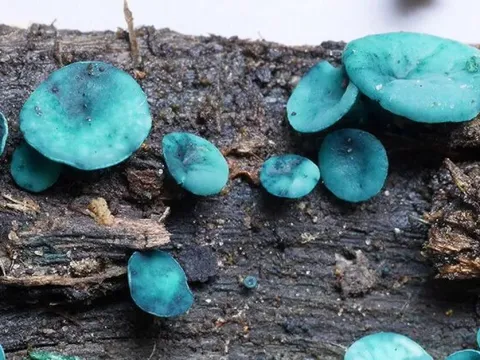
The life cycle features the production of small, disc-shaped, bright blue apothecia that emerge from the wood surface when environmental conditions are sufficiently humid.
The primary symptom is a permanent and uniform blue-green staining of the wood. This pigment is highly stable and does not fade significantly over time, even after the wood has been dried.
Small, cup-shaped fruiting bodies, typically ranging from 5 to 10 mm in diameter, appear on the surface of infected branches, logs, or stored timber, providing visual confirmation of the fungus's presence.
Over time, the wood structure undergoes subtle degradation, leading to increased brittleness as the fungal enzymes break down the lignin that holds the cellulose structure together.
Infection is most common in broad-leaved tree species, including oak, beech, and alder, especially in wood that has been left in direct contact with the ground.
Microscopic analysis reveals that the fungal hyphae fill the wood vessels, which explains the even distribution of the color throughout the infected sapwood and heartwood.
Chlorociboria thrives in conditions of high wood moisture, requiring levels above 30% to maintain active mycelial growth. This makes freshly cut or damp wood particularly susceptible.
The optimal temperature range for the development of the fungus is between 15°C and 25°C. It prefers cool, shaded environments where the air circulation is restricted.
Direct contact with damp soil provides a continuous supply of moisture and facilitates the initial inoculation of the wood with spores from the forest floor.
The duration of the colonization process depends on the density of the wood species; however, once established, the fungus can penetrate deep into the timber within a single season.
Spring and autumn, characterized by frequent rainfall and mild temperatures, represent the peak periods for sporulation and the subsequent colonization of new wood substrates.
Chlorociboria is not a pathogen of living trees and does not cause tree death. Its impact is purely related to the economic devaluation of timber products intended for commercial use.
For standard construction and high-quality cabinetry, the blue-green staining is considered a defect, as it deviates from the natural color expected in the final product.
Conversely, in the niche market of woodworking and craft, wood stained by Chlorociboria is highly sought after as a decorative material, often referred to as "green oak" or "blue wood."
In industrial forestry, the presence of this fungus is an indicator of poor management or improper storage conditions, which can lower the grade and market value of the harvested material.
Prolonged exposure to the fungus eventually results in a loss of structural integrity, reducing the mechanical strength of the wood and making it unsuitable for heavy-load-bearing applications.
The most effective strategy is the immediate removal of harvested timber from the forest and the implementation of rapid kiln drying or air drying to reduce moisture levels below 20%.
Timber should be stored on raised platforms or racks to prevent contact with the damp ground and to facilitate air circulation, which inhibits the growth of the fungus.
The application of wood preservatives or anti-sapstain fungicides can protect the material during temporary storage in humid environments where drying is not immediately possible.
Good forest hygiene, including the clearing of brush and debris, helps minimize the spore load in the immediate area and reduces the potential for timber contamination.
Periodic monitoring of timber stockpiles is essential. Any signs of initial staining should trigger immediate sorting and the isolation of infected materials to prevent the spread of the fungus.