
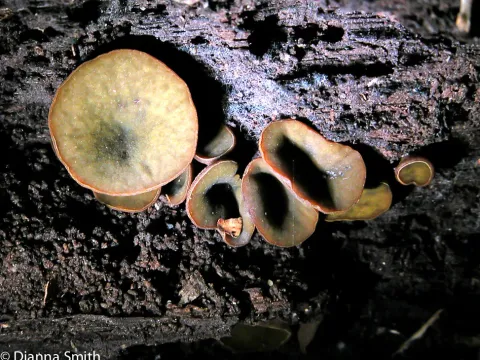
Chlorencoelia versiformis
Chlorencoelia versiformis
Chlorencoelia versiformis is typically identified by its distinct fruiting bodies that appear on decaying hardwood logs or stumps. These are small, cup-shaped structures with a bright green, olive, or yellowish-green hue.
What the section contains
Chlorencoelia versiformis
The fruiting bodies often display an irregular, variable shape, which is a defining characteristic of this species. They may grow in clusters and can be found attached directly to the wood or via a short stem.
The presence of this fungus is often indicated by the degradation of the wood structure, which becomes brittle and may show color changes due to the enzymatic breakdown of the substrate.
During periods of high humidity, the fruiting bodies become gelatinous and more prominent in appearance. Conversely, in dry weather, they shrink and become tough, often turning brownish in color.
Microscopic examination reveals the spores of the fungus, which are spread by wind and moisture, allowing it to colonize new sites on exposed or damaged bark surfaces.
The pathogen is the ascomycete fungus Chlorencoelia versiformis, a member of the Helotiales order. It is primarily classified as a saprotrophic fungus that thrives on decomposing woody matter.
Although it is a decomposer, it can occasionally act as a opportunistic pathogen, infecting stressed or wounded trees where natural defenses have been compromised.
The fungus develops a widespread mycelial network inside the timber, which continuously breaks down cellulose and lignin, effectively recycling dead wood back into the soil ecosystem.
The life cycle involves the formation of ascospores within the cup-like fruiting bodies, which are released and dispersed to find suitable substrates for new colonization.
As a resilient organism, it can adapt to various hardwood species, including oak, beech, and birch, utilizing their resources through chemical degradation.
The development of Chlorencoelia versiformis is highly dependent on environmental moisture levels. It favors deep shade and persistent dampness found in dense forest understories.
The fungus thrives in moderate temperature ranges, typically between 15 to 22 degrees Celsius, which are ideal for its mycelial growth and fruit body production.
Wounded bark, frost cracks, or mechanical damage from logging activities provide perfect entry points for the fungus to establish itself in both dead and weakened living wood.
High humidity levels and low air circulation around the substrate encourage the rapid formation of new fruiting bodies, leading to localized clusters of the fungus.
Old-growth forests with an abundance of fallen woody debris provide an optimal reservoir for this fungus to persist and spread to nearby vulnerable vegetation.
The primary impact of Chlorencoelia versiformis is the accelerated decay of wood, which reduces the structural integrity of timber and impacts the long-term health of forest stands.
In cases where the fungus colonizes living trees through wounds, it can lead to localized rot, which disrupts the transport of water and nutrients within the tree.
Forestry operations may suffer economic losses due to the degradation of timber quality, making the wood unsuitable for construction or high-value carpentry uses.
From an aesthetic perspective, the presence of the fungus in ornamental gardens is undesirable and often necessitates the removal of affected branches or entire trees.
By weakening the structure of woody plants, it increases the risk of mechanical failure during high winds, posing a safety risk in public areas and managed parks.
Effective control involves rigorous sanitation practices, including the prompt removal and disposal of dead, infected, or damaged wood to prevent spore buildup.
Tree wounds caused by storms or maintenance should be treated with appropriate sealants or wound paints to protect the exposed wood from fungal spores.
Improving the airflow and light penetration in dense plantations can create a less favorable microclimate for the fungus, thereby inhibiting its spread.
Regular monitoring of trees for early signs of decay is essential, especially in areas with a history of fungal infestations or high humidity levels.
- Remove decaying wood and logging slash.
- Apply wound dressings to prevent infection.
- Promote forest ventilation.
- Monitor health of hardwood species.