
Chlorencoelia
Chlorencoelia
Chlorencoelia is a genus of fungi within the class Leotiomycetes that typically behaves as a saprotroph, though it can exploit weakened tree tissues.
What the section contains
Chlorencoelia
These fungi are commonly found on decaying logs and branches of various broad-leaved trees, particularly oak and beech.
As an ascomycete fungus, it spreads primarily through the release of spores that settle on damaged or moist bark surfaces.
The mycelium of the fungus penetrates deeply into the woody substrate, breaking down organic components and utilizing them for its growth and reproductive phases.
While it plays an ecological role in wood decomposition, its presence on live but stressed trees qualifies it as a significant agricultural and forestry concern.
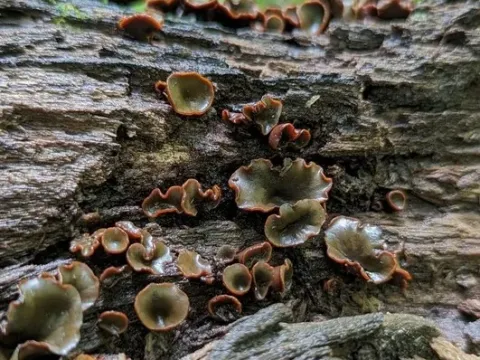
The most identifiable sign of a Chlorencoelia infection is the presence of distinctive bright green or yellowish-green cup-shaped fruit bodies.
These small, disc-like structures grow in clusters on the surface of the bark, signaling that the fungal colony is well-established within the host wood.
Infected bark tends to lose its natural integrity, becoming soft, brittle, and eventually peeling away from the underlying wood.
There is often a visible discoloration of the affected woody tissue, ranging from light staining to more pronounced rot patterns.
Localized necrosis may develop around the colonization sites, further weakening the tree's defensive barriers against secondary pathogens.
The development of Chlorencoelia is heavily dependent on high humidity and the presence of persistent surface moisture on wood.
Damp, shaded environments with poor air circulation create the perfect microclimate for the fungus to thrive and produce its fruit bodies.
Trees are most vulnerable when they have existing wounds, cracks, or mechanical damage that exposes the inner wood to fungal spores.
Cool to moderate temperatures, especially during humid spring or autumn periods, significantly accelerate the growth and spread of the fungus.
Proximity to decaying organic matter or deadwood in a forest setting provides a continuous source of inoculum for healthy but weakened trees.
The primary harm caused by this fungus is the degradation of wood quality, leading to internal decay and reduced structural strength.
The disease drains the tree's vitality, making it increasingly susceptible to further stress factors and opportunistic pathogens.
Loss of bark integrity compromises the tree's vascular health, interfering with the transport of water and essential nutrients.
In aesthetic and landscape settings, the damage can significantly reduce the ornamental value of trees, leading to costly removals.
Over time, unchecked infections can compromise the overall stability of the tree, posing a risk of branch failure or total tree death.
Effective management begins with strict sanitation practices, including the removal and disposal of deadwood that harbors the fungus.
Improving forest health through selective thinning helps increase sunlight and airflow, creating a drier environment that inhibits fungal growth.
Prompt application of protective sealants to tree wounds and pruning cuts is essential to prevent spores from entering the inner tissues.
Regular monitoring and survey of trees allow for the early identification of infections, enabling timely intervention before the disease spreads.
Maintaining high tree vigor through proper fertilization and irrigation helps trees build a natural defense against potential fungal colonization.