
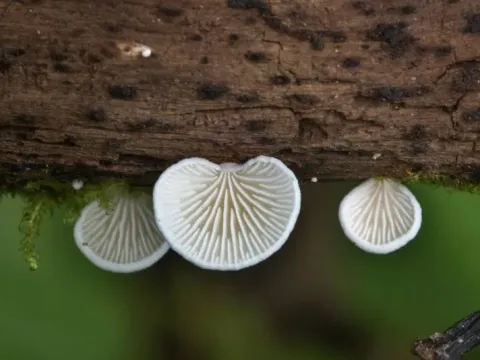
Cheimonophyllum
Cheimonophyllum
Cheimonophyllum is a genus of fungi belonging to the Niaceae family. Although strictly classified as xylotrophic saprotrophs in an agronomic sense, they can act as secondary pathogens affecting weakened woody plants.
What the section contains
Cheimonophyllum
This fungus features characteristic fruit bodies, often whitish or cream-colored, which develop on dead or damaged wood of deciduous tree species.
The biology of the pathogen is closely linked to the degradation of lignin and cellulose, making it an active participant in the biodegradation process of plant debris.
Unlike parasitic fungi, Cheimonophyllum is not an aggressive invader of healthy tissues, preferring to develop on substrates that have already lost their natural defensive capabilities.
The name is derived from Greek roots, indicating a preference for cool conditions, which determines its seasonal activity during autumn, winter, or early spring.
The first sign of the fungus's presence is the emergence of small, sessile, or short-stalked fruit bodies on the bark or wood of trunks and branches.
Tissues beneath the site of fungal development become soft, friable, and often change color, indicating the onset of deep wood decay.
On affected areas, bark peeling may be observed, providing access for secondary infections, including bacterial and other fungal pathogens.
The internal structure of the wood becomes spongy after prolonged colonization, losing mechanical strength and leading to branch breakage.
Upon examination, whitish mycelial hyphae can be found penetrating cracks and bark damage, which serve as entry points for the colony.
Fungal development is most intense under high humidity and moderately cool temperatures, typical of forest ecosystems.
Open wounds on trees, caused by pruning, wind damage, or frost cracks, create optimal conditions for initial colonization by spores.
Poor ventilation in plantations and moisture accumulation at the base of the trunk promote the rapid spread of mycelium across the substrate surface.
Weakened plants with low immune resistance, suffering from nutrient deficiencies or pest pressure, are more susceptible to the development of such xylotrophs.
Infection often occurs in areas of dense canopy closure, where a specific microclimate with high levels of surface condensation is created.
The primary risk lies in the structural weakening of woody plants, which may lead to their premature death.
The fungus facilitates the spread of rots that, when progressing, can cover significant areas of the trunk, rendering the tree potentially hazardous during strong winds.
In orchard management, the presence of the fungus is an indicator of poor plant health, requiring immediate sanitary pruning and wound treatment.
Indirect harm occurs as infected areas become reservoirs for wood-boring insects, further destroying the tree structure.
Disruption of sap flow due to the destruction of conductive tissues leads to stunted growth, reduced yields, and loss of ornamental value.
The primary control measure is timely sanitary pruning of all dead and damaged branches that serve as a primary substrate for the fungus.
All cut surfaces must be treated with specialized wound-healing garden pastes containing fungicidal components to prevent sporulation.
Ensuring good aeration within the tree canopy through regular thinning is essential to prevent moisture stagnation.
Maintaining optimal mineral nutrition and regular irrigation helps the tree produce its own defensive compounds, hindering colonization.
- Disinfecting tools after working on infected trees
- Removal and mandatory burning of infected wood from the plot
- Use of copper-based preparations for trunk wound treatment