
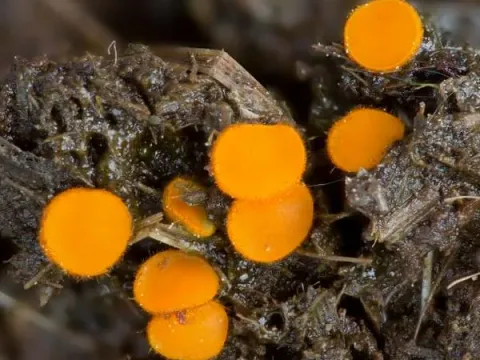
Cheilymenia stercorea
Cheilymenia stercorea
Cheilymenia stercorea is a species of fungus in the Pyronemataceae family. It is classified as a coprophilous fungus, meaning its life cycle is specialized for growing on animal dung.
What the section contains
Cheilymenia stercorea
This fungus is not a plant pathogen; it does not infect living plant tissues or disrupt their development. Instead, it functions as a saprotroph, feeding on the organic matter found in manure.
The fungus produces small, bright orange, cup-shaped fruiting bodies (apothecia) that are typically fringed with distinctive stiff hairs, which are easily visible to the naked eye.
Spores of the fungus are dispersed through the air or via animal vectors, often surviving the passage through the digestive tracts of herbivores, which aids in its distribution across pastures and fields.
While biologically harmless to crops, its presence is a significant indicator of the organic quality and sanitation levels within a growing environment or a substrate pile.
Growth of Cheilymenia stercorea requires moist conditions and a nutrient-rich substrate, primarily manure or composted materials with high nitrogen content.
The fungus thrives in temperate conditions, with optimal mycelial growth and fruiting occurring at temperatures between +15 and +25 degrees Celsius.
Poorly aerated environments that remain persistently damp are highly conducive to the rapid colonization of this species, especially in greenhouse nursery beds.
The spores can remain dormant in dry conditions and germinate rapidly when moisture levels increase and a suitable nutrient source becomes available.
Its frequent appearance in greenhouse settings is often linked to the use of raw or improperly fermented organic matter mixed into the potting medium.
Direct economic harm to crops is not caused by Cheilymenia stercorea, as it lacks the physiological capacity to parasitize plant tissues.
The primary concern is the indicator role of the fungus; its presence is a clear signal that the manure or compost used has not undergone proper thermophilic composting.
Because the composting process was insufficient to kill this fungus, it is highly likely that other, more dangerous plant pathogens and weed seeds have also survived the treatment.
In high-value ornamental or vegetable production, the physical presence of the fungus reduces the aesthetic and commercial value of the final product due to the unsightly fruiting bodies.
Furthermore, an excessive fungal population can disrupt the balance of the substrate's microbial community, leading to potential issues with oxygen availability at the roots.
The most effective management strategy is ensuring that all manure and organic amendments are subjected to high-temperature composting before being applied to the soil.
Implementing proper irrigation management is crucial, as reducing excess surface moisture in greenhouses can effectively inhibit the formation of fruiting bodies.
If the fungus is identified, manual removal of the apothecia along with the underlying substrate can prevent further spore release and reduce the overall inoculum load in the facility.
Standard sanitation procedures, including keeping tools and workspace surfaces clean, prevent the mechanical transfer of spores into clean growing areas.
- Strict adherence to thermophilic composting protocols.
- Maintaining optimal moisture and humidity levels.
- Using sterilized or high-quality commercial potting mixes.
- Regular inspection of organic fertilizers before use.