
Cheilymenia vitellina
Cheilymenia vitellina
Description
Symptoms
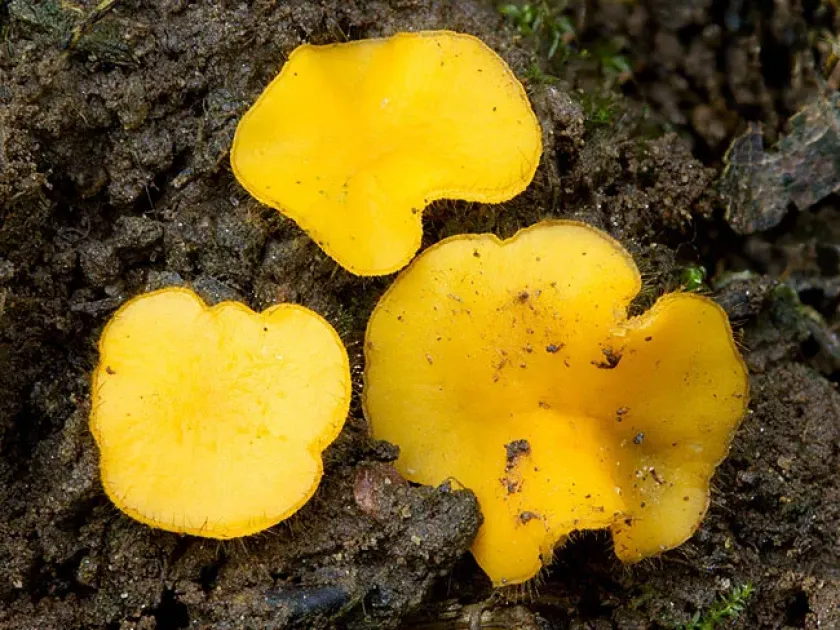
Cheilymenia vitellina is a small disc-shaped fungus easily recognized by its vibrant yellow or orange fruiting bodies.
These fruiting bodies, known as apothecia, usually have a diameter ranging from 2 to 10 millimeters and often feature tiny marginal hairs.
They frequently appear in clusters on damp soil or decaying organic matter, creating distinct, colorful patches in garden beds or greenhouses.
The absence of plant lesions or necrotic tissue distinguishes this species from common crop pathogens that damage living plants.
Their presence is a visual marker of high organic content in the topsoil and consistently moist environmental conditions.
Pathogen
Cheilymenia vitellina is a member of the Pyronemataceae family and acts strictly as a saprotrophic fungus.
It is not a plant pathogen; instead, it plays a vital role in decomposing organic material such as leaf litter and animal manure.
The mycelium network lives within the soil or on top of organic debris, breaking down complex polymers into simpler nutrients.
This process of decomposition helps recycle organic matter back into the soil, contributing to overall soil fertility.
Because it lacks the ability to infect healthy living plants, it does not pose a threat to agricultural productivity in a pathological sense.
Conditions for development
This fungus requires high humidity levels to initiate the development of its visible fruiting bodies on the soil surface.
It typically thrives in shaded areas, greenhouses with limited ventilation, or locations with poor soil drainage.
An abundance of nitrogen-rich organic matter, such as raw compost or heavy manuring, significantly promotes its growth.
Temperatures ranging from moderate to warm are ideal, provided the moisture levels remain stable and high enough to support the fungus.
Direct exposure to sunlight or prolonged drought inhibits its development, causing the fruiting bodies to wither and disappear.
Why it matters
The fungus itself is harmless to healthy crops, but its presence serves as an indicator of an imbalanced soil microclimate.
Excessive soil moisture, which supports Cheilymenia vitellina, is detrimental to most crops and can induce root rot or damping-off.
While the fungus is not pathogenic, the conditions that favor it are exactly the same conditions that favor serious agricultural plant pathogens.
Increased competition for oxygen in waterlogged soils can stunt plant growth, regardless of the fungus being present or absent.
Therefore, the primary concern is not the fungus itself but the underlying environmental mismanagement it identifies.
Protection
Controlling this fungus involves managing the environment rather than using chemical fungicides, which are unnecessary and inappropriate.
Improving soil drainage through structural adjustments ensures that water does not pool, naturally limiting the fungus's ability to fruit.
Regular ventilation in greenhouses reduces the humidity levels that the fungus needs to grow on the surface of the growing medium.
Ensuring that organic fertilizers, like compost, are fully matured before application prevents the creation of a nutrient-heavy habitat.
Simple practices like cultivating and loosening the topsoil layer facilitate oxygen flow and prevent the sustained moisture required by the fungus.
Discussion
No discussions yet — be the first.