
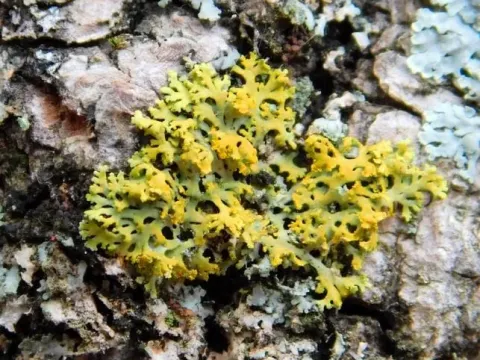
Candelaria concolor
Candelaria concolor
Candelaria concolor is not a plant pathogen or a parasitic fungus, but a type of lichen belonging to the Candelariaceae family.
What the section contains
Candelaria concolor
It exists as an epiphytic organism, using the bark of trees as a surface for attachment rather than as a source of nutrients.
The organism is a symbiotic complex of fungi and algae that obtains its nutrition from moisture, dust, and minerals in the surrounding air.
In agronomy, the presence of Candelaria concolor is considered an ecological indicator rather than a sign of a primary plant disease.
It does not penetrate the cambium or live tissues, meaning it does not directly cause decay in the host tree.
The primary visual sign of Candelaria concolor is the appearance of bright, lemon-yellow or yellow-green squamules on the bark.
These small, lobed structures adhere tightly to the bark, forming irregular patches that stand out against the dark color of the tree surface.
The lichen is most commonly found on the trunk and primary branches, especially in areas with moderate shade and humidity.
Unlike parasitic fungi, the lichen can be easily scraped off the surface of the bark without causing damage to the underlying tree layers.
Over time, the patches can merge to cover larger areas of the bark, giving the tree a distinctly discolored appearance.
The development of Candelaria concolor is favored by high atmospheric humidity and moderate levels of sunlight exposure.
Poorly pruned trees with dense canopies offer a microclimate that prevents bark from drying out, encouraging lichen colonization.
The accumulation of organic debris and dust on the bark provides a suitable substrate for the spores to anchor and grow.
Trees that are neglected or weakened by environmental stressors are often more susceptible to colonization by epiphytes.
Clean air conditions often allow for more vigorous growth of Candelaria, as it is relatively sensitive to heavy air pollution.
While Candelaria concolor is not directly parasitic, its dense growth can lead to indirect negative impacts on tree health.
Extensive lichen coverage may obstruct the lenticels of the bark, potentially interfering with the tree's gas exchange processes.
The moist environment beneath the lichen thallus can provide a harbor for harmful insect pests, including scale insects and mites.
Persistent moisture on the bark surface can also increase the risk of developing secondary fungal infections or bacterial decay.
The presence of significant amounts of lichen is a warning sign that the tree may require improved aeration and maintenance.
The most effective management method is the physical removal of the lichen during the dormant season using a wire brush or scraper.
Care must be taken to remove only the lichen and the loose dead outer bark without damaging the living inner layers of the tree.
Following removal, applying a disinfectant wash, such as a solution of copper or iron sulfate, helps inhibit the regrowth of lichen.
Pruning is an essential maintenance practice that improves light penetration and air circulation, creating a less hospitable environment for lichens.
- Maintaining tree vigor through proper fertilization and watering.
- Applying whitewash to the lower trunks to discourage colonization.
- Regular inspection of the bark for early signs of lichen accumulation.