
Candelariella aurella
Candelariella aurella
Description
Symptoms
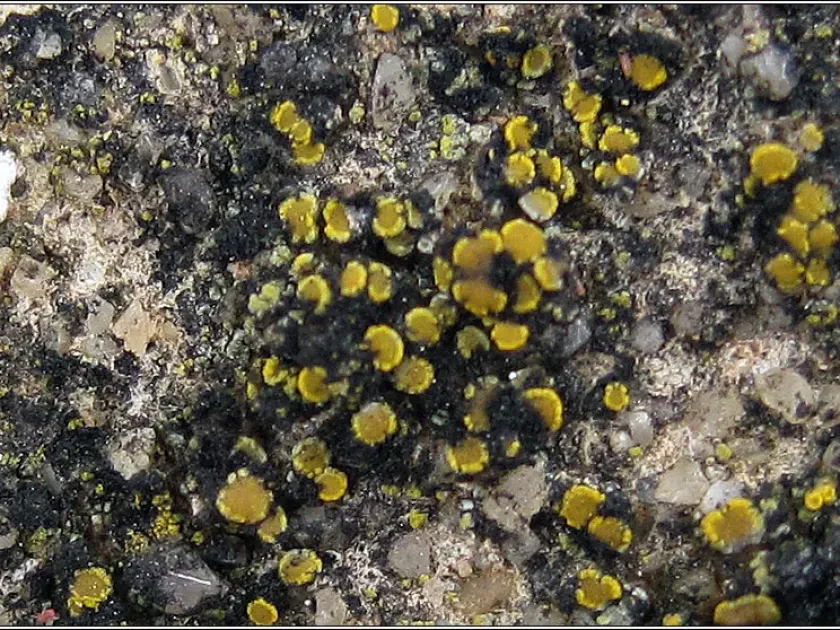
The presence of Candelariella aurella is characterized by thin, crust-like yellow or lemon-yellow patches appearing on the trunks and main branches of trees.
These patches typically exhibit a granular or warty texture, tightly adhering to the bark surface, making it difficult to scrape off without mechanical tools.
The lichen does not have distinct leafy structures; instead, it appears as a continuous or fragmented yellow coating that follows the contours of the bark.
In humid conditions, the color of the lichen may brighten, becoming more vivid as the algal component becomes more active and hydrated.
These signs are most prominent on older trees where the bark is stable and has not shed for several seasons, providing an ideal environment for colonization.
Pathogen
Candelariella aurella is a species of crustose lichen belonging to the family Candelariaceae. It is not a plant pathogen and does not cause diseases in crops or trees.
This organism is a symbiotic association between a fungus and algae, relying on photosynthesis for energy production. It does not infiltrate living plant tissues or extract nutrients from the host.
In agronomy, it is classified as an epiphyte—an organism that grows on the surface of another plant for structural support rather than nutrition.
Because it lacks the ability to penetrate or destroy plant cells, it does not fit the definition of a parasitic disease, which is essential to distinguish from harmful fungal pathogens.
The lichen is simply utilizing the bark of the tree as a stable, long-term substrate, common in old-growth trees or those with slower metabolic rates in their outer bark layer.
Conditions for development
Candelariella aurella thrives in environments with sufficient light exposure, as it requires solar energy for its photosynthetic processes.
The lichen prefers substrates with a neutral to alkaline pH, often appearing on trees that have been exposed to nitrogen-rich environments or dust containing alkaline minerals.
Atmospheric moisture is a critical driver for the spread and growth of the lichen, although it is well-adapted to survive intermittent drought through dormancy.
Spore dispersal occurs via wind and rain, allowing the lichen to colonize new substrates wherever the environmental conditions match its ecological niche.
Tree health is a secondary factor; trees with slow bark growth or those neglected in terms of maintenance offer the most suitable conditions for stable establishment.
Why it matters
There is no direct damage caused by Candelariella aurella to the physiological health of the plant. It does not consume nutrients or produce toxins.
The primary concern is that a dense covering of lichen might provide shelter for small pests or insects that could overwinter beneath the crust, potentially causing minor localized infestations.
Excessive lichen cover may indicate that a tree has been growing slowly or has been neglected, which could be a sign of underlying poor health or nutrient deficiencies.
From an aesthetic perspective, large colonies of lichen on the trunks of decorative fruit trees may reduce the visual appeal of a garden or plantation.
While not inherently harmful, a sudden increase in lichen growth can serve as a biological indicator of changing environmental conditions, such as high humidity or shifts in bark pH.
Protection
As this is not a disease, no chemical fungicides are required for control. Management is focused on general tree maintenance and cultural practices.
Mechanical removal using a stiff brush or a plastic scraper during the dormant season is effective for clearing the bark without causing damage to the living inner tissues.
Applying a lime wash or a lime-sulfur mixture to the tree trunk is a common agricultural method to discourage lichen growth, as it alters the bark surface chemistry.
Improving air circulation through proper pruning of the tree canopy can reduce the localized humidity levels that are essential for the lichen to thrive.
Promoting vigorous growth through balanced fertilization and adequate irrigation will naturally encourage the tree to shed bark more frequently, preventing long-term lichen colonization.
Discussion
No discussions yet — be the first.