
Candelariales
Candelariales
Description
Symptoms
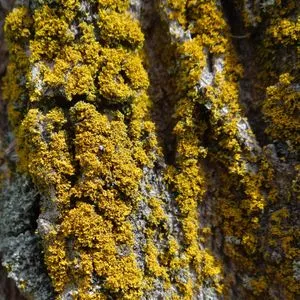
The most prominent sign of Candelariales presence is the appearance of distinct yellow, orange, or greenish-yellow crusts or spots on the bark of trunks and branches.
These fungal colonies tend to accumulate on older, rougher bark where small fissures provide an anchor point for the developing fungal thallus.
Affected areas often appear granulated or powdery. As the colony grows, it can cover significant portions of the bark, sometimes creating a vibrant but unnatural-looking surface layer.
When examined closely, small, flat, disk-like structures known as apothecia are visible, which are characteristic of this order and distinguish them from simple mosses.
The presence of these fungi often indicates that the tree's vitality has been reduced, as healthy, rapidly expanding bark is less conducive to long-term colonization.
Pathogen
Candelariales is an order of fungi belonging to the class Lecanoromycetes. Most species within this order are lichenized, functioning as symbiotic organisms rather than typical aggressive plant pathogens.
They typically colonize the bark of trees and shrubs, establishing themselves as epiphytes. Their biological structure includes a thallus that allows them to survive on the outer surface of woody plants.
The fungi reproduce through ascospores contained within apothecia. These structures are often visible to the naked eye as small, brightly colored disks on the surface of the fungal colony.
Unlike parasitic fungi that invade host tissues, Candelariales obtain nutrients from dust, moisture, and minerals trapped on the bark surface, though their presence indicates sub-optimal conditions.
Taxonomically, they are distinct due to specific characteristics of their asci and their unique evolutionary adaptation to colonizing nutrient-poor surfaces like tree bark.
Conditions for development
High relative humidity is the primary driver for the development and expansion of Candelariales colonies. They thrive in environments characterized by frequent fog and low air circulation.
Low light intensity, typical of dense or unpruned canopies, provides the optimal conditions for these fungi to establish and persist over long periods.
The host tree's physiological state plays a significant role; trees suffering from nutrient deficiencies or other stressors are much more susceptible to colonization than healthy specimens.
Temperature ranges between 15°C and 22°C are ideal for the metabolic processes of these fungi, facilitating the dispersal of spores by wind and water droplets.
Environmental stability, such as the absence of drastic drying winds, allows the thallus to maintain hydration, which is necessary for continued growth and reproduction.
Why it matters
The primary harm caused by Candelariales is the physical obstruction of gas exchange through the lenticels of the bark, which can slightly impede the tree's respiration process.
By trapping moisture against the bark, these fungi can create a micro-environment favorable for the secondary development of wood-rotting bacteria and other pathogenic fungi.
Massive colonization of the main trunk is an indicator of long-term tree stress, often leading to reduced vigor and slower annual growth rates in woody species.
In ornamental and nursery settings, the presence of these colonies significantly detracts from the visual appeal and market quality of the plant stock.
While not lethal on their own, they contribute to the decline of trees in poorly managed orchards, ultimately resulting in reduced crop yields and longevity.
Protection
The most effective management strategy is to maintain tree vigor through proper fertilization and irrigation, which promotes healthy bark growth and natural defenses.
Regular pruning is essential to improve canopy ventilation and light penetration, effectively removing the micro-climatic conditions required for fungal growth.
Mechanical cleaning of the bark using stiff brushes can successfully remove established colonies, especially when performed during the dormant season.
Applying copper-based fungicides or lime-sulfur sprays can kill existing fungal colonies and provide a protective barrier against new spore colonization.
Proactive orchard management, including periodic inspections and sanitary maintenance, is key to preventing the buildup of Candelariales and other epiphytic threats.
Discussion
No discussions yet — be the first.