
Candelariella
Candelariella
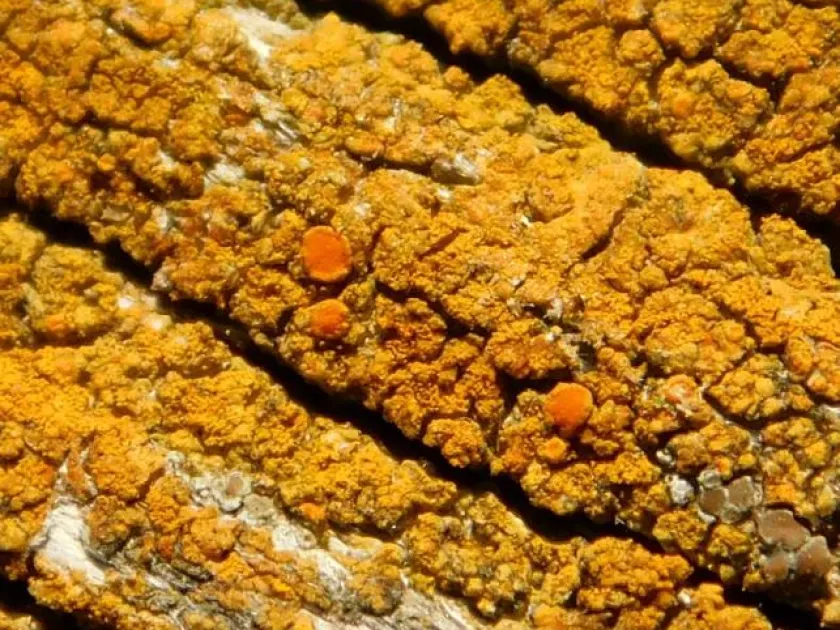
Description
Pathogen
It is crucial to clarify that Candelariella is not a pathogenic plant disease. It is a genus of crustose lichens that grow on bark, stone, or soil. As an epiphytic organism, it derives nutrients from the air and rain rather than from the host tree itself.
Biologically, Candelariella consists of a fungal partner and an algal partner living in symbiosis. It does not penetrate the tree's vascular system to extract sap, meaning it does not cause infections like bacteria or fungi do.
The yellow, crusty growth observed on branches is merely the thallus of the lichen. It colonizes surfaces that are relatively stable and possess sufficient light and humidity for its specific metabolic needs.
In agronomy, the presence of Candelariella is often mistaken for a disease, leading to unnecessary chemical treatments. However, it is an ecological indicator rather than a destructive plant pathogen.
The organism reproduces through specialized structures or spores that are wind-dispersed. Once these spores land on suitable bark, they gradually expand into colonies that define the appearance of the affected tree.
Conditions for development
The development of Candelariella is primarily driven by local humidity levels and light exposure. It thrives in environments where bark surfaces remain damp for prolonged periods, such as after mist or rainfall.
Older trees are significantly more prone to colonization. As bark ages, it becomes more textured and porous, providing a more stable substrate for lichen spores to anchor and grow compared to smooth, young bark.
Poor orchard management, specifically the lack of canopy thinning, creates stagnant air pockets. This lack of airflow prevents moisture from evaporating, creating an ideal microclimate for the rapid expansion of lichen colonies.
Regional air quality also plays a role. While some lichen species are sensitive to pollutants, Candelariella tends to show a higher tolerance for varying environmental conditions, allowing it to colonize both urban and rural trees.
The growth rate of the tree itself determines how effectively lichens can colonize. A fast-growing tree with active bark expansion regularly sheds its outer layers, making it difficult for the slow-growing Candelariella to establish.
Why it matters
Candelariella does not cause direct tissue damage. However, it can have indirect negative effects by acting as a refuge for pests such as aphids, mites, and scale insects, which may harbor under the lichen's crust.
The dense cover of lichen can theoretically restrict gaseous exchange through the lenticels of the bark. While this rarely kills a healthy tree, it can be a symptom of an already weakened tree that lacks the vitality to shed bark normally.
From an aesthetic perspective, heavy lichen cover is often considered a sign of poor garden maintenance. For commercial nurseries, this is a significant issue as it reduces the marketability of fruit trees and ornamental shrubs.
The presence of lichen often highlights that the tree's vitality is compromised. Often, trees covered in Candelariella are suffering from other issues like nutritional deficiency or drought stress, rather than the lichen being the primary enemy.
In extreme cases, the buildup of moisture under thick lichen layers can facilitate the growth of secondary decay fungi, which do pose a genuine threat to the longevity of the branch structure.
Protection
Effective management begins with proper tree care. Regular pruning is the most successful preventative measure, as it increases airflow and light penetration, effectively drying out the surfaces where lichens tend to settle.
Mechanical cleaning is highly effective. During the dormant season, scrubbing the bark with a stiff bristle brush can physically remove the lichen colonies without damaging the living tissues of the host plant.
Whitewashing the trunks with a lime-based solution (often mixed with copper sulfate) creates a hostile alkaline environment for lichens. This traditional method remains highly effective in modern orchard management.
Chemical control involving copper-based fungicides is typically used during the dormant period. These applications serve a dual purpose: they inhibit lichen development and provide essential protection against dormant-stage fungal pathogens.
- Maintain good ventilation within the canopy through proper pruning.
- Use whitewash (lime) on trunks to deter lichen establishment.
- Conduct annual bark inspections for early signs of pest colonization.
- Ensure adequate fertilization to support healthy and fast bark regeneration.
Discussion
No discussions yet — be the first.