
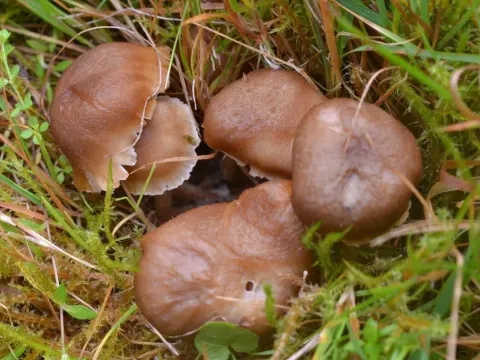
Camarophyllopsis
Camarophyllopsis
The genus Camarophyllopsis comprises a group of fungi belonging to the Hygrophoraceae family. It is crucial to clarify that this fungus is not a pathogen and does not cause any diseases in crops or plants.
What the section contains
Camarophyllopsis
These organisms do not infect plant tissues, roots, or leaves. They lack the biological mechanism to act as a parasite, meaning they pose no threat to agricultural production.
They function primarily as saprotrophs, interacting with organic matter within the soil profile. Their biological activity contributes to the maintenance of healthy soil ecosystems.
In the field, you will not find any signs of "infestation" or necrosis caused by this genus. Their presence should be viewed as a sign of environmental stability.
Understanding that these are non-pathogenic fungi is essential for farmers to avoid unnecessary chemical treatments that could harm beneficial biodiversity in their soil.
Camarophyllopsis species have specific habitat requirements that make them excellent indicators of ecological health. They thrive in unfertilized and stable grassland environments.
The application of high levels of artificial fertilizers, such as nitrogen or phosphorus, is known to be detrimental to the growth and survival of these fungi.
They are predominantly found in ancient pastures or semi-natural grasslands where the soil structure has remained undisturbed for a significant period of time.
Climatic factors such as consistent moisture and moderate temperatures are required for the development of their fruiting bodies, which typically appear late in the season.
The maintenance of these habitats is vital for the preservation of rare fungal species that rely on long-term ecological continuity without chemical agricultural disruption.