
Camarophyllopsis foetens
Camarophyllopsis foetens
Description
Symptoms
The presence of this fungus is indicated by the appearance of small, inconspicuous fruiting bodies, often blending with the forest floor.
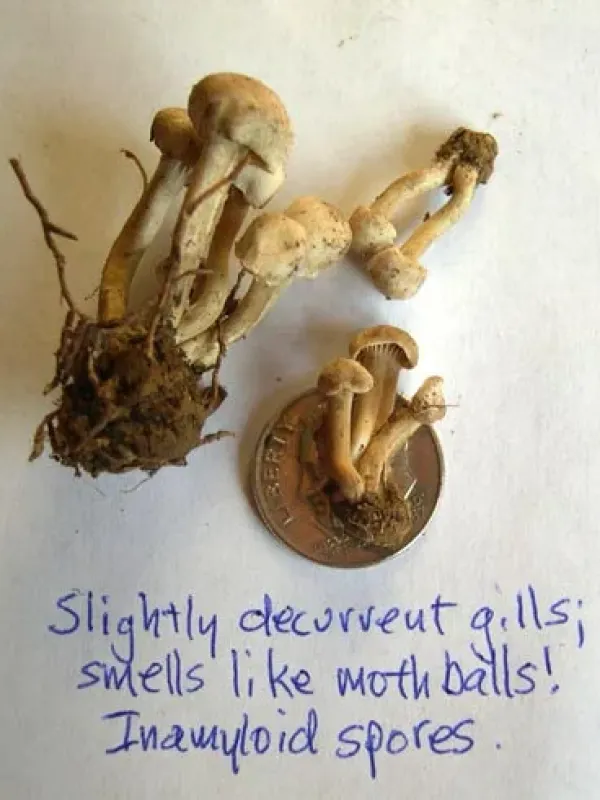
A notable characteristic is the distinctive, often unpleasant odor emitted by the mushrooms, which provides a clue for field identification.
The gills are typically thick, broad, and distant, a morphological trait characteristic of the broader Hygrophoraceae family.
Coloration of the fruiting body is usually muted, ranging from brownish-gray to pale white, depending on hydration and maturity.
Fruiting bodies are most frequently observed during periods of high humidity and moderate temperatures in natural woodland settings.
Pathogen
Camarophyllopsis foetens is a species of fungus within the Hygrophoraceae family, known for its role as a saprotroph in forest environments.
It is important to clarify that this fungus is not a pathogen and does not cause any diseases in agricultural, ornamental, or wild plants.
The organism exists primarily as mycelium in the leaf litter, breaking down complex organic compounds into simpler substances.
Unlike parasitic fungi that invade living tissue, this species relies entirely on dead organic matter for its nutritional requirements.
Mycological research focuses on its taxonomic classification, which distinguishes it from pathogenic species that could threaten crop health.
Conditions for development
The development of Camarophyllopsis foetens is strictly linked to stable forest ecosystems with deep, organic-rich soil.
Optimal moisture levels are critical, as the fungus requires high environmental humidity to initiate the growth of reproductive structures.
It prefers areas with minimal soil disturbance, as the delicate network of mycelium is sensitive to chemical treatments or tillage.
Temperature fluctuations in forested areas usually stay within the range tolerated by this species, allowing it to complete its cycle.
Lack of human interference and the presence of natural mulch layers are primary requirements for the persistent colonization of a site.
Why it matters
There is absolutely no harm associated with Camarophyllopsis foetens regarding plant health or crop productivity.
It does not pose a threat to plant tissues, nor does it secrete substances that could hinder the growth of surrounding vegetation.
The fungus is ecologically beneficial, contributing to the carbon cycle by facilitating the decomposition of fallen leaves and organic debris.
Farmers and gardeners do not need to worry about this species, as it is completely indifferent to the presence of cultivated crops.
Therefore, it occupies a neutral position in agronomic assessment, requiring no monitoring or control measures of any kind.
Protection
No control or protection measures are necessary for Camarophyllopsis foetens, as it is not a pest or a disease agent.
Using chemical fungicides against this species is not recommended, as it could negatively impact beneficial soil microflora.
If the appearance of these mushrooms is considered undesirable in a garden setting, improving soil drainage and air circulation will naturally limit their growth.
No prophylactic measures are required, and the focus of land management should remain on productive crop health rather than this organism.
Observation of such fungi in an ecosystem should be seen as an indicator of natural organic cycling rather than a sign of a disease outbreak.
Discussion
No discussions yet — be the first.