
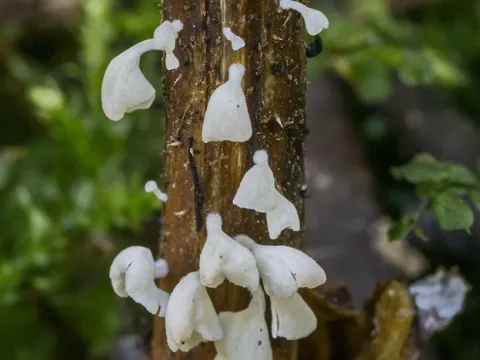
Calyptella capula
Calyptella capula
Calyptella capula is a fungus belonging to the Marasmiaceae family. It is strictly a saprotroph, meaning it obtains its nutrients by decomposing non-living organic matter rather than parasitizing living host tissues.
What the section contains
Calyptella capula
The fungus is characterized by its small, cup-shaped or bell-shaped fruiting bodies, which appear on the decaying stems and stalks of various herbaceous plants during the late stages of their life cycle.
As a decomposer, Calyptella capula plays an ecological role in breaking down cellulose and lignin, returning vital nutrients to the soil and participating in the natural recycling of organic waste.
It does not possess the mechanisms required to infect healthy, vigorous plant tissues. Its presence is strictly limited to dead or highly damaged plant material that is already undergoing degradation.
From a biological standpoint, this species is a specialist of moist environments, requiring specific atmospheric humidity levels to trigger the development of its ephemeral and delicate fruiting structures.
The most visible sign of Calyptella capula is the appearance of tiny, white to cream-colored, cup-like structures scattered across decaying plant stems.
These fruiting bodies are often found near the base of plants or on fallen stalks during cool, humid periods, typically in late summer or autumn when moisture persists for long durations.
The infected tissue might appear bleached or softened, which is a result of the fungal enzymes facilitating the breakdown process of the dead plant matter, mimicking symptoms of some pathogenic diseases.
When examined closely, the fruiting bodies have a distinct, delicate texture that is easily crushed. They do not form large mats or mycelial webs like some aggressive parasitic fungi.
Identification often relies on microscopic analysis of the basidia and spores, as many small fungi in the field may share a similar morphological appearance to the untrained eye.
High relative humidity is the primary driver for the development of Calyptella capula. Periods of prolonged fog, heavy dew, or excessive rainfall provide the necessary moisture for the fruiting bodies to emerge.
The fungus thrives in poorly ventilated environments where air circulation is restricted, such as in dense crop canopies or sheltered, shaded areas of a field or greenhouse.
Moderate temperatures are optimal for the growth of the fungus. It typically slows down significantly during periods of high heat and drought, as the lack of surface moisture inhibits the formation of its structures.
A high accumulation of organic debris on the soil surface acts as the primary substrate for this fungus, providing a continuous food source and moisture-retention medium for its mycelium.
Improving light penetration and air movement within the crop canopy generally creates conditions that are unfavorable for the persistence and propagation of this specific fungal species.
Calyptella capula causes no direct economic damage to healthy crops. Its role is strictly that of a decomposer, which actually benefits soil health by recycling organic nutrients.
However, its presence can be a useful diagnostic indicator of poor field hygiene or unfavorable microclimatic conditions, such as excess humidity or inadequate aeration, which are conducive to other, more dangerous pathogens.
In high-density cultivation, the presence of these fungi might complicate visual inspections, potentially obscuring early signs of true parasitic infections like grey mold or bacterial soft rot.
There are no recorded instances of this fungus causing harm to humans, livestock, or agricultural products, provided that standard harvesting and storage procedures are maintained.
Excessive moisture that supports Calyptella capula is a greater risk factor than the fungus itself, as it facilitates the spread of various opportunistic diseases in the field.
Preventative management is straightforward and centered on good agricultural practice. Removing fallen crop debris significantly reduces the available substrate for the fungus to inhabit.
Ensuring proper plant spacing is critical. This enhances air circulation, which prevents the build-up of the moisture pockets that the fungus requires for its reproductive phase.
Regular monitoring of irrigation schedules in greenhouse environments helps keep humidity levels within an optimal range, effectively suppressing the development of the fungus.
Deep incorporation of plant residues into the soil via tillage effectively eliminates the surface substrate, breaking the lifecycle of the fungus and promoting faster decomposition by soil microbes.
Chemical intervention is unnecessary and not recommended, as Calyptella capula is not a plant pathogen. Focus should always be placed on cultural control methods to improve overall crop health.