
Camarophyllopsis schulzeri
Camarophyllopsis schulzeri
Description
Symptoms
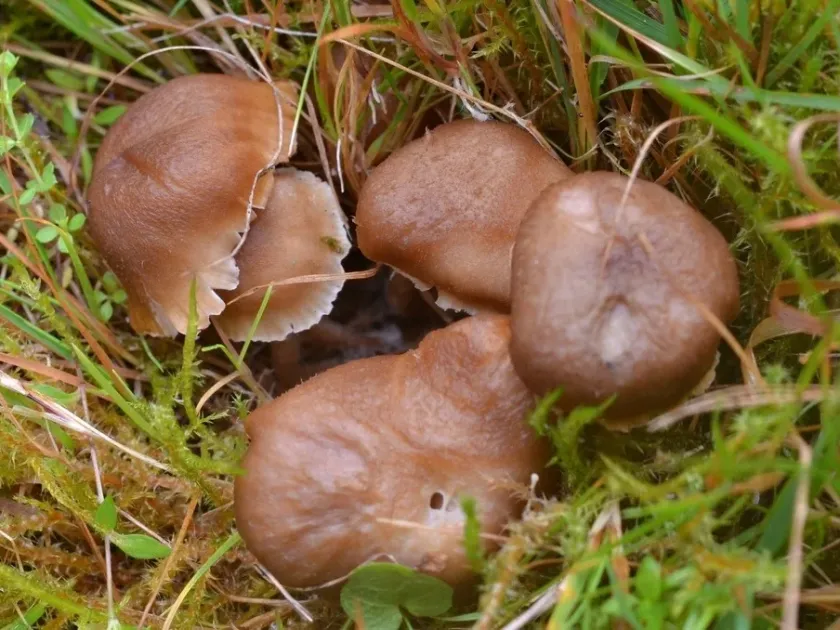
Camarophyllopsis schulzeri is a small gilled mushroom belonging to the Hygrophoraceae family. The fruit bodies typically measure 1 to 3 cm in diameter and exhibit a grey-brown to almost black coloration.
The mushroom is hygrophanous, meaning its color changes noticeably depending on the level of moisture in the environment, appearing paler when dry. The surface of the cap is often finely scaly, which serves as a key diagnostic feature.
The gills are widely spaced, thick, and decurrent along the stem, distinguishing it visually from many other small woodland mushrooms. The spore print is white, confirmed through microscopic analysis.
The stem is fragile, cylindrical, and usually matches the cap in color. It lacks a strong odor or taste, making identification difficult without a thorough botanical examination of its morphology.
As a typical litter-decomposing fungus, it thrives in stable forest ecosystems where it plays a vital role in the breakdown of organic matter within the forest floor.
Pathogen
It is crucial to clarify that Camarophyllopsis schulzeri is not a plant pathogen and does not cause diseases in crops or ornamental plants. It is classified as a saprotrophic fungus.
The mushroom does not parasitize living plants, nor does it affect their root systems, leaves, or vascular tissues. Its lifecycle is entirely dependent on decaying organic matter rather than living hosts.
The mycelium actively colonizes the upper layers of forest soil and leaf litter, aiding in the release of nutrients that are essential for the natural regeneration of the forest ecosystem.
Unlike harmful plant pathogens, this species does not secrete phytotoxic substances or enzymes that would suppress plant growth or reduce crop quality.
Therefore, from an agronomic perspective, Camarophyllopsis schulzeri is considered a beneficial or neutral organism that contributes to soil health and nutrient cycling.
Conditions for development
This fungus prefers humid, shaded environments typical of coniferous and mixed forests with a deep, undisturbed layer of organic leaf litter. It favors areas with stable microclimates.
The development of fruit bodies is most pronounced during late summer and autumn, provided that rainfall is sufficient and temperatures remain within a temperate range.
The species is highly sensitive to disturbances such as soil tillage, excessive application of fertilizers, or chemical pollution, which can lead to its rapid disappearance from the habitat.
It flourishes in stable ecosystems with minimal human interference, often acting as a bioindicator for healthy forest soils and consistent environmental conditions.
Dispersal occurs via airborne spores that germinate on suitable organic substrates, gradually establishing mycelial networks within the soil profile.
Why it matters
Camarophyllopsis schulzeri poses no threat to agricultural productivity, horticulture, or forestry. It does not compete with crops for resources and is entirely harmless to plant life.
There are no recorded instances of yield losses or economic damage caused by this fungus in any field or greenhouse cultivation sector worldwide.
For agronomists, this species is irrelevant as a pest, and it does not require monitoring or specific diagnostic procedures during regular crop health inspections.
The fungus produces no toxins that could affect crop quality or food safety. Its metabolic processes are localized to the decomposition of non-living organic residue.
Consequently, reports suggesting any harmful impact of this mushroom on cultivated plants are inaccurate and lack supporting mycological or agronomic evidence.
Protection
No protection or control measures are necessary for Camarophyllopsis schulzeri, as it does not constitute a hazard to the agrarian economy or plant health.
The use of fungicides or other chemical treatments to eliminate this fungus is discouraged, as it may disrupt the beneficial soil microbiome and serve no productive purpose.
Prophylaxis is not required because the fungus lacks the biological capacity to colonize agricultural fields or harm standing crops.
If its presence is undesirable in a specific area near a garden or nursery, improving soil aeration and drainage will naturally discourage the growth of saprotrophic fungi.
Maintaining the ecological balance in surrounding areas is recommended, as this fungus is a natural component of local biodiversity and poses no risk to agricultural interests.
Discussion
No discussions yet — be the first.