
Byssocorticium
Byssocorticium
Byssocorticium is a genus of fungi within the order of corticioid fungi (Basidiomycota). These organisms are primarily known for their ability to colonize woody substrates.
What the section contains
Byssocorticium
The fungus develops a thin, spreading mycelium that can manifest as a cobweb-like or felt-like coating on the surface of bark or decaying organic matter.
Biologically, these fungi utilize extracellular enzymes to break down the complex structure of wood, particularly lignin, contributing to the process of wood decay.
The life cycle involves the production of basidiospores in the hymenium, which are dispersed by air currents to colonize new susceptible substrates.
While often acting as saprotrophs, some species within the genus may opportunistically infect weakened trees, especially where protective barriers are damaged.
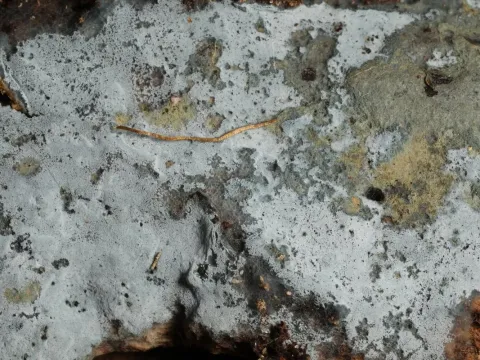
The most visible symptom is the presence of a thin, crust-like or web-like fungal mat on the surface of tree bark or fallen timber.
The coloration of these fungal mats is typically whitish to pale bluish or ochre, which serves as a key characteristic for field identification.
As the infection progresses, the underlying bark often becomes soft, brittle, and loses its attachment to the sapwood, potentially sloughing off in patches.
In advanced stages, mycelial cords may be observed under loose bark, indicating active spread and colonization of the host tissue.
- Thin web-like fungal mats on the bark.
- Softening and discoloration of the bark surface.
- Bluish or off-white patches of fungal growth.
- Peeling or loose bark indicating wood tissue decay.
High humidity and shade are the primary environmental drivers for the development of Byssocorticium. The fungus thrives in moist environments.
Cool to moderate temperatures provide optimal conditions for the germination of spores and the subsequent expansion of the fungal mycelium.
Physical injuries to the tree, such as cracks, frost damage, or improper pruning cuts, create direct pathways for fungal entry and colonization.
Poor airflow within dense plantings or forest stands leads to higher moisture retention on tree surfaces, promoting fungal infection cycles.
Accumulation of decaying wood debris in the vicinity acts as a reservoir for spores, increasing the overall infection pressure on healthy trees.
The primary impact of Byssocorticium is the degradation of wood fibers, which weakens the structural integrity of the affected plant or tree.
Trees infected with this fungus are more prone to physical breakage during high winds, posing safety risks and causing economic loss.
Systemic colonization can disrupt the vascular system of the tree, leading to reduced growth, yellowing foliage, and potentially tree mortality.
In orchards, the presence of the fungus on tree trunks necessitates costly removal or extensive surgical treatment to prevent further spread.
Increased susceptibility to secondary pests and other pathogens is a common consequence of the tissue weakness caused by wood-rotting fungi.
Sanitation is the cornerstone of management: promptly remove dead wood, fallen branches, and infected trees to eliminate sources of inoculum.
Minimize mechanical damage to trunks and branches during maintenance activities to ensure the natural physical barrier of the tree remains intact.
Apply protective wound dressings or fungicides to any necessary pruning cuts to prevent spores from entering the fresh wood tissue.
Improve stand or orchard management by thinning vegetation to promote air circulation and reduce the ambient humidity around tree trunks.
Maintain tree health through proper fertilization and watering, as vigorous trees are generally more resilient against minor fungal attacks.