
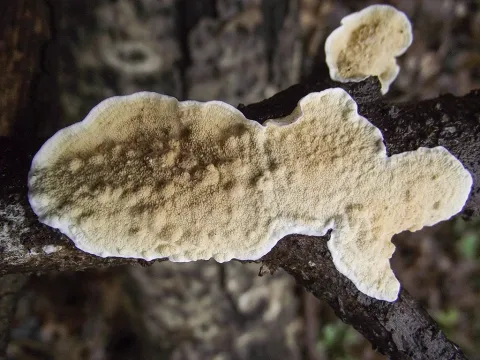
Byssomerulius
Byssomerulius
The disease is caused by wood-decay fungi belonging to the Byssomerulius genus, which are members of the Basidiomycota phylum. These organisms primarily function as saprotrophs but can behave as pathogens, especially under environmental stress.
What the section contains
Byssomerulius
The fungus develops a mycelium that invades the wood, secreting enzymes that decompose lignin and cellulose, which are the main structural components of tree wood. The fungus eventually produces thin, spreading fruiting bodies on the host surface.
The biology of Byssomerulius is heavily dependent on moisture levels and the availability of organic substrate. It can persist within the inner layers of the wood for extended periods, remaining dormant until conditions become ideal for growth.
Its life cycle includes active vegetative growth, the development of reproductive structures, and the dissemination of spores. These spores are easily spread via wind currents, rain splashing, or through the movement of contaminated tools.
From an agronomic perspective, this pathogen is often considered an opportunistic agent that targets weakened trees, highlighting the importance of overall plantation health and maintenance.
The most visible symptom is the presence of the fungus's fruiting bodies. These often appear as thin, papery, or crust-like layers attached to the bark or exposed wood, exhibiting creamy, yellowish, or ochre colors.
As the infection progresses, the wood loses its structural integrity. It becomes soft and fibrous, showing clear signs of decay consistent with white rot. The timber gradually loses its density and natural coloration.
Advanced stages of the disease lead to severe bark detachment and the formation of deep fissures in the tree trunk. The cambium layer dies, disrupting the transport of nutrients between the roots and the canopy.
Leaves on infected trees often exhibit premature yellowing and wilting, as the vascular system becomes obstructed by the fungal growth. The tree canopy eventually becomes thin and sparse as the condition worsens.
Necrotic patches appear on the trunk, which can expand rapidly. If left unchecked, these lesions can compromise the entire circumference of the tree, leading to girdling and eventual plant death.
High humidity is the primary catalyst for the growth of Byssomerulius. Persistent moisture on the bark surface or within wood cracks provides the ideal environment for the colonization and germination of fungal spores.
Moderate temperatures significantly accelerate the rate of mycelial development. Areas with poor air circulation or densely packed foliage, which prevent the tree from drying out after rain, are particularly prone to infection.
Mechanical damage to the bark, such as frost cracks, sunscald, or pruning wounds, serves as an entry point. Once the protective bark barrier is breached, the fungus finds easy access to the nutrient-rich inner wood.
Poor orchard sanitation, including the presence of decaying stumps, logs, or deadwood piles, creates a high spore load. Proximity to such infected material increases the likelihood of spore dispersal to healthy trees.
Neglecting basic cultural practices, such as proper pruning or wound protection, creates a favorable environment for the pathogen to establish itself and thrive within the plantation.
The primary concern is the significant loss of structural strength. Infected trees are at high risk of windthrow or branch breakage, which can cause considerable physical damage to other crops or property.
By interfering with the tree's vascular system, the fungus limits the tree's ability to take up water and nutrients. This results in reduced vigor, stunted growth, and a marked decline in fruit yield and quality.
Byssomerulius is highly infectious to susceptible species. If not managed, the disease can spread throughout an entire orchard, resulting in widespread decline and the need for costly tree removal and replacement.
In addition to economic losses in commercial production, the aesthetic value of landscapes and ornamental trees is severely damaged, requiring extensive and costly restorative efforts.
The persistent nature of the fungus requires continuous investment in monitoring and management, which adds a significant burden to the overall costs of maintaining the plantation.
Effective management begins with rigorous sanitary practices. All infected wood must be pruned and safely removed from the site. Burning or deep burial of infected debris helps destroy spore sources.
Wounds created by pruning should be immediately treated with appropriate disinfectants and protective sealants. This prevents the exposed tissue from becoming a point of entry for fungal spores.
Maintaining tree vitality through balanced fertilization and appropriate irrigation is crucial. A healthy tree can better defend itself against fungal pathogens through its natural physiological resilience.
Applying preventative fungicides according to local agronomic schedules can help suppress fungal activity. It is important to alternate between different chemical groups to prevent the development of resistant strains.
Sterilizing pruning tools between trees is essential to prevent the mechanical transmission of the fungus. Maintaining good ventilation within the canopy by proper thinning can also significantly reduce infection risks.