
Byssocorticiaceae
Byssocorticiaceae
The family Byssocorticiaceae consists of basidiomycete fungi belonging to the order Thelephorales. While many are saprotrophic, playing a role in decay processes, certain species exhibit pathogenic behavior on woody plant tissues.
What the section contains
Byssocorticiaceae
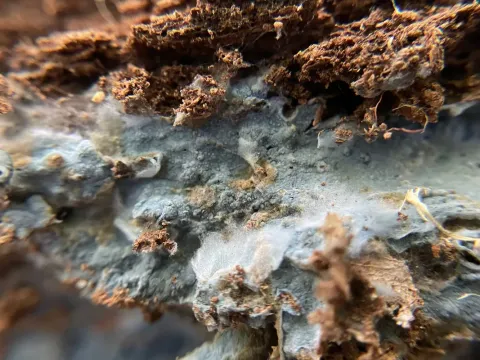
These fungi are characterized by the development of thin, often web-like or felted mycelial mats on the surface of bark. They utilize extracellular enzymes to degrade wood components like cellulose and lignin.
Dissemination of these fungi primarily occurs through basidiospores, which are dispersed via wind or water splash. Their life cycle is deeply dependent on environmental moisture levels.
In agricultural settings, Byssocorticiaceae are often identified as opportunistic pathogens, colonizing trees that are already stressed or suffering from structural wounds.
Accurate identification of these pathogens requires specialized mycological examination, as the morphological features of their fruiting bodies can vary significantly depending on the substrate they occupy.
Early symptoms appear as thin, whitish, or cream-colored patches on the bark, resembling fine webbing or a soft felt-like texture that can be easily overlooked.
As the infection progresses, the area beneath the mycelial growth begins to suffer from necrosis, leading to the cracking and flaking of the bark from the woody stem or branches.
- Formation of cobweb-like mycelial films on stems.
- Cracking and premature peeling of the bark.
- Darkening of the woody tissue underneath the infected bark.
- Noticeable decline in tree vigor and stunted new growth.
- Premature leaf drop in severe cases of stem colonization.
Under high-humidity conditions, the infected areas may appear moist or slightly slimy, which facilitates the rapid expansion of the fungus across the bark surface.
Long-term colonization leads to localized wood rot, weakening the structural integrity of the affected branches and causing them to die back over several growing seasons.
Development of these fungi is primarily driven by high relative humidity, typically exceeding 80%, which is required for spore germination and mycelial spread.
Moderate temperatures ranging between 15°C and 25°C provide the optimal environment for the metabolic activity of Byssocorticiaceae, enabling them to colonize plant surfaces effectively.
Poorly managed plantations with dense canopies or restricted air circulation tend to accumulate humidity and spore loads, creating hotspots for the development of fungal infections.
Accumulated dead wood, fallen branches, and unremoved plant debris serve as critical reservoirs for the pathogen, sustaining its presence within the orchard environment.
Physical injuries to the bark caused by hail, pruning tools, or pests create entry points for the fungus, allowing it to move from the surface into the nutrient-rich inner bark tissues.
Byssocorticiaceae fungi contribute to the degradation of woody tissues, which impairs the plant's ability to transport water and essential nutrients effectively throughout its system.
The damage to the bark and cambium makes trees significantly more susceptible to secondary pests, such as wood-boring insects, which further accelerate the decline of the plant.
In commercial orchards, the presence of these pathogens leads to reduced crop yields and shortened lifespan of the trees, necessitating premature replacement and resulting in economic losses.
Ornamental trees are also negatively affected, as the aesthetic value is diminished by unsightly mycelial mats and the subsequent dieback of crown branches.
If left unmanaged, the infection can spread across the entire orchard, potentially leading to the loss of large portions of the crop and requiring extensive sanitation efforts.
Sanitation practices such as regular pruning of diseased branches and their immediate removal from the site are essential to break the pathogen's life cycle and limit spore spread.
Improving air circulation through proper canopy management and maintaining optimal moisture levels in the orchard helps to minimize the conditions conducive to fungal growth.
Applying protective fungicides or wound-healing sealants to pruning cuts and bark injuries creates a physical and chemical barrier against potential colonization by fungal spores.
Maintaining strong tree vigor through balanced nutrition and adequate irrigation improves the natural resilience of the plants, allowing them to better resist minor fungal attacks.
Regular orchard inspections throughout the growing season ensure early detection, allowing for the isolation or treatment of infected plants before the disease becomes widespread.