
Butter bolete
Boletus appendiculatus
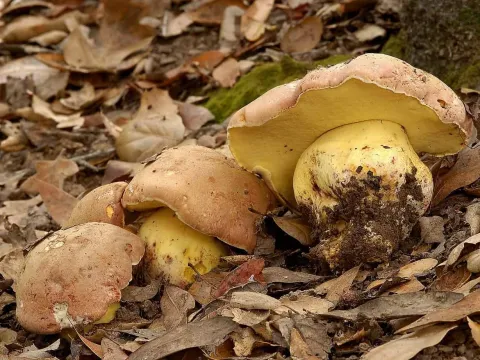
The butter bolete is a large, sturdy mushroom belonging to the Boletaceae family. Its cap typically measures between 7 and 20 centimeters in diameter and features a velvety texture.
What the section contains
Butter bolete
The coloration of the cap ranges from golden-brown to tan, providing an elegant appearance that makes it a popular species among mushroom enthusiasts.
The pore surface, or hymenophore, is bright yellow. A key identification characteristic is that the pores turn distinctively blue when bruised or damaged.
The stipe, or stem, is thick and robust, tapering significantly toward the base, which is the origin of its scientific name appendiculatus.
Inside, the flesh is yellowish and turns blue upon exposure to air, maintaining a firm texture that is appreciated for its mild and pleasant taste.
It is critical to clarify that the butter bolete is not a plant pathogen or a cause of disease in agricultural crops. It is a symbiotic fungus.
This species forms an ectomycorrhizal association with the roots of various broad-leaved trees, primarily oak and beech species.
Rather than destroying plant tissues, it assists trees by enhancing the uptake of water and essential mineral nutrients from the surrounding soil.
It does not cause wilting, root rot, or any form of necrosis, and therefore requires no pest control measures in forestry or gardening.
The mushroom serves as a beneficial component of the forest ecosystem, contributing to the overall health and vitality of the woodland environment.
The development of the butter bolete's mycelium requires warm and fertile soil conditions, typically found in established broad-leaved forests.
It thrives in symbiosis with tree hosts, meaning its presence is strictly tied to the existence of healthy oak and beech stands in the area.
The species prefers well-drained soils and is sensitive to extreme waterlogging, requiring good soil aeration to support its mycorrhizal activity.
The fruiting season generally occurs during the warmest months of the year, from mid-summer through early autumn, following periods of adequate rain.
Due to its specific ecological requirements, the species is considered somewhat rare and is often protected in various parts of its European range.