
Browning of flax
Aureobasidium lini
The disease is caused by the imperfect fungus Aureobasidium lini (formerly Polyspora lini). It is a specialized pathogen that primarily targets flax plants throughout their development stages.
What the section contains
Browning of flax
The pathogen overwinters as mycelium and conidia in infected plant debris, in the soil, and on flax seeds, allowing it to persist in the field across multiple seasons.
The biology of the fungus involves the rapid production of conidia, which serve as the primary inoculum. These spores are easily disseminated by wind, rain splashes, and insects, leading to secondary cycles of infection.
Once it colonizes plant tissues, the fungus interferes with normal physiological processes, leading to stunted growth, reduced fiber quality, and potential failure of seed maturation.
Managing the pathogen requires understanding its lifecycle, as it can thrive on various parts of the flax plant, including stems, leaves, and bolls, ensuring a continuous presence in unfavorable conditions.
The initial signs of Browning of flax appear as small, light-brown spots on cotyledons and leaves, which gradually darken as the infection progresses throughout the season.
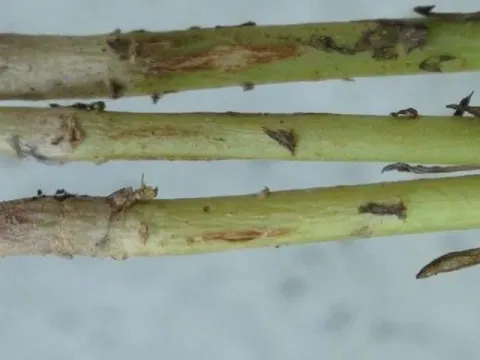
Distinctive dark-brown, often oval-shaped lesions appear on stems and bolls. These lesions frequently merge, causing large, necrotized areas that weaken the integrity of the plant stem.
Under high humidity, a noticeable fungal growth composed of spore masses may be observed on the affected areas, serving as an visual indicator of the disease's active stage.
Infected plants often show signs of deformation and premature drying. When the infection is severe, it leads to lodging, making the crop extremely difficult to harvest efficiently.
The damage to flax bolls is particularly critical, as it directly affects the quantity and quality of the seeds, often resulting in shriveled or non-viable seeds.
The spread of Browning of flax is strongly associated with prolonged periods of wet, cool weather. High relative humidity is the primary catalyst for conidial germination.
Dense crop stands provide an ideal microclimate for the disease, where limited airflow leads to increased moisture retention, significantly accelerating the rate of infection.
The fungus thrives at temperatures ranging from 15 to 20 degrees Celsius. In many regions, this temperature window coincides with the flowering and maturation stages of flax.
Poor agricultural practices, such as the use of non-treated, infected seeds, facilitate the early establishment of the disease, making it harder to control later in the season.
The presence of weeds within the field can act as a bridge for the pathogen, allowing it to survive and move between cultivated plants even if the overall density is managed.
The primary economic harm is the reduction in both the yield and the technical quality of flax fiber. Infected fiber becomes brittle and loses the elasticity required for textile manufacturing.
The disease significantly decreases the biomass of the crop. Infected plants produce fewer bolls and lower-quality fiber, leading to substantial financial losses for growers.
Seed viability is severely impacted by the pathogen. Seeds harvested from infected fields often have low germination rates, creating a cycle of infection for future crop cycles.
Costs related to fungicide treatments and the necessity of rigorous seed cleaning add to the overall production expenses, reducing the profitability of flax cultivation.
If left unmanaged, a severe outbreak can compromise the entire harvest, necessitating the abandonment of the field or heavy reliance on expensive chemical intervention.
Crop rotation is the most effective cultural practice for controlling Browning of flax. Keeping a gap of 5–7 years between flax plantings helps break the pathogen's lifecycle in the soil.
The use of certified, fungicide-treated seeds is mandatory to prevent the initial introduction of Aureobasidium lini into the field from contaminated sources.
Post-harvest management, including deep plowing and the thorough destruction of crop residues, is essential to reduce the inoculum levels and prevent the fungus from over-wintering.
Applying fungicides during the critical growth stages (emergence and early flowering) is necessary to protect the crop when weather conditions favor the development of the disease.
- Utilize resistant or tolerant flax varieties.
- Optimize seeding rates to improve field ventilation.
- Maintain soil fertility to enhance the plant's natural resistance.