
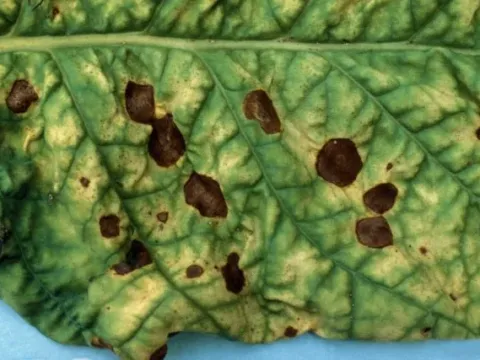
Brown spot of tobacco
Alternaria longipes
The causal agent of this disease is the imperfect fungus Alternaria longipes (Ellis & Everh.) E.W. Mason. This pathogen belongs to the class Hyphomycetes and can persist in soil, on crop debris, and in tobacco seeds for long periods.
What the section contains
Brown spot of tobacco
The fungus spreads actively through conidia, which are dispersed by wind or rain splashes over long distances. The infection penetrates plant tissues through stomata or mechanical damage to the epidermis, primarily affecting the leaves of the crop.
The biology of the pathogen is characterized by high plasticity. The fungus can exist as a saprotroph, feeding on dead tissues, which allows it to effectively survive the off-season in the upper layers of the soil.
The development cycle of the pathogen is directly dependent on the presence of moisture, which is necessary for conidia germination. An optimal temperature regime promotes the rapid accumulation of infectious potential in the agroecosystem.
In addition to tobacco, the fungus can affect a number of other solanaceous crops, but it is on tobacco that the disease manifests most aggressively, causing serious economic losses.
The first signs of the disease appear as small brown spots that gradually increase in size. Affected areas often acquire a concentric zonation, which is a characteristic diagnostic feature of alternaria leaf spot.
In the center of the spots, a characteristic gray or olive-colored coating often forms, representing the conidial sporulation of the fungus. The lower tiers of leaves are the first to be affected, where the microclimate is most favorable for pathogen development.
As the disease progresses, the spots merge, covering significant areas of the leaf blade. The leaves begin to yellow, curl, and dry out prematurely, which significantly reduces the market value of the raw material.
In high humidity conditions, the necrotic tissues may rot, emitting an unpleasant odor. Under severe infection, the pathogen spreads to stems and floral buds, causing systemic weakening of the plant.
In the final stages of the disease, the plant appears scorched, and the yield loses weight and technical quality indicators, becoming unsuitable for processing.
Disease development is triggered by prolonged wet weather with frequent precipitation or heavy dew. High air humidity (above 80%) is a critical factor for fungal spore germination.
A temperature range from +20°C to +28°C is considered optimal for active tobacco infection. Under these conditions, the incubation period is shortened to a few days, which can lead to epiphytotics.
Poor agricultural practices, including overly dense planting, create stagnant air within the crops. The lack of proper aeration promotes increased local humidity in the ground layer.
Insufficient or unbalanced plant nutrition, especially an excess of nitrogen fertilizers, reduces the immune status of tobacco. Plants with tender tissues are more susceptible to the penetration of fungal hyphae.
The presence of weeds in the rows hinders ventilation and can act as an infection reservoir throughout the growing season.
Brown spot causes significant economic damage to the tobacco industry by reducing the total weight of the harvested leaves. Affected parts of the plant are rejected during sorting, leading to direct financial losses.
The quality of the raw material drops critically during the disease: the leaf color changes, it becomes brittle and loses elasticity. Infected leaves may develop off-flavors and unpleasant odors during the fermentation process.
Massive leaf infection leads to a decrease in nicotine and sugar content, which disrupts the biochemical indicators required for tobacco production.
If young plants are affected, their death is possible, which thins out the stands and reduces crop density. This directly affects the total production yield per unit area.
Long-term persistence of the pathogen in the soil complicates tobacco cultivation on the same fields for several years, requiring strict adherence to crop rotation.
The basis of protection is strict adherence to crop rotation, excluding solanaceous plants as preceding crops. It is important to maintain spatial isolation between current-year fields and previous-year plots.
Deep plowing of crop residues immediately after harvest is recommended to deprive the pathogen of a substrate for overwintering. High-quality field sanitation is an important preventive measure.
The use of copper-based fungicides or systemic preparations from the triazole and strobilurin groups effectively controls the spread of the disease. Treatments should begin as soon as the first symptoms appear.
Balanced mineral nutrition, especially the application of potassium fertilizers, increases the resistance of tobacco to fungal diseases. Avoid excess nitrogen in the second half of the growing season.
- Use of resistant tobacco varieties.
- Maintaining optimal planting density for better ventilation.
- Timely weeding.
- Disinfection of field tools and equipment.