
Buchwaldoboletus lignicola
Buchwaldoboletus lignicola
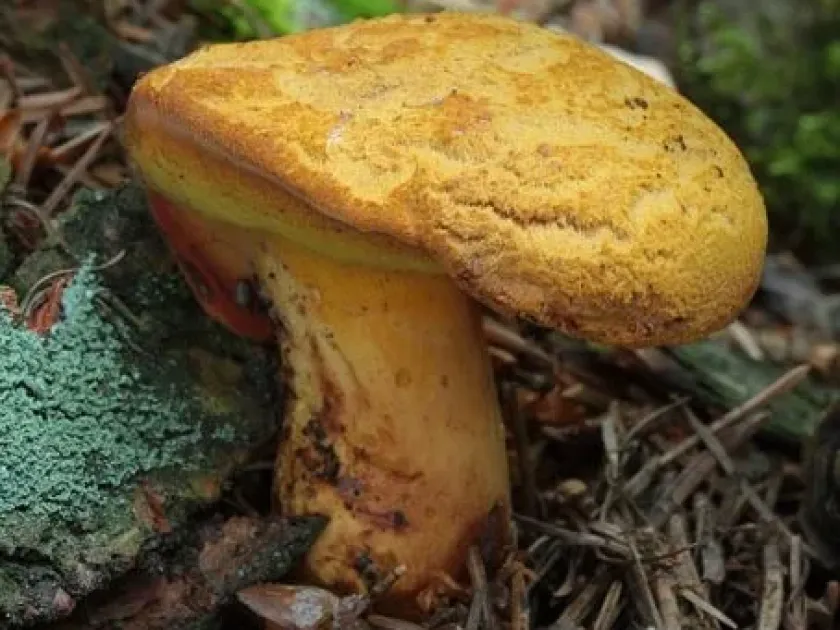
Description
Symptoms
The primary symptom of the presence of Buchwaldoboletus lignicola is the emergence of yellow-to-orange fruiting bodies directly from the stem or stumps.
Internal wood decay develops, causing the structural integrity of the tree to weaken over time. This leads to softened wood tissues and potential failure of the trunk.
Visible symptoms in the crown include needle yellowing, early needle drop, and a general loss of vigor, indicating a failure in water and nutrient transport.
Necrotic lesions and cracks may appear on the bark surface at the point of infection. Fungal mycelial mats are sometimes visible deep within these fissures.
Cross-sections of infected wood typically show areas of soft rot, often accompanied by distinct changes in wood color and a softer, fibrous texture.
Pathogen
Buchwaldoboletus lignicola is a unique fungal species belonging to the Boletaceae family. Unlike its terrestrial relatives, this fungus is known for its lignicolous habit.
The mycelium of the fungus penetrates and degrades wood tissues by secreting specialized enzymes. It is considered a facultative parasite capable of colonizing living and dead hosts.
Biological studies indicate that this fungus primarily targets coniferous trees, although it may occasionally be found on other types of wood substrates.
The pathogen reproduces via airborne spores, which land on bark crevices or wounds, germinating to initiate the internal degradation of the wood structure.
The life cycle is closely tied to the availability of wood cellulose and lignin, which serve as the primary carbon source for the fungal growth.
Conditions for development
Optimal conditions for development include high ambient humidity and moderate temperatures, which are frequently found in dense or poorly ventilated forest stands.
Stressed trees, particularly those weakened by drought, soil compaction, or previous physical injuries, are significantly more susceptible to colonization.
Physical wounds caused by storms, logging, or animal activity serve as primary entry points for fungal spores, facilitating deep tissue infection.
Poorly managed forest stands with high accumulations of dead woody debris provide an ideal environment for the fungus to persist and build up spore inoculum.
Waterlogged soils can induce root stress, which negatively impacts the tree's natural defense mechanisms, making it easier for the fungus to establish itself.
Why it matters
The fungus is dangerous because it compromises the mechanical stability of the tree, significantly increasing the risk of structural collapse and stem breakage.
In silviculture, the fungus causes severe economic loss by degrading wood quality, rendering the timber unsuitable for commercial construction or furniture production.
Infected trees suffer from impaired metabolic processes, leading to reduced growth rates and eventual decline if the infection is not halted.
In public or recreational areas, the pathogen poses a safety threat, necessitating the removal of affected trees to prevent accidents during high winds.
The presence of this fungus often attracts secondary pests, such as wood-boring insects, which further accelerate the deterioration of the tree.
Protection
Sanitation practices are essential for control. Removing infected trees and clearing deadwood significantly reduces the spore load in the local environment.
Protecting trees from mechanical damage is a critical preventative measure. Any existing wounds should be treated with appropriate sealants or fungicides.
Promoting overall forest health through proper silvicultural management, including adequate spacing and species diversity, enhances the natural resistance of the stand.
Regular inspections and monitoring of tree health allow for the early detection of fruiting bodies, enabling timely intervention before the decay spreads.
In urban forestry, professional arborists may apply specific treatments or pruning techniques to mitigate the spread of the fungus in valuable mature trees.
Discussion
No discussions yet — be the first.