
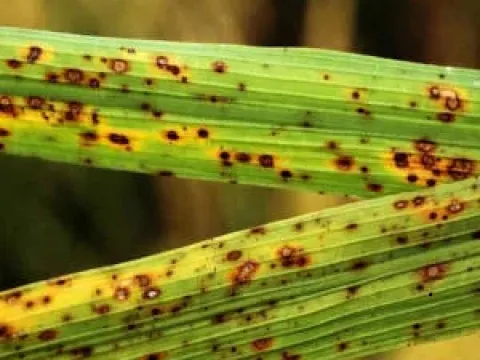
Brown spot of rice
Bipolaris oryzae
The causative agent of the disease is the fungus Bipolaris oryzae (syn. Helminthosporium oryzae), a member of the hyphomycetes. It survives as mycelium and conidia in crop debris, infested seeds, and the soil for extended periods.
What the section contains
Brown spot of rice
The pathogen spreads through conidia, which are disseminated by wind, rain splashes, and irrigation water. Seeds serve as the primary source of infection in new plantings, as the fungus can infect the embryo and seed coat.
The biology of the fungus is highly dependent on the host plant's physiological state. It exploits weakened plants and produces phytotoxins, specifically ophiobolins, which cause tissue necrosis and impair plant health.
Bipolaris oryzae affects rice crops globally. It maintains its pathogenicity throughout the entire vegetation period, being particularly aggressive during the reproductive stage when grain filling occurs.
Diagnostic verification involves microscopic identification of the characteristic dark, multi-celled conidia. These structures allow agronomists to distinguish this disease from other similar fungal leaf spots occurring in rice fields.
Symptoms appear on all aerial parts of the rice plant, including leaves, sheaths, stems, panicles, and grains. The hallmark sign is the presence of brown or dark brown circular to oval spots.
Initially, spots may be small, but they expand over time, often surrounded by a yellow halo. Under high humidity, a greyish or olive-colored velvety layer of conidiophores and conidia may emerge in the center of the spots.
Severe infection leads to leaf necrosis, causing leaves to wither and die prematurely. This loss of photosynthetic tissue significantly reduces the plant's capacity to fill grain, leading to lower yields.
Panicles become heavily infected, resulting in shriveled, discolored, and light-weight grains. The glumes may show dark lesions, and in some cases, the entire panicle may become sterile if the infection occurs early in the development.
Seedlings infected with the fungus show blighting and brown lesions. This often results in poor stand establishment, reduced plant vigor, and, in severe cases, the total loss of young seedlings.
The disease thrives in warm and humid conditions, with optimal temperatures ranging from +25°C to +30°C and relative humidity levels exceeding 85%. These conditions are essential for successful spore germination and host colonization.
Nutrient deficiency is a critical predisposing factor. Specifically, soils lacking sufficient potassium, magnesium, and silicon make rice plants significantly more susceptible to fungal entry and spread.
Dense planting and poor field aeration create a humid microclimate within the canopy, facilitating the rapid secondary spread of spores. Stagnant water and poor drainage further exacerbate the severity of the infection.
Plant stress due to fluctuating temperatures, solar radiation deficiency, or inappropriate irrigation management weakens the plant's natural defense mechanisms, making it easier for Bipolaris oryzae to penetrate tissues.
Continuous rice cultivation without crop rotation allows the pathogen to accumulate in the soil. Furthermore, infected crop residue left on the field serves as a reservoir for the next season's infection cycle.
Brown spot of rice is responsible for significant yield losses, often ranging from 20% to 40% under favorable conditions for the pathogen. Weight loss in 1000-grain measurements is the most direct economic impact.
Beyond yield reduction, the disease severely impacts grain quality. Infested seeds have low germination rates, decreased vigor, and poor marketability due to discoloration and lesions.
The accumulation of mycotoxins produced by the fungus during grain development is a major concern. These toxins can affect the safety and quality of processed rice products, posing risks to both humans and livestock.
Physiologically, the disease interrupts vital processes such as photosynthesis and nutrient transport. This leads to weakened plants that are more vulnerable to other opportunistic pathogens and environmental stress factors.
The economic burden includes the cost of fungicides and specialized agricultural management practices. In severe outbreaks, the entire harvest may need to be downgraded, leading to substantial financial losses for farmers.
The most effective strategy is the use of disease-resistant varieties. Breeding for genetic resistance remains the primary focus of long-term sustainable management of brown spot in rice cultivation.
Agricultural management should focus on balanced fertilization, particularly the application of silicon and potassium. Proper residue management, such as deep plowing, helps reduce the initial inoculum load in the soil.
Chemical control involving systemic fungicides, such as strobilurins or triazoles, should be applied based on scouting reports and economic threshold levels. Timely application during the early growth stages is crucial.
- Use of high-quality, certified, and treated seeds.
- Implementation of crop rotation to break the pathogen's life cycle.
- Optimizing planting density to ensure better canopy ventilation.
- Management of irrigation to prevent excessive stagnant water.
Regular field monitoring is essential. Detecting early symptoms allows for targeted action, preventing the disease from reaching an epidemic stage and ensuring a healthy, high-yielding crop at harvest.