
Bryoria fuscescens
Bryoria fuscescens
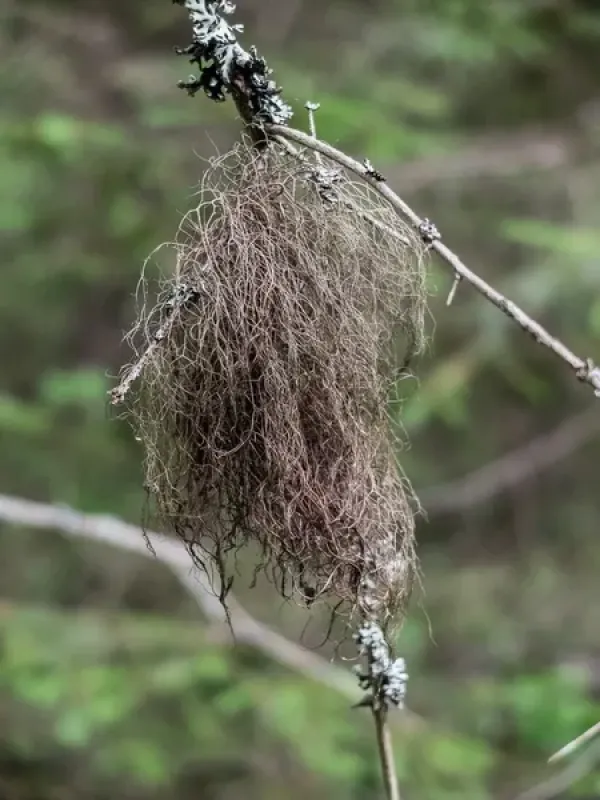
Description
Symptoms
Bryoria fuscescens is a fruticose lichen that frequently appears as dark, brown or olive-colored hair-like strands hanging from tree branches or trunks. It is often misidentified by gardeners as a serious disease of the bark.
The primary sign of its presence is the formation of dense, beard-like growths that can cover significant areas of the tree surface. These strands are usually thin, flexible, and can grow several centimeters in length.
Unlike actual plant pathogens, this lichen does not penetrate the cambium or wood of the host tree. It merely uses the bark as a structural anchor, staying entirely on the surface without causing decay.
If you inspect the bark under the lichen, you will find no necrotic spots, ulcers, or structural damage. The lichen detaches easily with a light scrape, revealing healthy bark beneath the epiphytic layer.
Its presence is visually distinct because it creates a textured, shaggy appearance on the bark that contrasts with the surrounding smooth or furrowed surface of the tree.
Pathogen
Bryoria fuscescens is not a plant pathogen. It is a lichenized fungus, a symbiotic organism consisting of fungal mycelium and algal cells that live in a mutually beneficial relationship.
In agronomy, it is classified as an epiphyte. It obtains its water and minerals from the atmosphere, rain, and dust particles, rather than from the host tree, making it an independent entity rather than a parasite.
The lichen acts as a biological indicator. Its colonization of bark usually reflects a clean environment, as it is highly sensitive to sulfur dioxide and other air pollutants common in industrial areas.
The biology of Bryoria fuscescens involves vegetative reproduction through the dispersal of thallus fragments, which are spread by wind or water to suitable substrates, usually trees with slow-growing, rough bark.
Because it does not feed on plant tissue or produce toxic metabolites, it does not fit the definition of a disease-causing organism in the context of plant pathology.
Conditions for development
The development of Bryoria fuscescens is heavily dependent on high humidity and stable, cool temperatures. It thrives in environments with frequent fog or persistent moisture, which allows the lichen to hydrate and grow.
Lack of air circulation within the tree canopy is a primary condition for its establishment. Trees that are not pruned properly often suffer from restricted airflow, creating a humid microclimate favored by the lichen.
The age and condition of the bark are critical factors. Lichens prefer established, rough-textured bark because it holds moisture longer and provides more surface area for the fungal spores to adhere and develop.
It is commonly found in older, neglected orchards or forests where tree growth is slow. Rapidly growing young trees usually shed their outer bark layers, making it difficult for the lichen to gain a foothold.
Environmental cleanliness is a prerequisite; the absence of Bryoria in certain regions is often a direct indication of poor air quality due to heavy pollution.
Why it matters
Bryoria fuscescens poses no direct harm to the vitality, yield, or health of the trees it colonizes. It is a harmless occupant that does not interfere with the plant's metabolic processes.
The potential for indirect harm is low, though it can provide a refuge for pests such as scale insects or mites. These pests may hide within the dense lichen mass, making direct chemical application more difficult.
Excessive lichen growth may create an aesthetic concern for ornamental or orchard trees, as some growers find the shaggy look unsightly and indicative of poor maintenance.
However, the lichen itself does not cause rot, wilting, or branch dieback. Any associated decline in tree vigor is typically due to other environmental stresses that also happen to encourage lichen colonization.
Management is generally pursued for sanitation purposes, allowing for easier inspection of the tree's bark for actual diseases like cankers or wood-boring insects.
Protection
Control measures for Bryoria fuscescens are purely mechanical and prophylactic, focusing on altering the bark environment to be less hospitable to lichen growth.
- Manual scraping of the lichen from the bark using a dull blade or a wire brush during the dormant season.
- Whitewashing trunks with lime, sometimes mixed with copper-based compounds to sanitize the bark surface.
- Regular pruning to improve sunlight penetration and air circulation throughout the tree canopy.
- Applying ferrous sulfate solutions early in spring, which desiccates the lichen thallus and leads to its eventual removal by wind and rain.
Maintaining tree vigor through proper irrigation, fertilization, and timely pruning is the most effective long-term preventative measure, as healthy trees are less prone to colonization by epiphytes.
Standard orchard fungicide programs for scab or rust are often sufficient to prevent lichen establishment, effectively keeping the trees clean without specialized treatments.
Discussion
No discussions yet — be the first.