
Buchwaldoboletus
Buchwaldoboletus
Buchwaldoboletus is a genus of fungi within the Boletaceae family. Unlike typical plant pathogens that target leaves or roots, these fungi primarily act as wood-decay agents with semi-parasitic characteristics.
What the section contains
Buchwaldoboletus
The fungus is often associated with conifers, including pines and larches, where it colonizes dead wood or the compromised parts of living tree trunks.
Its life cycle involves the production of spores that are dispersed by air currents, landing on favorable wooden substrates to begin the colonization process.
From a mycological perspective, Buchwaldoboletus can exhibit both saprotrophic and parasitic behavior, making it a complex organism in forest pathology studies.
Researchers observe that its presence is often an indicator of the declining health of a forest stand or the accumulation of decaying woody debris.
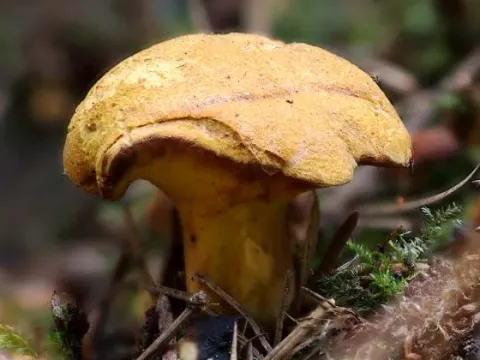
The most visible sign of Buchwaldoboletus is the formation of fleshy, sponge-like fruiting bodies that usually display yellow to brownish-orange hues.
These fruiting bodies are typically found clustered around the base of trees, on old stumps, or directly on fallen timber in moist environments.
Internal wood decay, which manifests as structural weakness and discoloration, often occurs hidden beneath the bark before the fruiting bodies emerge.
The texture of the cap is often velvety, while the pore surface (hymenophore) is indicative of its classification within the bolete family.
- Presence of yellow or ochre-colored mushrooms at the tree base.
- Softening and discoloration of wood near infected sites.
- Bark peeling or cracking as the mycelium spreads.
- Stunted growth or chlorosis in branches located above the infection site.
High humidity and moderate temperatures are the most critical environmental conditions required for the growth and spread of the Buchwaldoboletus mycelium.
Physical injuries to trees, such as frost cracks, wounds from machinery, or damage from wood-boring insects, provide entry points for the fungal spores.
Forest stands that have become overly dense, preventing proper air circulation and sunlight penetration, are more susceptible to prolonged dampness and fungal colonization.
Mature and over-aged trees, which naturally have reduced defenses and higher amounts of woody mass, provide a stable substrate for these fungi.
The fungus thrives in areas where organic matter remains moist for long periods, such as deep forest litter or shaded valleys.
The primary damage caused by Buchwaldoboletus is the progressive degradation of wood, which significantly reduces the structural integrity of the timber.
As the fungus breaks down cellulose and lignin, the affected trees become prone to windthrow, posing a danger to the safety of the surrounding forest ecosystem.
In managed forestry, the economic impact is felt through the loss of high-quality wood, as the decay makes the timber unsuitable for commercial use.
The spread of the fungus can lead to the formation of localized infection hotspots, which threaten the vitality of adjacent younger trees in the forest.
Persistent presence of these fungi creates a cycle of decay, where affected wood serves as a breeding ground for future generations of the fungus.
Effective management begins with regular forest health monitoring to identify early signs of fungal decay and remove infected wood promptly.
Sanitation cutting, including the removal of dead stumps and diseased trees, is the most robust measure for lowering the spore load in a forest area.
Ensuring that forestry operations are performed with care to prevent mechanical damage to standing trees is essential to keep the bark protective barrier intact.
Promoting a healthy and diverse forest structure with proper thinning helps maintain conditions that are less favorable for persistent fungal pathogens.
In cases of severe localized outbreaks, burning infected material or removing it entirely from the site is recommended to break the life cycle of the pathogen.