
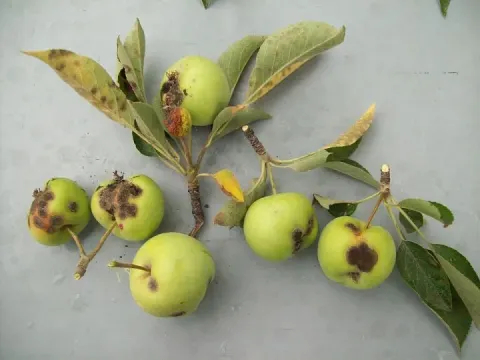
Apple scab
Boletus venturii
Apple scab is caused by the ascomycete fungus Venturia inaequalis. It is one of the most destructive and economically important diseases affecting apple trees worldwide.
What the section contains
Apple scab
The fungus overwinters primarily in fallen infected leaves as pseudo-thecia. In early spring, during wet weather, these structures release ascospores that travel via wind and rain to young foliage.
Once initial infection occurs, the fungus produces conidia, which are asexual spores that spread the disease throughout the summer months. This cycle of infection repeats whenever wet, cool conditions persist.
The fungus colonizes the cuticle layer of leaves and fruit, causing cellular disruption and triggering the development of visible lesions characteristic of the disease.
Understanding the life cycle of Venturia inaequalis is crucial for timing fungicide applications effectively and minimizing the impact of the disease on commercial or home orchards.
The first symptoms appear as olive-green to brown spots on the underside of young leaves. These spots have a velvety appearance due to the abundant production of spores.
On fruit, the lesions appear as dark, olive-colored, circular spots. As the fruit grows, these spots become corky, brown, and often cause the fruit skin to crack and deform.
In cases of severe infection, lesions can also appear on pedicels and petioles, leading to premature leaf drop and the shedding of young, underdeveloped fruit.
Shoots may also show symptoms in the form of blister-like pustules. These pustules eventually rupture, exposing the fungal mycelium and potentially allowing the infection to persist in the tree.
The overall appearance of infected trees is often sickly, with sparse, discolored foliage and fruit that is clearly unmarketable due to unsightly scarring and blemishes.
Apple scab development is heavily dependent on moisture. For primary infection, foliage needs to remain wet for a specific period, which varies depending on the temperature.
Cool, damp spring weather, especially during the blossom period, is the most critical time for the disease to establish itself within the orchard canopy.
Poor orchard ventilation due to high planting density or inadequate pruning prevents foliage from drying quickly after rain, significantly increasing the risk of infection.
Accumulated leaf litter is a major reservoir for the pathogen. If this debris is not managed, the source of inoculum remains ready to infect the trees the following season.
Host susceptibility varies widely among cultivars. Planting resistant varieties is often the most effective way to reduce the impact of apple scab in a garden or orchard setting.
The primary harm caused by apple scab is the degradation of fruit quality. Blemished and cracked apples are aesthetically unappealing, making them unsuitable for fresh market sales.
Extensive leaf infection reduces the photosynthetic capacity of the tree, which can lead to lower yields, reduced fruit size, and poor tree vigor over time.
The disease can cause early leaf fall, leaving the tree stressed and more susceptible to winter injury, which may lead to dieback of branches or even tree mortality in harsh winters.
Infected fruit is highly prone to secondary fungal infections during storage, such as bitter rot or storage rots, causing significant economic losses after the harvest.
The cumulative effect of annual infection is a decline in overall orchard productivity and a shortened lifespan for the affected apple trees.
Sanitation is the first line of defense; raking and destroying fallen leaves reduces the primary inoculum for the next growing season significantly.
Proper pruning practices are essential to open up the tree canopy, which promotes better air circulation and faster drying of leaves and fruit, hindering fungal growth.
Chemical control using fungicides should be applied during the primary infection season. It is vital to use products recommended for specific developmental stages like bud break and petal fall.
Integrated Pest Management (IPM) strategies, including monitoring weather conditions and using resistant cultivars, can help minimize the reliance on chemical inputs.
- Select apple varieties with known genetic resistance.
- Implement balanced fertilization to maintain tree health.
- Rotate fungicide modes of action to prevent the development of resistance.