
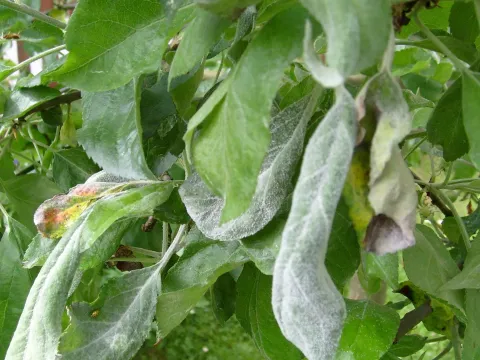
Apple powdery mildew
Podosphaera leucotricha
The disease is caused by the fungus Podosphaera leucotricha. It is an obligate parasite that specifically attacks young, growing tissues of apple trees, causing significant physiological distress.
What the section contains
Apple powdery mildew
The pathogen primarily overwinters as mycelium within dormant buds. As the buds break in the spring, the fungus becomes active and starts to colonize the emerging leaves and blossoms.
Asexual spores, known as conidia, are produced in large quantities and are easily spread by wind and rain throughout the growing season, facilitating the rapid development of secondary infections.
Under specific environmental conditions, the fungus can produce sexual structures called chasmothecia, which serve as a survival mechanism during harsh conditions and provide genetic diversity to the fungal population.
This fungus is highly host-specific, primarily affecting the Malus genus. Its ability to proliferate on green tissues makes it one of the most persistent issues in modern apple cultivation.
The primary symptom is a white, felt-like, powdery fungal growth that appears on leaves, shoots, and blossoms. This growth is easily visible as it contrasts with the green tissue of the tree.
Infected leaves become chlorotic, curled, and brittle. They often stop expanding normally and may drop prematurely, which impacts the tree's overall canopy health.
Blossoms are particularly vulnerable; if infected, they fail to develop properly, becoming deformed and dried out. This leads to complete fruit loss in the affected clusters.
On young shoots, the infection causes severe stunting and distortion. The tips may die back, giving the branch a characteristic appearance often referred to as "witches' brooms" due to excessive branching.
While less common on mature fruit, infection can result in a "russeted" appearance on the apple skin, which detracts from its commercial value and makes the fruit look unattractive.
Powdery mildew development is favored by warm, dry weather conditions during the day, accompanied by high humidity or dew at night. Temperatures between 18°C and 25°C are optimal.
Unlike many other fungal diseases, powdery mildew does not require free water on the leaf surface for infection to occur; instead, high humidity is sufficient for the spores to germinate.
Orchards with dense, poorly pruned canopies are at higher risk because they maintain higher localized humidity and have limited air circulation, which prevents the foliage from drying out quickly.
Vigorous vegetative growth triggered by excessive nitrogen fertilization creates an abundance of succulent tissues that are highly susceptible to fungal colonization.
Neglected orchards that lack proper sanitation and air management provide the necessary environment for the pathogen to thrive and establish a permanent reservoir of infection.
The disease causes a reduction in the photosynthetic capacity of the tree, which ultimately weakens the overall vitality and growth potential of the apple tree.
Economic damage is substantial due to the direct loss of blossoms and the subsequent reduction in fruit yield, especially in susceptible cultivars that are poorly managed.
Infected trees often exhibit decreased winter hardiness, making them more prone to frost injury during cold winters. This leads to long-term decline and potential tree mortality.
Marketable yield is reduced not only by lower fruit counts but also by the aesthetic defects on the fruit skin, which restricts the potential for premium fresh-market sales.
Repeated fungicide applications required for effective control increase the production costs for growers, directly impacting the profitability of the apple orchard business.
The foundation of effective control is pruning. Removing infected shoots during winter and spring is crucial to minimize the initial inoculum load in the orchard.
Cultural practices should focus on maintaining tree vigor through balanced fertilization and improving canopy structure to ensure adequate airflow and light penetration.
Chemical control involving fungicides, such as sulfur-based products or site-specific systemic fungicides like DMI inhibitors, should be applied during high-risk periods.
Resistance management is essential, requiring the rotation of chemical classes to prevent the fungus from developing insensitivity to the active ingredients used in sprays.
- Planting resistant or tolerant apple cultivars.
- Rigorous sanitation by removing and burning infected branches.
- Monitoring weather patterns to time fungicide applications effectively.