
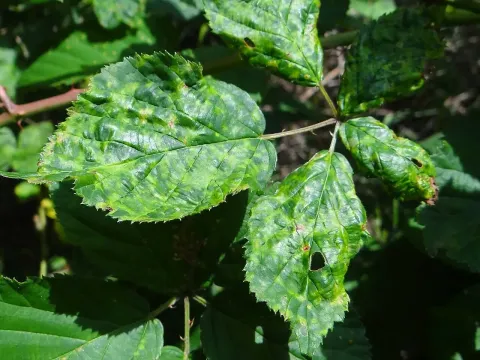
Arabis mosaic
Arabis mosaic
The primary symptom of Arabis mosaic virus infection is a distinct mosaic pattern on leaves, manifesting as alternating light and dark green chlorotic spots.
What the section contains
Arabis mosaic
In raspberries, the foliage often shows signs of severe distortion, with leaves becoming puckered, wavy, or asymmetrical in their growth development.
The virus acts as a systemic pathogen, causing significant stunting of the plant, reduced vigor, and a noticeable decline in the production of new canes.
Fruit quality is severely impacted; berries often become smaller, deformed, or display uneven ripening patterns, making them unsuitable for market use.
Advanced stages of the disease lead to the overall decline of the plant, characterized by sparse foliage and diminished photosynthetic efficiency.
The disease is caused by the Arabis mosaic virus (ArMV), a member of the Nepovirus genus known for its wide host range in both crops and weeds.
The viral particles are isometric and contain a genome composed of positive-sense single-stranded RNA, which facilitates rapid replication within host cells.
This virus is biologically transmitted by soil-dwelling nematodes, particularly those belonging to the genus Xiphinema (dagger nematodes).
Apart from nematode transmission, the virus can be spread through contaminated vegetative propagation material, such as cuttings or root stocks.
The pathogen is highly persistent, capable of surviving in the roots of reservoir hosts, which makes managing it in established plantations quite difficult.
The development and spread of the virus are highly dependent on the presence of its nematode vectors in the soil environment surrounding the plant roots.
Moist soil conditions and moderate temperatures favor nematode movement and feeding, which in turn facilitates the inoculation of the virus into roots.
Human activities, such as moving infested soil during cultivation or transplanting infected nursery stock, are primary drivers of long-distance virus spread.
The presence of susceptible weed species within or near the orchard creates a permanent reservoir that maintains the virus cycle within the soil profile.
Spring and early summer periods, when root growth is at its peak, are the most frequent times for new infections to occur due to intense nematode feeding.
Arabis mosaic virus causes substantial economic losses, especially in raspberry cultivation, by drastically reducing fruit yield and overall fruit quality.
Systemic infection weakens the plant's physiological defenses, making it more susceptible to secondary infections by other fungi or bacterial pathogens.
Infected plantations often become unviable within a few years as the virus continues to circulate and infect healthy neighboring plants through the soil.
Once a plant is infected, there is no chemical cure available, necessitating the immediate removal and destruction of the plant to prevent further spread.
Long-term soil contamination makes it impossible to replant the same susceptible species in the affected area for several years without prior soil treatment.
The most effective strategy for managing Arabis mosaic is the use of certified, virus-free planting material sourced from reputable tissue culture nurseries.
Growers should maintain a strict schedule of monitoring and rogueing, which involves removing any plant showing symptoms of the virus as early as possible.
Soil management, including the use of nematicides or extended fallow periods combined with weed control, is essential for reducing the vector population.
- Prioritizing the use of clean, virus-tested nursery stock
- Implementing rigorous weed control programs to remove reservoir hosts
- Applying soil fumigation or solarization to kill nematode vectors
- Disinfecting pruning equipment regularly to avoid mechanical transmission
Establishing proper spatial isolation between new plantings and old, potentially infected blocks helps minimize the risk of virus spread into healthy areas.